
Indonesia Builds Energy 'Fortress' to Face Iran War and Protect Public Finances
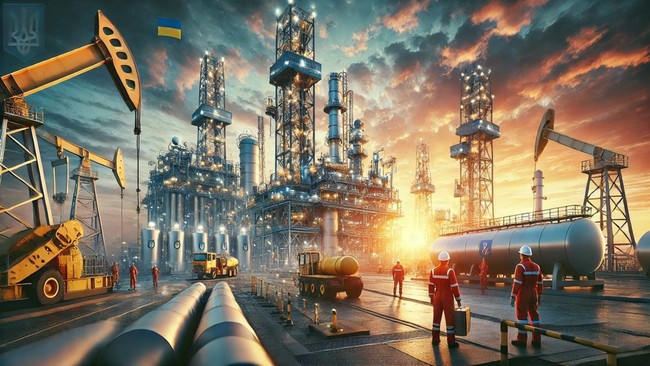
Global energy turmoil may seem distant from daily life. But when oil prices surge, distribution routes are disrupted, or energy supplies stall, the impact can directly hit people’s wallets.
The energy turmoil triggered by the Iran war since late February 2026 has made many countries anxious. The world is facing one of the largest energy shocks in modern history, with supply disruptions described as unprecedented.
The Iran conflict and disruption of shipping lanes in the Strait of Hormuz have become the main trigger, striking one of the world’s key energy trade arteries. The International Energy Agency (IEA) has called the disruption the largest supply disruption in the history of the global oil market and one of the most serious energy security challenges the world has ever faced.
Many countries then chose to raise fuel prices. As a result, transport costs increased, industrial production costs swelled, and prices of various necessities were pushed up.
So why has Indonesian society relatively not felt the impact of the global energy turmoil?
The answer is not because Indonesia is completely immune to the energy crisis. Amid the energy crisis hitting the world due to the Iran war, Indonesia has built a number of buffers to ensure fuel is available without having to sacrifice large public costs.
JPMorgan’s findings reinforce this condition. In its report ‘Pandora’s Bog: The Global Energy Shock of 2026’, Indonesia is among the countries relatively most protected from global oil and gas price shocks.
In terms of total protection factor, Indonesia ranks second, only below South Africa. When accounting for the combination of low oil and gas import dependence and high domestic energy protection, Indonesia ranks third.
However, what matters more for the public is not the ranking but the impact felt by society.
The government is also equipped with intervention instruments to dampen the impact of global energy spikes, in the form of fuel and electricity subsidies as well as the coal Domestic Market Obligation (DMO) policy. With this mechanism, global price turmoil is not directly passed on to the public.
- Indonesia’s Energy Source from Coal
One of Indonesia’s biggest buffers is domestic energy sources.
In the primary energy mix, coal still dominates at 40.37%, followed by oil at 28.82%, natural gas at 16.17%, and new and renewable energy (NRE) at 14.65%.
Indonesia is one of the largest producers of thermal coal used as an energy source.
Indonesia is even the world’s largest exporter of thermal coal. Indonesia produced 790 million tonnes of coal in 2025 and has long reserves.
For the public, the meaning is simple. When world oil and gas prices surge, Indonesia’s electricity sector is not fully dependent on imported energy.
Coal contributes around 40.37% of primary energy, the largest share. Indonesia also implements a domestic market obligation (DMO) requiring companies to allocate 25% of their coal sales to PT Produksi Listrik Negara (PLN) to maintain supply.
Stable electricity is not just about keeping home lights on.
Electricity supports factories, data centres, telecommunications networks, hospitals, schools, banking and digital government services.
Therefore, energy resilience ultimately also becomes resilience of economic activity and public services.
To mitigate the impact of the Iran war, the government has also not raised electricity tariffs this year. This policy certainly reduces the burden on the public.
For comparison, Singapore experienced a 17% increase in household electricity tariffs in July-September 2026 to 31.91 Singapore cents/kWh before GST, after previously rising 2.1% in April-June, due to soaring natural gas prices amid the Middle East conflict, while around 95% of Singapore’s electricity still depends on imported natural gas.
- Not Immediately Raising Fuel Prices
One of the main dampeners is the government’s decision not to immediately raise subsidised fuel prices when world oil prices surged.
When many countries immediately raised fuel prices massively after the war, the government only partially raised non-subsidised fuel prices.
Data from GlobalPetrolPrices, which monitors fuel prices in 170 countries and territories, shows 143 countries have already raised fuel prices. The highest spike was recorded in Bhutan at 56%.
Referring to GlobalPetrolPrices data, petrol prices in Bhutan or Burma rose from US$0.667/litre on 23 February 2026 to US$1.041/litre on 24 August 2026. That means an increase of around 56%.
Below Bhutan are Cuba, Myanmar and the United Arab Emirates (UAE) at 50%. The price spikes in Bhutan and Myanmar show how great the impact of the Iran war is on fuel prices in the ASEAN region.
The government uses the state budget (APBN) as a shock absorber so that global oil price increases are not directly passed on to consumers.
To date, the government has not raised subsidised fuel prices, including Pertalite and diesel.
This policy is important because fuel price spikes can quickly spread to transport costs, logistics, food and inflation.
The government has only raised non-subsidised fuel prices such as Dexlite and Pertamax. Indonesia’s fuel prices are also among the cheapest in ASEAN.
- Seeking Oil Sources from Other Countries
Indonesia is also not sitting idle in facing the risk of supply disruption from the Middle East.
The government and Pertamina are working to diversify crude oil import sources, including seeking supply from the United States and other regions outside the Middle East.
Indonesia’s oil production is only around 600 thousand barrels per day, while demand reaches around 1.6 million barrels per day. This gap makes imports remain a necessity.
Indonesia depends on Singapore for 62% of its fuel supply, then Malaysia for 35% and others for 3%.
For crude oil imports, 16% comes from Saudi Arabia and African countries such as Nigeria, Angola, Gabon and others as well as Kazakhstan.
After the Iran war, Indonesia began diversifying crude oil import sources by shifting some supply from the Middle East to the United States, securing supply from Russia of up to 150 million barrels, and seeking additional supply from Africa such as Angola and Brazil to reduce dependence on the Strait of Hormuz route.
Special Envoy of the President for Energy and Environment Hashim Djojohadikusumo revealed that Indonesia obtained 150 million barrels of crude oil from Russia at a special price.
Hashim said the oil supply obtained at a special price was the result of President Prabowo Subianto’s visit to meet President Vladimir Putin at the Kremlin Palace in Moscow on Monday (13/4/2026).
- Increasing Energy Diversification
Indonesia is not only seeking oil from abroad. The government is also accelerating diversification of fuels based on domestic resources to reduce dependence on imported energy.
One of these is through the B40 programme, namely increasing the blend of palm oil-based biodiesel in diesel. This policy allows part of diesel demand to be met from domestic raw materials, so dependence on diesel imports can be reduced.
PT Pertamina Patra Niaga is targeting diesel fuel with a 50% palm oil-based biodiesel blend (B50) to be realised at all petrol stations by September 2026. Currently, 82% of Pertamina petrol stations have distributed B50 since its implementation began on 1 July 2026.
The next step targets petrol.
The government is preparing E10, namely petrol with a 10% ethanol blend, which is then directed to increase towards E20.
The raw materials are also sought from domestic commodities such as sugarcane, cassava and corn.
When war makes world oil expensive and import routes disrupted, Indonesia is trying to reduce dependence by producing more fuel domestically.
For the public, energy diversification serves as a buffer against global energy price spikes.
Programmes such as B40 and the development of E10/E20 can reduce dependence on imported diesel and petrol, so that when war makes world oil prices surge, the pressure on domestic fuel price increases can be smaller.
The impact then spreads to transport costs, logistics costs, food prices and daily necessities that are more protected.
So, the main benefit of energy diversification is not that fuel automatically becomes cheaper, but rather preventing global energy price increases from directly hitting people’s pockets as deeply as possible.
This strategy is becoming increasingly important because energy resilience is not just about having oil, but also the ability to meet energy needs without being too dependent on global supply.
- Energy Infrastructure as the Next Fortress
Energy resilience is also not enough just by having energy sources.
Energy must be able to be delivered from its source to households, industry and areas in need.
Therefore, energy infrastructure development is an important part of the government’s strategy, from refineries, gas networks, fuel infrastructure, power plants to transmission networks and electrification in unreached areas.
The stronger the infrastructure, the smaller the risk that a single disruption at one point will immediately paralyse the entire system.
This is also important for the 3T regions (frontier, outermost and least developed). Energy resilience must not only be felt by communities in Java’s economic centres and big cities.
There are several important oil and gas infrastructure improvements and upgrades in 2026, especially from the perspective of energy resilience in facing war and global supply disruptions.
- Cisem II gas pipeline begins full operation
One of the most strategic projects is the Cirebon-Semarang Gas Transmission Pipeline (Cisem) II.
On 6 June 2026, Cisem II officially entered full operation after a series of commissioning. This pipeline connects the gas network from Central Java to West Java and is integrated with Pertagas facilities at Kandang Haur Timur.
- Fuel pipeline network strengthened
Pertagas in 2026 allocated around US$75 million for energy infrastructure development and network reliability improvement. One important project is the Cikampek-Plumpang fuel pipeline spanning 96 km.
The goal is not only to accelerate fuel distribution, but also to reduce distribution costs and reduce dependence on land transport.
This is very important when global disruptions occur. The more efficient the domestic distribution network, the smaller the risk that a disruption at one point will immediately cause scarcity in another region.
- Arun LNG tank revitalised
The F-6004 LNG Arun tank facility in Aceh has been revitalised and in 2026 began to be optimised again. Pertagas said the facility will be used to strengthen gas supply for industry and power plants, while increasing Indonesia’s role in the regional energy network.
This is important because LNG can serve as a buffer when gas supply through pipelines is disrupted.
- Balikpapan refinery continues to be strengthened
The Balikpapan Refinery Development Master Plan (RDMP) project is not just an ordinary refinery development.
This is a massive development with a major mission to increase processing capacity from 260 thousand barrels to 360 thousand barrels per day, increasing independence in processing and providing fuel, LPG and petrochemical products.
- Upstream gas production continues to be boosted
Upstream gas production continues to be boosted, one of which is through the development of large reserve discoveries such as the South Andaman Block in Aceh. In addition, the government is also encouraging the acceleration of other strategic gas project development, including the Masela Block, to increase national gas supply in the future.
On 16 July 2026, physical construction of the Masela Block project officially began through a groundbreaking in the Tanimbar Islands with an investment value of around US$20.9 billion. The government targets construction to continue from 2027 and gas production to begin around 2029-2030.
In addition to strengthening energy resilience and reducing dependence on imports, this project is projected to drive the economy of Maluku and the Tanimbar Islands through investment, job creation, infrastructure development, and local supply chain development, while becoming a source of state revenue in the long term.
- Renewable energy sources boosted
Indonesia continues to boost environmentally friendly energy sources. In the latest development, President Prabowo Subianto has officially accelerated the development of national solar energy.
The government launched the 100 gigawatt peak (GWp) Solar Power Plant (PLTS) programme, whose initial phase includes the construction of 14 PLTS in six provinces with a total capacity of 5.3 GWp. The ambitious programme was launched directly by Prabowo at PLTS Site Gilimanuk, Jembrana Regency, Bali, on Tuesday (25/8/2026).
Starting the 100 GWp PLTS programme, 14 PLTS in 6 provinces were launched. The fourteen PLTS launched are:
PLTS Tembesi in Riau Islands Province;
PLTS Pulau Sembur in Riau Islands Province;
PLTS Pulau Rengit in Bangka Belitung Islands Province;
PLTS Saguling in West Java Province;
PLTS Purwakarta in West Java Province;
PLTS Jatiluhur in West Java Province;
PLTS Cirata in West Java Province;
PLTS Jatigede in West Java Province;
PLTS Waduk Gajah Mungkur in Central Java Province;
PLTS Karangkates in East Java Province;
PLTS Madura in East Java Province;
PLTS Pasuruan in East Java Province;
PLTS Banyuwangi in East Java Province; and
PLTS Site Gilimanuk in Bali Province.
- Upstream oil and gas contract schemes made more flexible
The government now gives greater flexibility to investors in choosing upstream oil and gas contract schemes. Through Minister of Energy and Mineral Resources Regulation No. 13 of 2024, contractors can choose the Cost Recovery or Gross Split scheme according to risk, investment needs, and project economics.
This policy is beginning to be seen in the 2026 oil and gas working area auctions, where the government offers different schemes according to block characteristics. Natuna D-Alpha, for example, uses Cost Recovery, while Sapukala uses Gross Split.
The government has also made the Gross Split scheme simpler by cutting calculation components from 13 to 5 and allowing contractor shares to reach 75%-95% before tax for conventional oil and gas.
Meanwhile, for Cost Recovery, the government has removed the cost ceiling and provided a number of incentives. In essence, the government no longer imposes one contract model on investors, but lets investors choose the scheme most suitable to the risk level and project characteristics. This step is expected to make upstream oil and gas investment more attractive and accelerate the monetisation of Indonesia’s large gas discoveries.
Ultimately, the benefits of these energy policies can be felt through more stable fuel prices, logistics costs that are not too high, and smaller risks of price increases for daily necessities.
However, this infrastructure development does not automatically make energy cheaper because it requires large investment. Its main benefit is making the public more protected when global energy turmoil or war occurs.
Source: jawawa.id (https://jawawa.id/newsitem/indonesia-builds-energy-fortress-to-face-iran-war-and-protect-public-finances-1788011794)
Originally published by CNBC Indonesia (https://www.cnbcindonesia.com/research/20260827103121-128-762671/ri-bangun-benteng-energi-hadapi-perang-iran-agar-dompet-rakyat-aman), translated from Indonesian