
Indonesia Building its Halal Identity
Certificates are merely an instrument, not the ultimate goal. What matters more is how deeply the halal ecosystem is embedded within the national production system.
For years, Indonesia has occupied an awkward position on the global halal economy map. Despite being the country with the largest Muslim population on the planet, with over 240 million people, it is more widely known as a giant consumer rather than a dominant producer. Halal products from Malaysia, Thailand, and even Brazil enter the domestic market with ease, while Indonesian products themselves are still struggling to significantly penetrate the global halal export market.
The Mandatory Halal Policy of October 2026 (WHO 2026) is designed to reverse this narrative. This policy affirms Indonesia’s commitment to transforming from a mere spectator into a major player in the global halal industry.
In essence, this policy is not a sudden move. Its legal foundation is rooted in Law Number 33 of 2014 concerning Halal Product Assurance, which was subsequently strengthened by Government Regulation Number 42 of 2024. Implementation is being carried out gradually. Medium and large enterprises have been required to be halal-certified since October 2024, while imported products and Micro and Small Enterprises (MSEs) have been given a deadline until October 2026.
The implementation of halal product regulations cannot be applied uniformly to all business actors. Large factories with standardised management systems naturally have different capacities compared to meatball stalls or home-based cake producers.
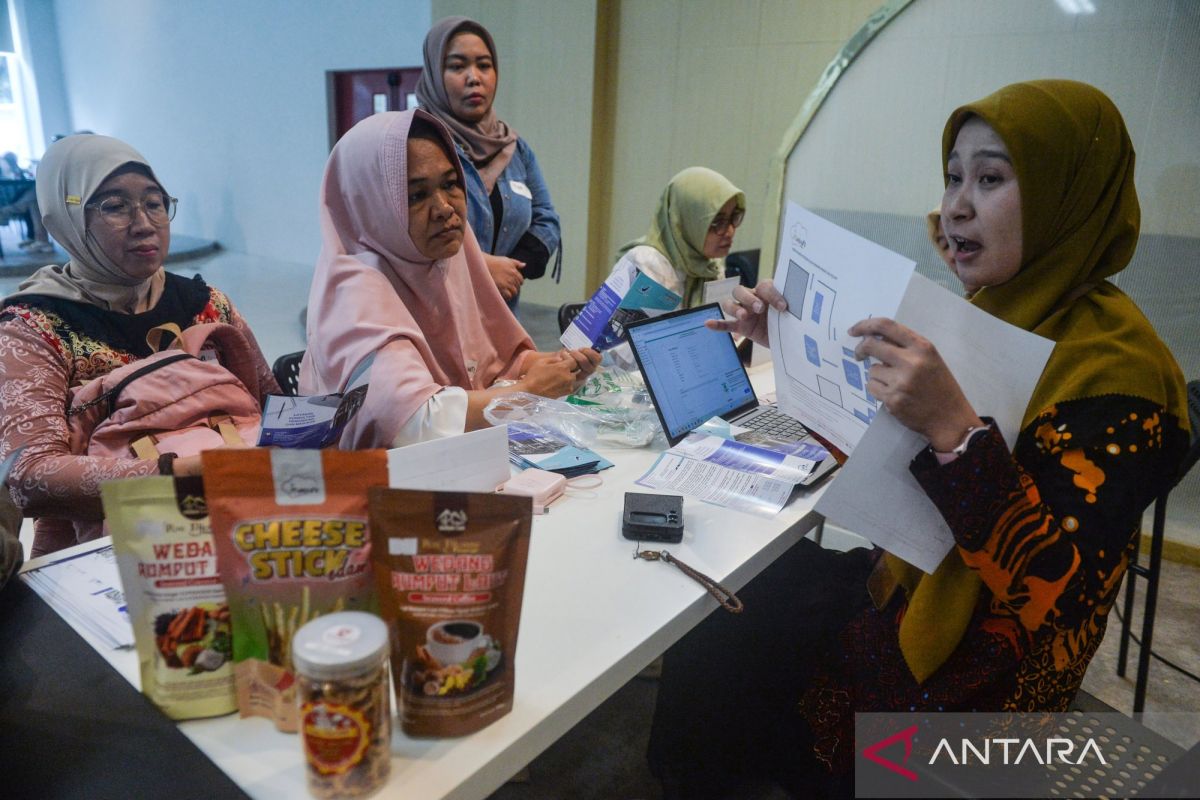
The Halal Product Assurance Organizing Agency (BPJPH), as the primary operator, manages the entire process from certification and supervision to facilitation programmes. Specifically for Micro and Small Enterprises (MSEs), a special pathway called SEHATI (Free Halal Certification) is available, with a target quota of 1.35 million certificates by 2026, an increase from one million certificates in the previous year.
More than 111,000 Halal Product Process Assistants (P3H) have been deployed across various regions to assist with the application process directly. These figures represent the infrastructure being built by the government to establish a halal ecosystem that reaches the lowest layers of economic actors.
Beyond Religion
Many may question the urgency of halal labelling in a country with a Muslim majority. There is a common assumption that Muslim producers tend to be honest and are unlikely to falsify raw materials with non-halal elements. However, the halal label has a much broader dimension than mere religious boundaries.
One significant shift in the WHO 2026 policy is how the government positions halal certification. While the halal label was previously viewed solely as a religious matter—concerning ritual compliance and the peace of mind of Muslim consumers—the official narrative has now shifted towards the domains of economy and competitiveness.