
Indonesia Braces for 'Boiling Hot' Temperatures, Agriculture Ministry on High Alert
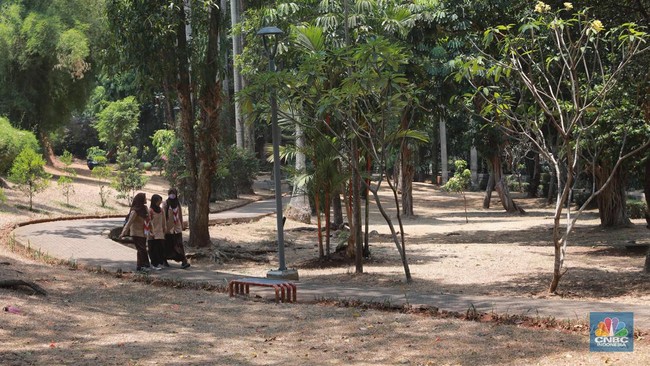
The Ministry of Agriculture has begun preparing various anticipatory measures to face the potential impact of El Niño during the 2026 dry season. Although drought has started to occur in several regions, the government has assured that the situation is still under control compared to previous El Niño periods. Ministry Secretary General Suwandi stated that the experience of the 2015 El Niño served as an important lesson for the government. At that time, the area of agricultural land experiencing crop failure reached 217,000 hectares, a figure far greater than the El Niño events in 2023 or the current conditions. ‘In 2015, crop failure affected 217,000 hectares, or 1.5% of the harvest area. During the 2023 drought caused by El Niño, crop failure reached 49,000 hectares, or 0.4%,’ Suwandi said during a hearing with Commission IV of the House of Representatives at the parliamentary complex in Jakarta. ‘God willing, although we must remain vigilant and careful in 2026, as of today, the data shows only 12,000 hectares are experiencing drought. So, God willing, it is still under control and safe.’ He explained that the government uses climate forecast data from the National Oceanic and Atmospheric Administration (NOAA) and the International Research Institute for Climate and Society (IRI) as a reference for planning anticipatory steps until March 2027. Based on projections, climate conditions are expected to remain in a weak to moderate El Niño phase, prompting the government to strengthen mitigation efforts early on. Data from the Meteorology, Climatology, and Geophysics Agency (BMKG) indicates that the 2026 dry season began in April in the East Nusa Tenggara region and is spreading to other areas, with the peak expected in August across Sumatra, Java, parts of Bali, Kalimantan, Sulawesi, Maluku, and Papua. Suwandi noted that the impact of El Niño could potentially affect all agricultural sub-sectors, especially food crops that are highly dependent on water availability. Risks include a decrease in planting area, reduced production, and an increase in pest attacks. To address these conditions, the Ministry is implementing three main strategies: anticipation before the dry season, adaptation during the dry season, and mitigation once impacts emerge. Anticipatory strategies include mapping drought-prone areas, providing production inputs, and strengthening water infrastructure. Adaptation involves intermittent irrigation, drought-resistant rice varieties, and pest control, while mitigation includes agricultural insurance and free seed assistance for affected farmers. Minister of Agriculture Amran Sulaiman has sent letters to all regional heads since 9 March 2026 to strengthen preparedness, including reactivating drought brigades. The government is also optimising water management through the rehabilitation of irrigation networks, reservoirs, shallow wells, and pump-based irrigation. Cross-ministerial coordination has been intensified, with the Ministry requesting BMKG to prepare weather modification or artificial rain in drought-affected areas. In terms of production facilities, the Ministry has strengthened the readiness of pre-harvest agricultural machinery, with a total of 94,767 units prepared in 2026, up from 69,460 units in 2025. The government has also allocated funds for the construction and rehabilitation of water resource infrastructure, including 17,400 pump irrigation units, 3,500 pipe irrigation units, and the distribution of approximately 57,300 water pumps to drought-prone regions.