
Indonesia Begins Construction of First Melamine Plant in Gresik SEZ
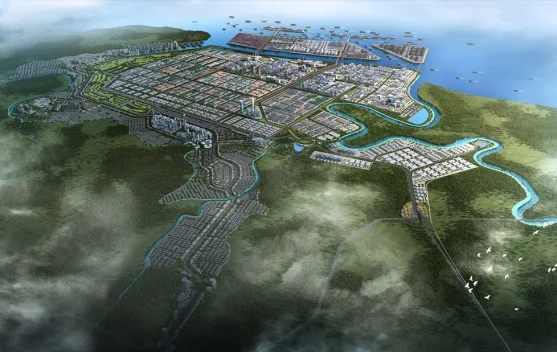
Indonesia Begins Construction of First Melamine Plant in Gresik SEZ
13 Apr 2026 14:14 WIB
Voice of Indonesia
Key Points
The Indonesian government has begun construction of the country’s first melamine factory in the Java Integrated Industrial and Ports Estate (JIIPE) Special Economic Zone (SEZ) in Gresik, East Java.
Coordinating Minister for Economic Affairs Airlangga Hartarto described the project as a milestone in transforming Indonesia’s national industry.
RRI.CO.ID, Jakarta – The Indonesian government has begun construction of the country’s first melamine factory in the Java Integrated Industrial and Ports Estate (JIIPE) Special Economic Zone (SEZ) in Gresik, East Java.
The project, valued at approximately USD 600 million, is being developed by PT GEABH Joint Technology, a subsidiary of China-based Sichuan Golden Elephant Sincerity Chemical Co., Ltd.
Coordinating Minister for Economic Affairs, Airlangga Hartarto, described the groundbreaking as a milestone in Indonesia’s industrial transformation. He emphasized that processing natural gas into liquid ammonia and its derivatives will strengthen the value chains of the energy and chemical sectors.
“This project will process natural gas into liquid ammonia, which will then be developed into derivative products such as urea, melamine, and ammonium nitrate,” Minister Airlangga said in a video speech delivered at the groundbreaking ceremony on Wednesday, April 8, 2026, as quoted by Antara on Monday, April 13.
These products are expected to support the agricultural, chemical, and manufacturing sectors while opening up export opportunities. Minister Airlangga added that the government remains committed to ensuring a conducive investment climate. “We will continue to provide the necessary support and incentives so that PT GEABH Joint Technology and all investors in this SEZ can grow and develop optimally,” he said.
Chinese Ambassador to Indonesia Wang Lutong highlighted the strategic role of the energy and chemical sectors in supporting the agricultural supply chain. He stressed the importance of strengthening production capacity for key inputs such as energy and fertilizers to maintain food security.
“This project can strengthen Indonesia’s energy and chemical industry chains, increase self-sufficiency in key products like fertilizers, drive regional economic development, and contribute to national industrialization,” Wang said.
The factory is also expected to reduce reliance on melamine imports, create jobs, and boost economic activity in Gresik.
Nationally, investment in SEZs by the end of 2025 is projected to reach USD 19.7 billion, with the Gresik SEZ contributing USD 6.1 billion. Indonesia’s economic growth in 2025 was recorded at 5.11 percent, supported by strong domestic consumption, investment, and exports.
The manufacturing sector contributed 31.32 percent to East Java’s regional economy, while in Gresik it accounted for 52.58 percent of the regional gross domestic product (GRDP). Over the past five years, the unemployment rate fell from 8.00 percent to 5.47 percent, while the Human Development Index (HDI) rose from 76.98 in 2021 to 79.69 in 2025. ***
News Recomendation
Loading latest news…..