
Indonesia Becomes a Key Player in the Battery Industry, but Significant Challenges Remain
The rapid pace of electrification is reshaping global competition, particularly within the battery ecosystem. The struggle is no longer merely about the electric vehicle market, but about controlling the entire battery supply chain, from mining to cell manufacturing.
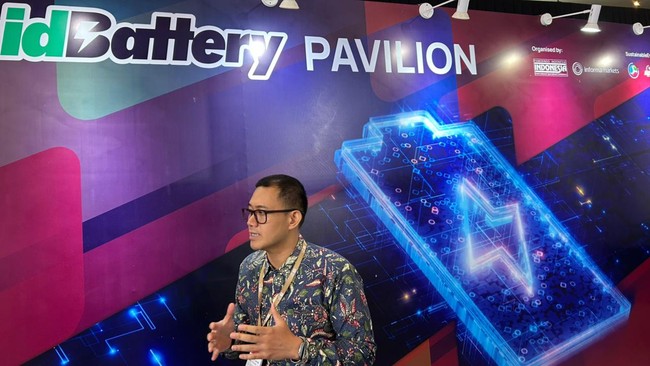
Niko Chandra, Chairman of ID Battery and Director of Business Development at Indonesia Battery Corporation (IBC), revealed that battery facilities in Indonesia are expanding, ranging from battery pack assembly to actual cell production. In other words, the battery industry is experiencing significant growth.
With this foundation, he stated that Indonesia needs to develop the battery ecosystem from upstream to downstream, encompassing both the supply chain and demand. This is particularly advantageous as Indonesia possesses substantial nickel reserves, a primary raw material for battery production.
“What industry players truly need most is visibility regarding demand—specifically, the extent to which battery demand is growing,” Niko told CNBC Indonesia during the Indonesia Energy and Engineering (IEE) Series 2026 on Thursday.
Niko explained that in developing the battery ecosystem, safety is paramount, especially for electric vehicle requirements. Therefore, it is essential to build public trust regarding battery usage.
“Within the association, we are also pushing for battery testing and similar processes. We already have the infrastructure and SNI (Indonesian National Standard) in place. The goal is to transition these from being voluntary to becoming mandatory,” Niko explained.
Beyond safety, he also emphasised the importance of sustainability. In this regard, Indonesia needs to prepare recycling processes and implement second-life applications, supported by appropriate regulations.
“This is what needs to be completed to ensure a complete ecosystem. Currently, regulations in the field of recycling are not yet fully established,” he clarified.
Furthermore, he noted that batteries are not only required for electric vehicles and solar power plants (PLTS), but data centres also represent a massive market for batteries.
“The development of data centres in Indonesia has become a hub, and the country is being eyed for data centre expansion. Looking further ahead, as technology becomes more advanced with robotics and AI, the need will grow,” said Niko.
Developing the electric battery ecosystem requires ‘pentahelix’ collaboration, involving the Ministry of Environment, the Ministry of Energy and Mineral Resources, the Ministry of Industry, and the Ministry of Transportation. Meanwhile, collaboration with academics and researchers is necessary for the future development of sustainable battery technology.
“Essentially, it is an ecosystem that requires collective effort,” he added.
For context, IBC is participating in Energy Week, part of the IEE Series 2026. This major B2B industry gathering in Southeast Asia carries the theme “Sustainability for Industrial Transformation,” similar to last year’s theme.
He expressed hope that Energy Week would serve as a platform to bring together investors, industry players, the government, and academics to provide concrete contributions and steps.
“The aim is for the events within it to provide policies and recommendations for improvement, particularly regarding policy and investment in Indonesia, to ensure a more conducive environment,” Niko concluded.