
Indonesia-Australia Research Turns Shrimp Waste and Flies into Blue Economy Innovation
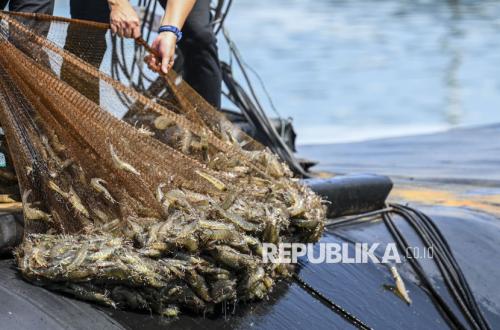
NORTH LOMBOK — An Indonesia-Australia research collaboration is developing ways to turn fisheries waste into products with economic value. Two studies supported by joint BRIN-KONEKSI funding are extracting astaxanthin from shrimp shells and developing sustainable lobster feed using black soldier fly larvae and local shellfish.
Australia’s Ambassador to Indonesia, Rod Brazier, visited the Centre for Marine Aquaculture Research at the National Research and Innovation Agency’s (BRIN) Organisation for Agricultural and Food Research in North Lombok on Wednesday (4 November 2026). The visit was to review progress on two research projects in the marine bioeconomy.
Brazier said the two countries’ research cooperation was intended to produce innovations that benefit communities, particularly by safeguarding marine resources and strengthening coastal economies.
“Australia and Indonesia are investing in research that delivers practical benefits for communities. Through our partnership with BRIN, we are supporting innovation that helps ensure our marine resources are more sustainable, strengthens the livelihoods of coastal communities and creates new opportunities for economic cooperation,” Brazier said in a KONEKSI statement on Thursday (5 November 2026).
The first study is led by BRIN researcher Syahputra Wibowo, in collaboration with Gadjah Mada University, Brawijaya University and Curtin University. The team is developing a method to extract astaxanthin from shrimp-shell waste. The high-value antioxidant compound could be used as a raw material for health products.
The research team said the potential astaxanthin content reached 78.13 per cent. The study has entered the extract-development and compound-characterisation stage, including the development of an astaxanthin complex to support research into its potential effects on diabetes.
The next stage will include biological activity tests, including in vivo testing. The team is also exploring cooperation with the pharmaceutical industry to create opportunities for commercialisation. The research applies a circular-economy approach by increasing the value of shrimp-shell waste.
The second study is led by BRIN researcher Sunarti Sinaga, together with Brawijaya University, the Ministry of Marine Affairs and Fisheries (KKP) and Griffith University. The team is developing sustainable lobster feed using black soldier fly (BSF) larvae and local shellfish.
The innovation targets the reliance of lobster farming in West Nusa Tenggara (NTB) on natural feed, particularly low-value fish. The research presentation said NTB is a production centre that supplies about 80 per cent of the country’s lobster needs, with output of around 120–150 tonnes a year.
However, lobster farming still faces challenges in feed efficiency. The feed conversion ratio (FCR) is reported at 17.3–20.1, indicating that large quantities of feed are needed to produce lobster growth.
The team is developing feed ingredients from urban organic waste processed using BSF larvae. The invasive mussel Mytilopsis sallei is also being used as an alternative protein source.
Tests found that a feed formulation containing 70 per cent mussels and 30 per cent low-value fish produced a final biomass of around 183.98 grams, with a survival rate of 85 per cent. A treatment using 100 per cent mussels recorded a 90 per cent survival rate, the lowest mortality and the greatest potential to reduce costs.
The team has also developed pellets made from BSF larvae, with a crude protein content of 46.71 per cent. The feed contains several essential amino acids, including leucine, valine and arginine.
The study recorded daily BSF larval growth of 18.54 per cent. The optimal harvest time is the 20th day, which could help improve the efficiency of feed-ingredient production.
Alongside feed development, the research identified an invasive mussel in Lombok waters. DNA analysis confirmed that the brown mussel found was Mytilopsis sallei, previously thought to be M. adamsi. The finding is the first molecular record of the species in Sekotong Bay.
The mussel also contains naturally occurring minerals, particularly calcium and phosphorus, which together account for 29.99 per cent. This creates the possibility of using it as an alternative source of protein and minerals for lobster farming.
Together, the studies demonstrate how waste and local resources can be used to create higher-value products. The innovations are expected not only to improve farming efficiency but also to open up new economic opportunities for coastal communities and support sustainable management of marine resources.
Indonesia-Australia cooperation through KONEKSI (Australia-Indonesia Knowledge Partnership Platform) is one vehicle for strengthening research and innovation collaboration between the two countries, particularly in developing the blue economy and managing marine resources.
Source: jawawa.id (https://jawawa.id/newsitem/indonesia-australia-research-turns-shrimp-waste-and-flies-into-blue-economy-innovation-1793929856)
Originally published by Republika (https://esgnow.republika.co.id/berita/to22c0416/riset-indonesiaaustralia-olah-limbah-udang-dan-lalat-jadi-inovasi-ekonomi-biru), translated from Indonesian