
Indonesia-Australia exchange emphasises woman-centred midwifery
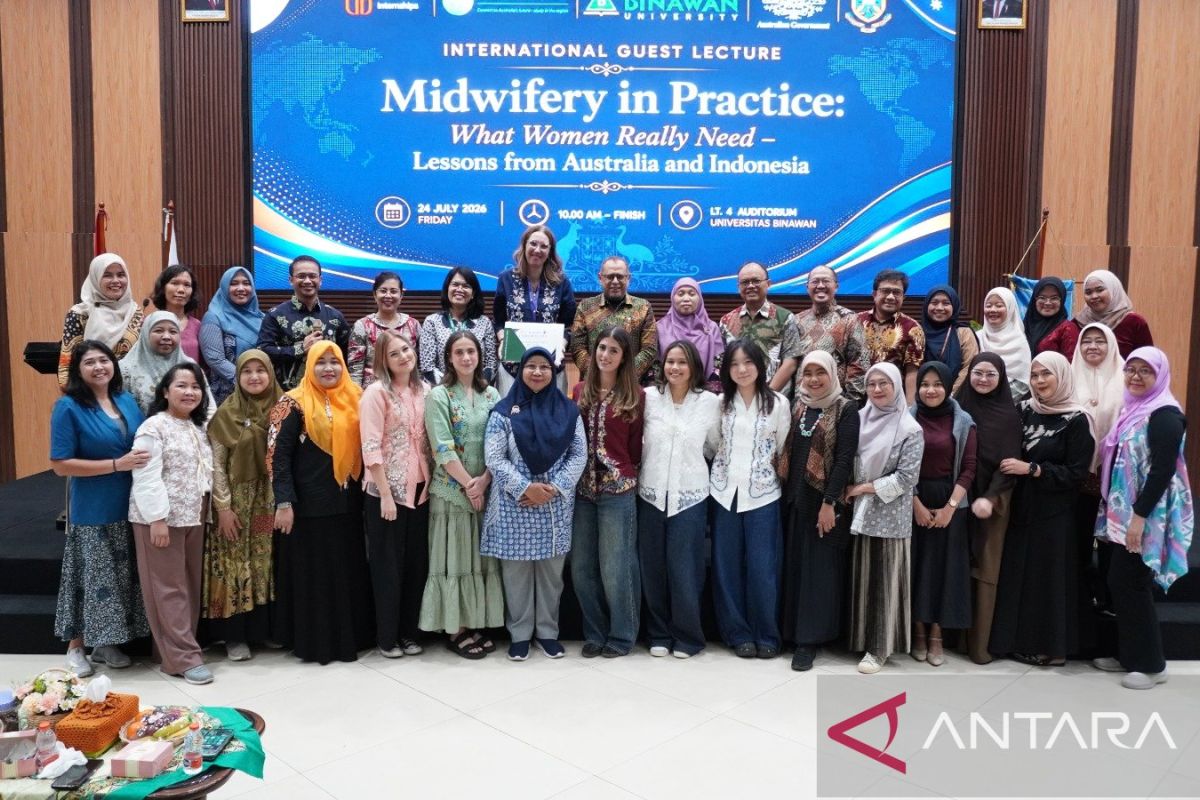
The Indonesia-Australia midwifery practice exchange emphasised the importance of maternal services that prioritise a woman-centred approach by strengthening midwives’ ability to understand needs and communicate well with patients.
“International collaboration is not just about bringing institutions together or presenting perspectives from other countries. What is more important is how students get the opportunity to learn from real experience, understand differences in practice, and see how their competencies can be applied in a broader context,” said Vice Rector of Universitas Binawan Jakarta Farouk Abdullah Alwyni in a statement quoted in Jakarta on Sunday.
He explained that international experience is needed to build a global perspective while strengthening students’ readiness to face developments in the health sector.
Learning through practical experience from different countries also provides an opportunity for students to see the application of health competencies in a broader context.
This perspective was discussed in a Guest Lecture titled “Midwifery in Practice: What Women Really Need-Lessons from Australia and Indonesia”, which was part of the International Internship programme collaboration between Universitas Binawan and The University of Queensland (UQ), Australia.
The activity featured UQ Associate Professor Dr Megan Cooper, Ph.D., who shared her experience regarding midwifery practice in Australia, including the role and responsibilities of midwives as well as the challenges in providing services centred on women’s needs.
Megan explained that midwifery practice requires a comprehensive understanding of women’s needs as well as support throughout the series of health services.
Perspectives from different countries, according to her, can be used to reflect on existing practices and find lessons that can be applied.
“Midwifery practice is essentially about understanding what women need and supporting them throughout their journey. Learning from various countries allows us to reflect on our own practice, understand different perspectives, and identify what we can learn from each other,” she said.
The Indonesia-Australia practice exchange introduced students to a number of aspects of midwifery services, such as clinical practice, a focus on women’s services, communication, cultural awareness, and adaptability. These aspects complement the mastery of clinical skills in preparing prospective midwives to face the diverse needs of women.
Midwifery education at UQ integrates academic learning, clinical skills development, simulation, and clinical placement experience in shaping the competencies of prospective midwives. This experience is part of a cross-country learning process that allows students to understand differences in practice while reflecting on midwifery services in their own environment.
The Indonesia-Australia collaboration in exchanging knowledge and midwifery practice experience is expected to broaden the perspectives of students and academics regarding maternal services.
The cross-country learning also opens space to develop practices that are increasingly responsive to women’s needs and the community context.