
Indonesia, Australia, and Timor-Leste Agree to Strengthen Intelligence Exchange
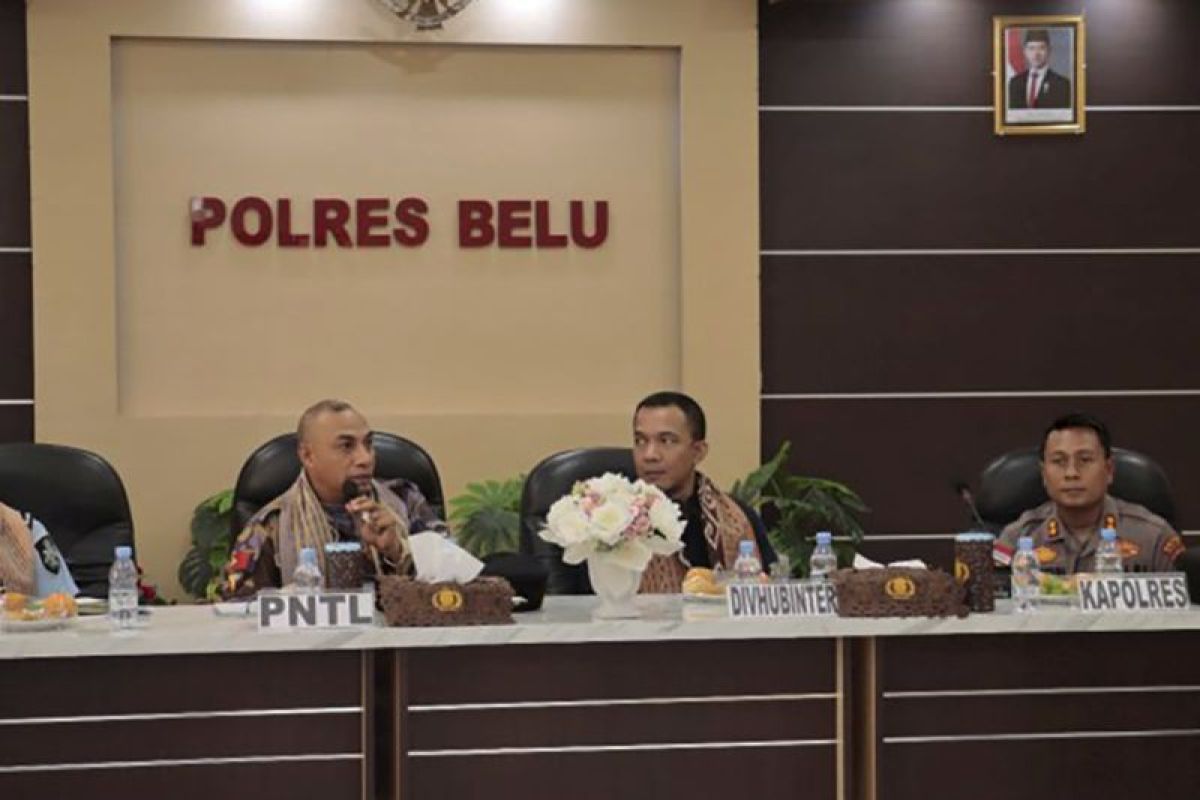
Kupang (ANTARA) — Indonesia, together with Australia and the Democratic Republic of Timor-Leste (RDTL), has agreed to strengthen the mechanism for exchanging intelligence information as a strategic step to prevent and tackle various forms of transnational crime that exploit border regions as operational routes.
Head of Public Relations at East Nusa Tenggara Regional Police (Polda NTT), Senior Commissioner Henry Novika Chandra, said in Kupang on Tuesday that Polda NTT stands ready to follow up on the outcome of the meeting through its territorial commands so that the agreement reached can be realised in measurable operational steps.
“The Regional Police Chief of East Nusa Tenggara affirmed that synergy between the Indonesian National Police (Polri), the Australian Federal Police (AFP) and the Policia Nacional de Timor-Leste (PNTL) must continue to be strengthened through intensive communication, rapid information exchange and effective coordination, so that every potential threat of transnational crime can be detected and handled early,” Henry said.
The agreement emerged from a Trilateral Meeting between the International Relations Division (Divhubinter) of Polri, the Australian Federal Police (AFP) and the Policia Nacional de Timor-Leste (PNTL), held at Belu Police Headquarters in East Nusa Tenggara.
During the meeting, the three nations expressed hope that the agreement would further strengthen the joint response system in eradicating transnational crime whilst maintaining security stability in the Indonesia–Timor-Leste border region and the routes towards Australia.
Senior Commissioner Juara Silalahi, an interpreter with the International Relations Division of Polri, said in a statement received in Kupang on Tuesday that transnational crime knows no national borders and therefore requires a joint response through closer cooperation.
“This trilateral meeting is a concrete manifestation of our commitment not to work alone in facing threats that recognise no national borders,” he said.
Through this forum, he said he hoped a mechanism for intelligence information exchange that is faster, more accurate and more secure could be established, so that various threats can be prevented at an early stage.
All the outcomes of the discussions, he said, would form part of strengthening cross-border police cooperation, including accelerating the exchange of information on the ground as the primary key to preventing transnational crime.
According to him, the Indonesia–Timor-Leste border region, which lies close to Australia, occupies a strategic position and therefore requires joint monitoring of the activities of international criminal networks.
Federal Agent Sarah Hammond of AFP Dili said Indonesia, Timor-Leste and Australia face interconnected security challenges owing to the geographical proximity of the three countries.
“We see criminal networks still exploiting sea and land routes in this region as transit routes. These threats cannot be handled by a single country alone, which is why information exchange and trilateral cooperation are so important,” she said.
The AFP, she said, is committed to strengthening collaboration with Polri and the PNTL in handling people smuggling, human trafficking, narcotics circulation and the smuggling of illegal chemicals.
Echoing this, Chief Superintendent Calisto Gonzaga of the PNTL Border Police Unit said that strengthening intelligence information exchange must be accompanied by an increase in joint patrols, combined operations and personnel capacity building in order to narrow the room for manoeuvre of cross-border criminals.
During the discussion session, the three delegations also addressed various current issues in the border region, ranging from people and goods smuggling, human trafficking, livestock theft, motor vehicle theft and illegal border crossings that continue to exploit sea routes and unofficial paths.