
Indonesia at the Centre of Southeast Asia's Digital Transformation
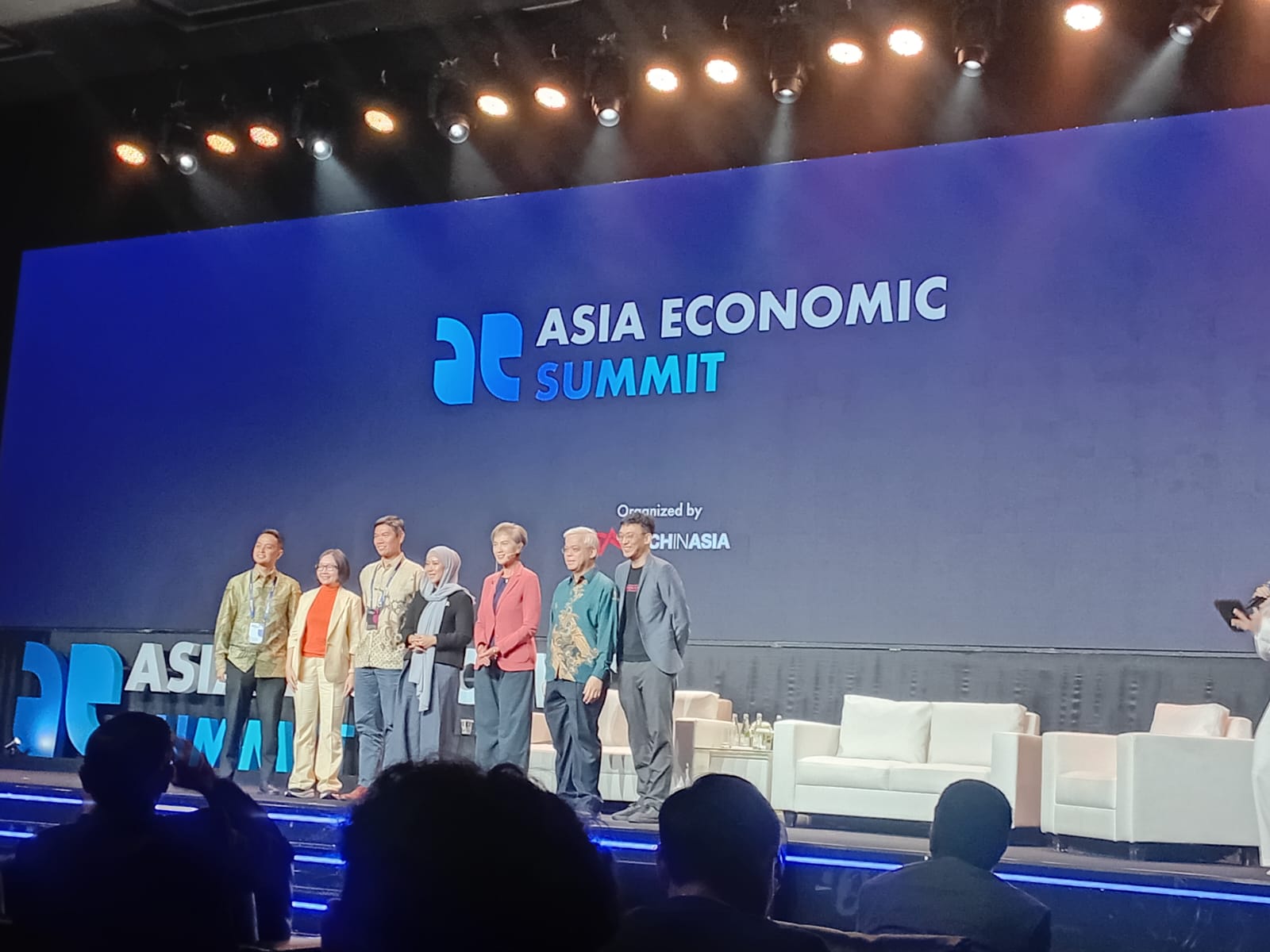
In this context, hosting the Asia Economic Summit (AES) 2026 in Jakarta represents more than just a discussion forum. The gathering, which brings together policymakers, investors, business leaders, and technology chiefs from various countries, reflects a significant shift in the region’s economic landscape. Indonesia is no longer seen solely as Southeast Asia’s largest market, but is beginning to play a role as one of the agenda-setters for the regional digital economic transformation. The summit’s theme, ‘Where Southeast Asia’s Economic Decisions Take Shape’, illustrates how strategic decisions that will determine the region’s economic future are increasingly being discussed and formulated within Southeast Asia itself. The region is no longer just a recipient of investment flows or technology from developed nations, but is starting to contribute to shaping the direction of global digital economic development. This change has not occurred suddenly. Over the past decade, Southeast Asia has experienced a significant surge in digital economic growth. Various technology companies have been born and have grown within the region. Sectors such as e-commerce, digital financial services, tech-based logistics, and artificial intelligence are developing rapidly alongside increasing public demand for digital services. Indonesia is one of the main drivers of this development. With a population exceeding 280 million and a steadily increasing internet penetration rate, Indonesia possesses a unique combination of a large domestic market and vast digital economic growth potential. Several local technology companies have successfully grown into regional players, while foreign investment continues to flow into the national technology and digital sectors. It is therefore unsurprising that Jakarta was chosen as the location for AES 2026. Indonesia’s increasingly strategic position within the Southeast Asian digital ecosystem makes the country a meeting point for various regional economic interests. Issues ranging from investment and digital infrastructure development to artificial intelligence advancement and cross-border cooperation form part of the agenda discussed at the forum. One issue receiving significant attention is the development of Artificial Intelligence (AI). In recent years, AI has evolved from merely an experimental technology into a tool widely used across various industrial sectors. Banking, manufacturing, healthcare, education, and government are all beginning to integrate AI into their operational processes. Interestingly, the rate of AI adoption in Southeast Asia is developing faster than the global average. A joint study conducted by Tech in Asia, McKinsey, and the Singapore Economic Development Board shows that 73 percent of companies in Southeast Asia are already in the trial phase or even large-scale implementation of AI. This figure is considerably higher than the global average, which stands at around 57 percent. This data indicates that companies in Southeast Asia do not want to be left behind in the global technology race. They recognise that AI is no longer just a support tool, but will be a critical factor determining future business competitiveness. Organisations that can integrate AI effectively have the potential to boost productivity, reduce operational costs, and create new, more efficient business models. However, the development of AI also presents significant challenges. Adequate digital infrastructure is a primary requirement. The development of data centres, cloud computing networks, data storage capacity, and a workforce with high-level technological skills are essential prerequisites for sustainable AI transformation. This is where regional cooperation becomes crucial. Not all countries possess the same resources to build an AI ecosystem. Some have large markets but lack infrastructure, while others have more advanced technological capacity but face limitations in domestic market size. Cross-border collaboration allows each nation to leverage its respective strengths, creating more equitable growth across the entire region. Beyond AI, capital flows are also a major concern. Global uncertainty triggered by geopolitical conflicts, economic slowdowns in several developed countries, and shifts in global monetary policy are making investors increasingly selective about where they place their funds. In this situation, Southeast Asian nations are required to create a stable and competitive investment environment. Indonesia has a significant opportunity to capitalise on this situation. Relatively well-maintained economic stability, a large domestic market, and an ongoing industrial downstreaming agenda provide a distinct appeal for international investors. Furthermore, the acceleration of digitalisation across various economic sectors opens up new investment opportunities that were previously unavailable. However, these opportunities also come with challenges. Competition among countries to attract investment is becoming increasingly intense. Nations such as Singapore, Vietnam, Thailand, and Malaysia are also continuously improving their regulations and infrastructure to attract global capital. Therefore, enhancing the quality of public policy is a critical factor for Indonesia to maintain its competitiveness. Forums like AES are important because they enable direct dialogue between the government and the private sector. In many cases, investment barriers arise not from a lack of investor interest, but from a gap in understanding between policymakers and business actors. Meetings that bring these two groups together can help create more effective solutions.