
Indonesia as an Anchor of Indo-Pacific Stability
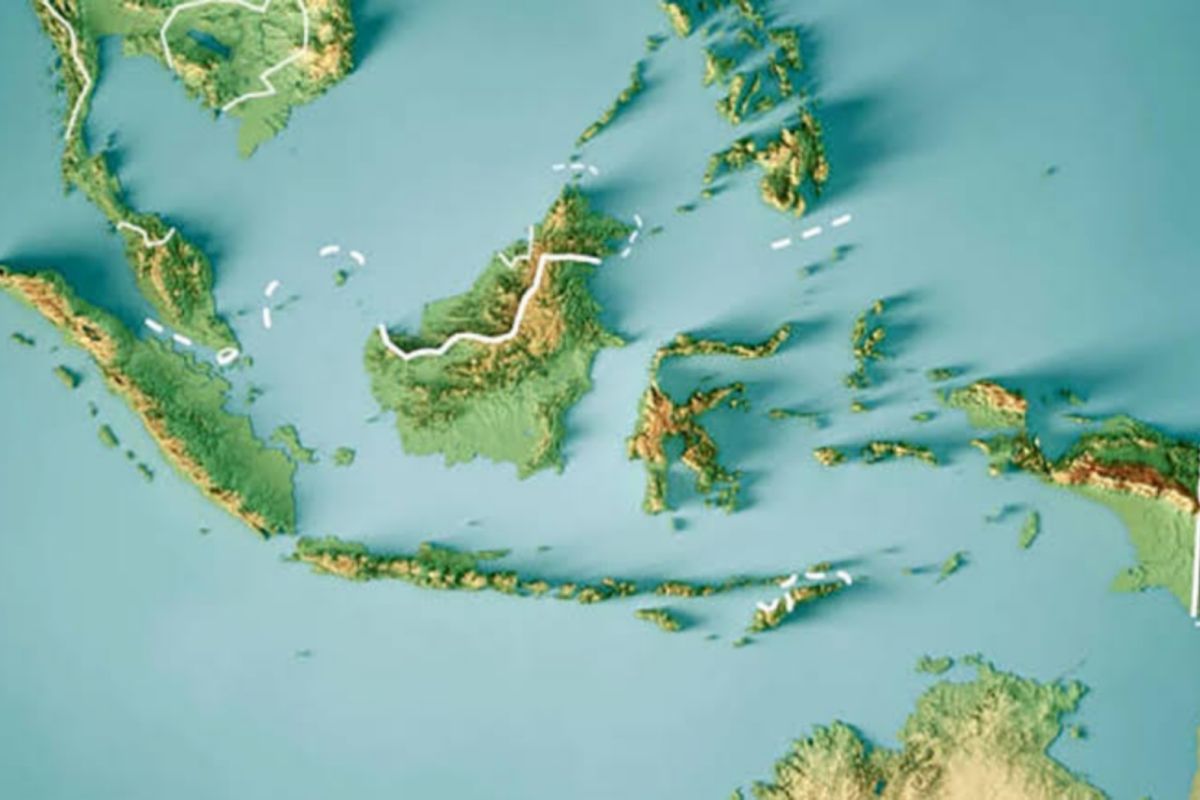
In recent years, the term ‘Indo-Pacific’ has increasingly appeared in political speeches, defence strategy documents, and international security forums. The Indo-Pacific refers to a vast geopolitical region stretching from the eastern coasts of South and East Africa, across the Indian Ocean, South Asia, and Southeast Asia, to the western and central Pacific Ocean.
Many observers view the Indo-scale region as the economic and geopolitical centre of gravity for the 21st century. This is unsurprising, as more than half of global trade moves through Indo-Pacific maritime routes, and much of the energy powering Asian economies traverses this area. Amidst this global traffic, Indonesia occupies an unparalleled position. Situated at the intersection of two oceans and two continents, Indonesia’s location presents both significant opportunities and challenges.
The Strait of Malacca, for instance, is one of the busiest shipping lanes in the Indo-Pacific. Every day, vessels carrying energy, industrial raw materials, and consumer goods pass through waters adjacent to Indonesian territory. To the south lies the Sunda Strait, while further east, the Lombok and Makassar Straits serve as vital alternatives for much larger vessels. Any disruption to these routes would have consequences far beyond Indonesia, impacting global energy prices, supply chains, and international trade activities.
Consequently, when French President Emmanuel Macron recently discussed Indo-Pacific maritime security during a meeting with President Prabowo Subianto in Paris, the issue extended far beyond mere naval warfare; what is at stake is the stability of the international economic system.
Currently, Indonesia’s standing is particularly noteworthy because it does not align exclusively with any single major power bloc. Indonesia maintains relatively good relations with the United States, China, Japan, India, Australia, and European nations. This provides a level of diplomatic manoeuvrability that other nations may lack. Indonesia does not have to view every regional development through the lens of a winner-take-all competition. Such manoeuvrability becomes increasingly relevant as rivalries between major powers show signs of intensifying. Indeed, the sea is no longer viewed solely as a space for trade, but also as a theatre for strategic competition.
In this context, the United States and its allies frequently advocate for freedom of navigation, while China continues to assert its own security interests and strategic claims. The challenge remains that regional nations do not always share the same interests as these major players, as many prioritise stability over polarisation.