
Indonesia and Value Creation in AI-Based Creative Collaboration
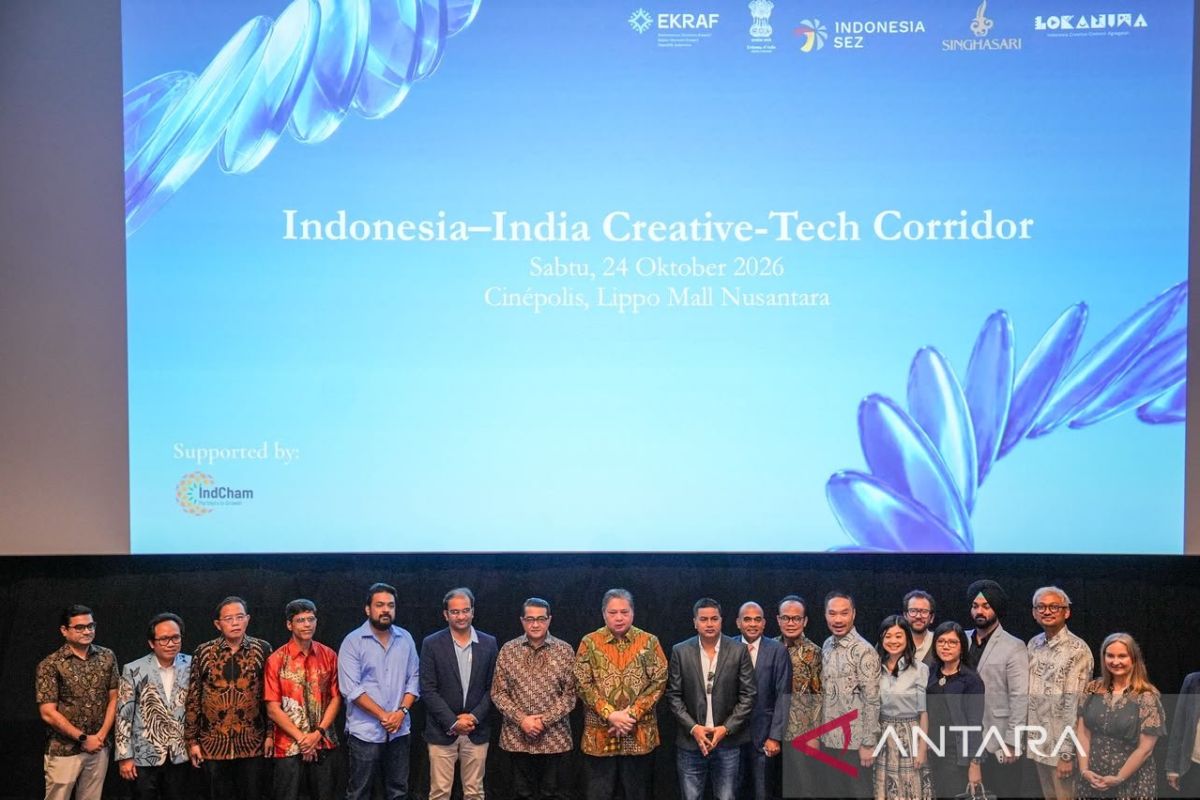
The Indonesia-India corridor offers an opportunity to bring the richness of Indonesia’s culture together with international production capacity and markets.
Jakarta (ANTARA) – Indonesia’s cultural wealth can be a source of material for the global creative industry. But turning local stories and characters into commercially valuable products requires the ability to develop creative works, reach markets and ensure that their creators receive economic benefits.
The launch of the Indonesia-India Creative Tech Corridor at Singhasari Special Economic Zone (SEZ) in East Java on 24 October 2026 offers an opportunity to strengthen this process.
The corridor connects Indonesian talent and intellectual property (IP) with India’s audiovisual technology and production capacity, including through the use of artificial intelligence (AI).
The collaboration was marked by the signing of a memorandum of understanding between Lokanima at Singhasari SEZ and several Indonesian and Indian industry partners. It covers the development of creative technology, IP creation, the use of AI and the distribution of audiovisual content to international markets.
The parties are targeting the premiere of a joint work at the 2027 World Audio Visual and Entertainment Summit (WAVES) in Mumbai, India.
Minister of Creative Economy and Head of the Indonesian Creative Economy Agency Teuku Riefky Harsya said the corridor followed through on commitments made at the 2026 World Conference on Creative Economy (WCCE) to establish concrete partnerships offering meaningful economic opportunities.
The government has also stressed the importance of involving local talent and IP in technology development.
The direction of this collaboration is relevant to a sector that employed 27.4 million people in 2025, equivalent to 18.70 per cent of the total workforce. Statistics Indonesia (BPS) data show that the creative economy contributed Rp1,757.87 trillion, or 7.38 per cent of national gross domestic product (GDP), in the same year.
This substantial contribution points to economic potential that can be further developed. However, expanding market access alone does not guarantee creators a fair share of the benefits. Added value also depends on creators’ ability to develop IP, participate in business decisions and earn income from the use of their work.