
Indonesia and Türkiye Take Different Approaches to the MSCI Threat
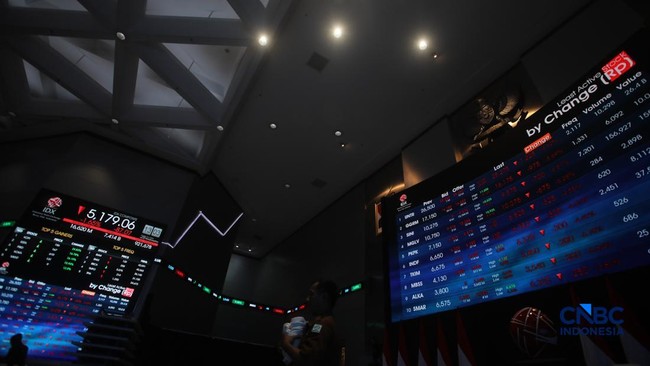
Jakarta, CNBC Indonesia — Indonesia is not alone: Türkiye’s capital market is also under the shadow of potential sanctions by global index provider Morgan Stanley Capital International (MSCI).
In announcements issued for both countries on 15 October 2026, MSCI froze several Turkish equity indices. The move came alongside a warning that Indonesia’s capital market could be downgraded from emerging-market to standalone-market status.
In its 2026 market classification review, MSCI cited serious concerns among institutional investors about alleged coordinated transactions involving mutual funds affiliated with small-cap issuers.
If significant improvements are not evident by June 2027, MSCI could take further action, including consulting on whether to downgrade Türkiye’s MSCI Index from Emerging Market to Frontier Market or Standalone Market status.
CNBC reported that the MSCI pressure was triggered by a market-manipulation scandal that rocked Türkiye. The case began with alleged inflation of low-liquidity share prices in the fourth quarter of 2025 and culminated in September 2026, when several mutual funds defaulted.
The turmoil sent the benchmark BIST 100 index down by 16.7%. In response, local authorities ordered the liquidation of 131 mutual funds with assets worth around 1 trillion lira (US$20.2 billion) and, in early October, removed dozens of shares linked to the case from the BIST 100.
Türkiye’s response
In response to the MSCI threat and the market-manipulation scandal, Turkish authorities have taken a series of measures. Citing Turkish media outlet Turkish Minute, Justice Minister Akın Gürlek said prosecutors were investigating 632 suspects, while trustees had been appointed to 91 companies. Assets belonging to 181 legal entities and 551 individuals had been seized, and their bank accounts frozen.
Prosecutors have frozen assets worth around 13 billion lira that had been transferred abroad, including to the United Kingdom, Switzerland, Luxembourg, Bahrain, Greece, Germany, the Czech Republic, Italy and the United Arab Emirates.
The crisis in Türkiye’s investment funds has also shaken the ruling AKP’s elite and the financial regulatory system. A former minister and senior AKP figure has been jailed and is awaiting trial. Mustafa Yazıcı, son of AKP deputy chairman Hayati Yazıcı, was questioned by prosecutors for six hours before being released under judicial supervision.
Two relatives of senior AKP parliamentarians have also come under scrutiny over alleged links to Tera, a company suspected of involvement in the market-manipulation case.
Several senior Turkish officials have also resigned, although their names were not specified. The chief executive of Borsa Istanbul was jailed on allegations of accepting bribes, while former banking regulator Şahap Kavcıoğlu was barred from travelling abroad as prosecutors sought authorisation to investigate him.
Indonesia’s response
The Indonesia Stock Exchange (IDX) overhauled its stock-market rules throughout 2026 amid scrutiny from MSCI.
Measures taken by the exchange authorities include disclosing data on shareholders with stakes of more than 1% and on issuers with highly concentrated share ownership; raising the minimum free float to 15%; establishing an HSC committee and excluding HSC shares from the calculation of the Jakarta Composite Index (JCI); and planning to demutualise the exchange.
On the enforcement front, the Financial Services Authority (OJK) imposed fines totalling Rp2.1 trillion on 16 October over violations related to trading in DSSA shares, amounting to Rp1.5 trillion; the BREN initial public offering process, Rp500 billion; and the CUAN IPO process, Rp100 billion.
On 16 November, OJK investigators also detained three suspects in a case involving alleged warrant-trading manipulation on the IDX. OJK said the suspected losses were around Rp6.97 billion and that the case remained under investigation.
Most recently, OJK disclosed 10 capital-market violations involving several issuers, companies and individuals. Three cases involved alleged share-trading manipulation that generated illicit gains of Rp23.77 billion.
For the violations, OJK imposed administrative fines totalling Rp3.71 billion. In addition, some parties were ordered to return illicit gains, barred from capital-market activities, or told to close securities accounts suspected of being used for manipulation.
In an official statement, OJK stressed that the Rp23.77 billion represented illicit gains that perpetrators had been ordered to return, not funds that had already been recovered.
Source: jawawa.id (https://jawawa.id/newsitem/indonesia-and-turkiye-take-different-approaches-to-the-msci-threat-1795672258)
Originally published by CNBC Indonesia (https://www.cnbcindonesia.com/market/20261126115417-17-788655/beda-sikap-indonesia-dan-turki-hadapi-ancaman-msci), translated from Indonesian