
Indonesia and the US Strengthen Cooperation on Legal and Sustainable Forest Products
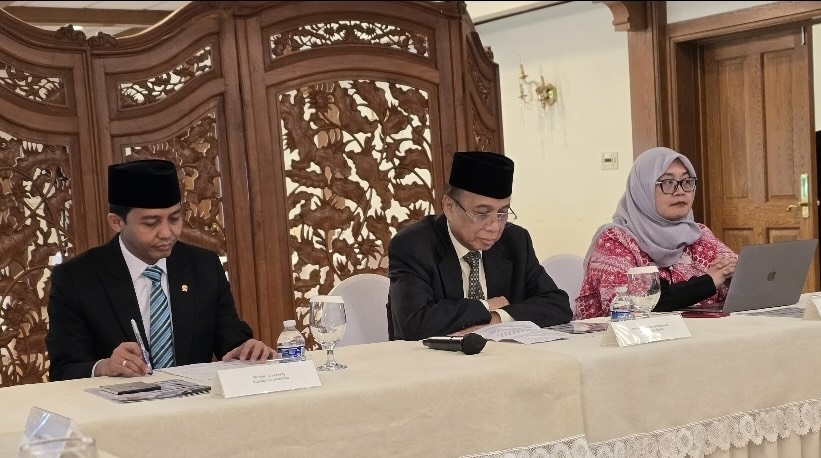
The Indonesian government, together with national forestry industry players, is strengthening trade diplomacy for sustainable forest products with the United States through a business forum entitled “Navigating U.S. Market Access for Indonesian Forest Products: Trade, Legality, and Sustainability,” held in Washington D.C., United States, on May 14, 2026. The forum brought together government officials, forestry industry associations, and businesses from both countries to discuss market opportunities, timber legality, sustainability, and strengthening the supply chain of Indonesian forest products in the global market.
The Ambassador of the Republic of Indonesia to the United States stated that trade relations between Indonesia and the United States continue to develop, including in the forestry sector, which is considered to have a strategic role in supporting economic growth and sustainable trade in both countries. He said that the United States remains one of the main markets for Indonesian forest products, ranging from plywood, pulp and paper, processed wood products, furniture, to various other value-added products.
“Indonesia continues to strengthen its position as a supplier of legal and sustainable forest products through the implementation of the Legal and Sustainable Verification System (SVLK), which is the world’s first mandatory national timber legality system,” he said. He added that global market trends are increasingly demanding transparency, traceability, and responsible supply chains, so collaboration between governments and industry is becoming increasingly important.
Meanwhile, the Director General of Sustainable Forest Management at the Ministry of Forestry, Laksmi Wijayanti, explained that Indonesia has built a national forestry governance framework that integrates legality, sustainability, traceability, and independent verification through SVLK. She said that this system continues to be strengthened in line with developments in international regulations, including the needs of the U.S. market.
According to her, SVLK is developed in line with various global policies such as the U.S. Lacey Act, the European Union Deforestation Regulation (EUDR), and forestry regulations in Japan, South Korea, and Australia. “SVLK helps buyers and importers understand the origin of products, ensure compliance, and strengthen trust in the supply chain of Indonesian forest products,” she said.
She added that Indonesia has significant potential to support global forestry trade because it has 123.9 million hectares of forest area, with about 67 million hectares of production forest. In addition, Indonesia continues to encourage the transformation of forestry business models through a multi-business approach, strengthening regenerative agroforestry, forest rehabilitation, strengthening community economies, and developing environmental services and carbon trading.
At the same event, Representative of the Indonesian Forestry Community Forum (FKMPI) Purwadi Soeprihanto said that the U.S. market still represents a strategic opportunity for Indonesian forest products. FKMPI stated that the value of Indonesia’s wood product exports to the United States in 2025 reached approximately $1.94 billion, or about 15 percent of Indonesia’s total global wood product exports.
FKMPI explained that Indonesian forest products have a complete industrial chain ranging from roundwood, plywood, pulp and paper, to furniture and other downstream products. “Indonesia is ready to respond to the needs of the U.S. market for legal and sustainable tropical timber products, including supporting the manufacturing and recreational vehicle (RV) industries in the United States,” it said at the forum.
FKMPI also highlighted the importance of strengthening cooperation between the Indonesian Government, U.S. wood industry associations, and businesses from both countries to expand market access and strengthen diplomacy for sustainable forest product trade. In addition, industry players hope that various trade barriers such as countervailing duty (CVD) and anti-dumping policies on several panel and paper products can be discussed more constructively within the framework of trade cooperation between the two countries.
The forum also received support from the Multi-Stakeholder Forestry Programme Phase 5 (MFP5), a collaboration between the Indonesian Government and the British Government that supports strengthening forestry governance, developing sustainable forestry businesses, and increasing market recognition for Indonesian forest products and services. Through technical support, capacity building, and facilitation of multi-party collaboration, MFP5 also helps strengthen the policy, institutional, and partnership foundations needed to support trade in legal, sustainable, and high-integrity forest products in the global market.
Source: jawawa.id (https://jawawa.id/newsitem/indonesia-and-the-us-strengthen-cooperation-on-legal-and-sustainable-forest-products-1780706885)
Originally published by forestinsights.id (https://forestinsights.id/indonesia-dan-as-perkuat-kerja-sama-produk-kehutanan-berbasis-legalitas-dan-keberlanjutan/), translated from Indonesian