
Indonesia and the Strengthening of UN Accountability
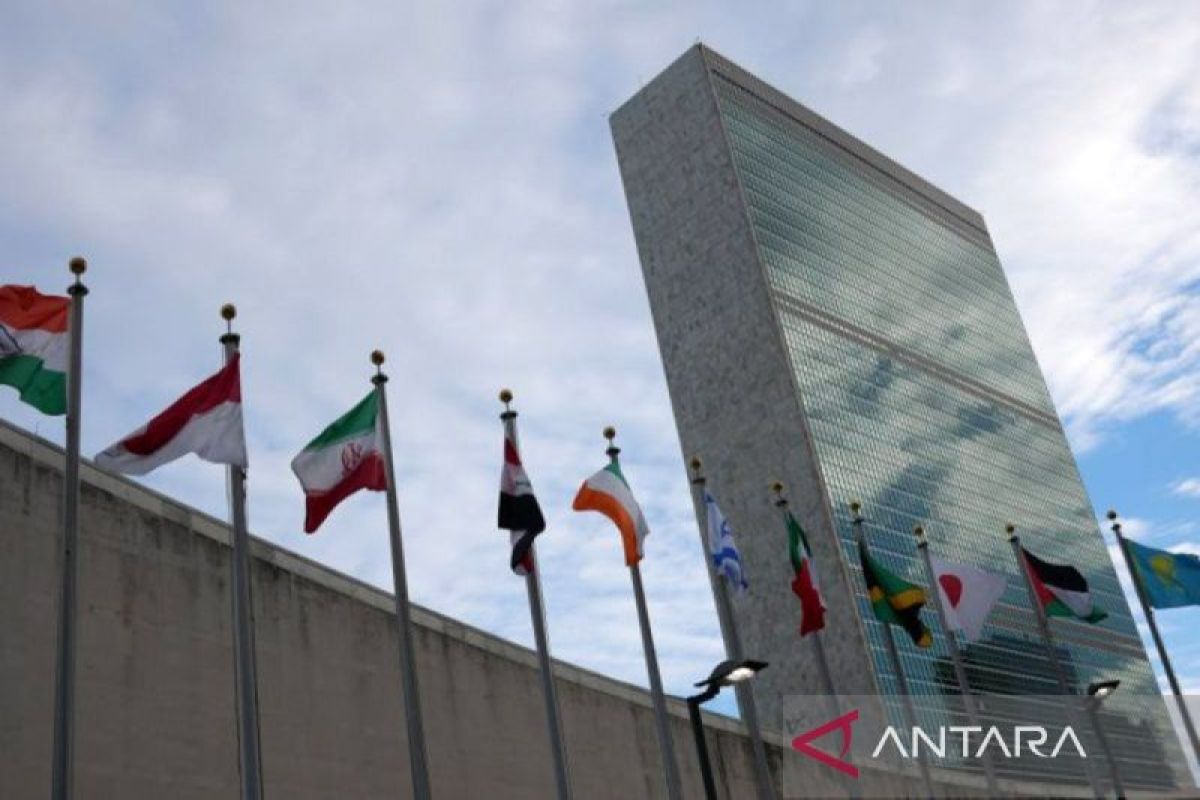
Jakarta (ANTARA) - The differing implementation rates for audit recommendations on the United Nations’ (UN) regular budget and peacekeeping operations show that improving the world organisation’s governance still requires continuous oversight.
By the 2025–2026 reporting period, 69 per cent of previous audit recommendations concerning the UN regular budget had been implemented. For peacekeeping operations, the implementation rate was only 49.3 per cent.
Data from the UN’s Independent Audit Advisory Committee (IAAC) show that following up on audit findings remains an important task.
This is one area in which Indonesia’s Supreme Audit Board (BPK) can advance improvements through its mandate as a member of the UN Board of Auditors (UN BoA) for the 2026–2032 period.
The IAAC report notes that the Board of Auditors issued an unqualified opinion on the UN Secretariat’s 2025 financial statements. However, the audit still identified internal control weaknesses and made 18 new recommendations. The peacekeeping operations audit also produced 19 new recommendations.
These findings show that fair presentation of financial statements does not automatically mean that all management systems are operating effectively. Compliance in financial reporting must be accompanied by improvements to management weaknesses, internal controls and programme delivery.
Indonesia’s Foreign Minister, Arrmanatha Nasir, emphasised the strategic importance of auditing for UN governance at a briefing for BPK auditors on 15 October 2026. He said: “One sharp finding can be more powerful than a hundred political speeches.”
Four days later, when meeting UN Secretary-General António Guterres in Jakarta, Arrmanatha affirmed that Indonesia would continue to advocate for a more accountable UN that is responsive to changing circumstances.
UN BoA audit reports provide member states with material for discussions on the UN’s budget and governance, including through the Advisory Committee on Administrative and Budgetary Questions (ACABQ) and the UN General Assembly’s Fifth Committee.
Audit findings supported by evidence can therefore be Indonesia’s contribution to improving the world organisation.
Audits with impact
BPK began its mandate as a member of the UN BoA in July 2026, after taking over the role from China’s National Audit Office on 22 July 2026.
Alongside the audit institutions of France and Brazil, BPK is part of the board collectively responsible for the external audits of various UN entities.
The allocation of assignments among board members takes into account workload distribution, links between audits, expertise, and geographical and logistical factors. BPK’s mandate does not mean that Indonesia audits every UN body independently. Its contribution depends on the quality of its audits of the entities and assignments for which it is responsible.
A total of 108 BPK auditors have been prepared to audit the financial statements and performance of the UN Secretariat and five entities: the UN Office for Project Services (UNOPS), the UN Relief and Works Agency for Palestine Refugees (UNRWA), the UN Environment Programme (UNEP), the UN Human Settlements Programme (UN-Habitat), and the International Trade Centre (ITC).
The scope of the audits also includes peacekeeping operations.
For the audit of the United Nations Peacekeeping Operations (UNPKO) financial statements and performance for the 2025/2026 financial year, BPK was assigned five missions: MINUSCA in the Central African Republic, UNSOS in Somalia, UNISFA in Abyei, UNDOF in the Golan Heights, and MINURSO in Western Sahara.
Bahtiar Arif, Director-General of BPK’s State Financial Audit VIII and International Organisations, said the audit covers both financial and performance aspects. The performance audit focuses on the effectiveness of contingency planning and performance monitoring systems in peacekeeping operations.
The need to follow up on audit recommendations is evident in the IAAC report covering 1 August 2025 to 31 July 2026. Of the 73 outstanding audit recommendations for peacekeeping operations, 36, or 49.3 per cent, had been fully implemented.
Another 36 recommendations were still in progress, while one was deemed no longer relevant. The implementation rate was up from 26 per cent in 2023/2024.
This improvement is worth noting, but work remains. Of the 36 recommendations still in progress, 17 had been outstanding for two years or more. This shows that follow-up requires continued attention to prevent management weaknesses from recurring.
Spending on peacekeeping missions should not be assessed solely on whether financial records are accurate. The management of resources must also support operational readiness, the ability to respond to emergencies and the fulfilment of mission mandates. Audits can identify both what is working well and what needs to improve.
Completing recommendations
The value of an audit does not end with the publication of a report. Recommendations must be implemented and monitored until the audited institution provides evidence of improvement. IAAC data show that progress in follow-up needs to be sustained and delayed recommendations require attention.
BPK’s experience auditing international organisations can serve as a foundation. Kusuma Ayu Rusnasanti, Director of BPK’s International Organisations Audit Directorate, said its audit of the International Maritime Organization (IMO) resulted in recommendations on accounting policies, procurement and human resources.
BPK also identified areas for improvement in risk management, investment management and liquidity monitoring.
BPK recorded recommendation completion rates of 78 per cent at the IMO and 88 per cent at the World Intellectual Property Organization (WIPO). These figures reflect BPK’s experience in following up recommendations at two international organisations.
However, the rates cannot be directly compared with implementation of UN BoA recommendations, as the entities, audit periods and scope of recommendations differ.
That experience can provide lessons for carrying out the UN mandate. Recommendations should be specific, supported by evidence and geared towards measurable improvements. Regular monitoring is also needed to ensure that recommendations do not remain mere entries in audit reports.
Coordination between BPK and Indonesia’s Foreign Ministry could help the country understand the dynamics of UN budget discussions and reform. Audit results produced through a professional process can inform evidence-based diplomacy in multilateral forums. Such coordination must, however, preserve the independence of the audit.
Auditors’ assessments must be based on evidence and auditing standards, not short-term diplomatic interests.
BPK’s mandate through 2032 gives Indonesia the opportunity to help strengthen UN accountability through financial and performance audits. Success should be measured by the quality of findings, the practicality of recommendations and tangible improvements at audited entities.
This contribution can strengthen Indonesia’s position in global governance through concrete work.
Indonesia’s influence should be measured not only by its membership of international bodies, but also by its ability to deliver audit results that help member states ensure the UN budget is used effectively and responsibly.
Source: jawawa.id (https://jawawa.id/newsitem/indonesia-and-the-strengthening-of-un-accountability-1793707100)
Originally published by Antara (Indonesian) (https://www.antaranews.com/berita/5829255/indonesia-dan-penguatan-akuntabilitas-pbb), translated from Indonesian