
Indonesia and the Netherlands Agree to Repatriate More Than 30,000 Historic Artefacts
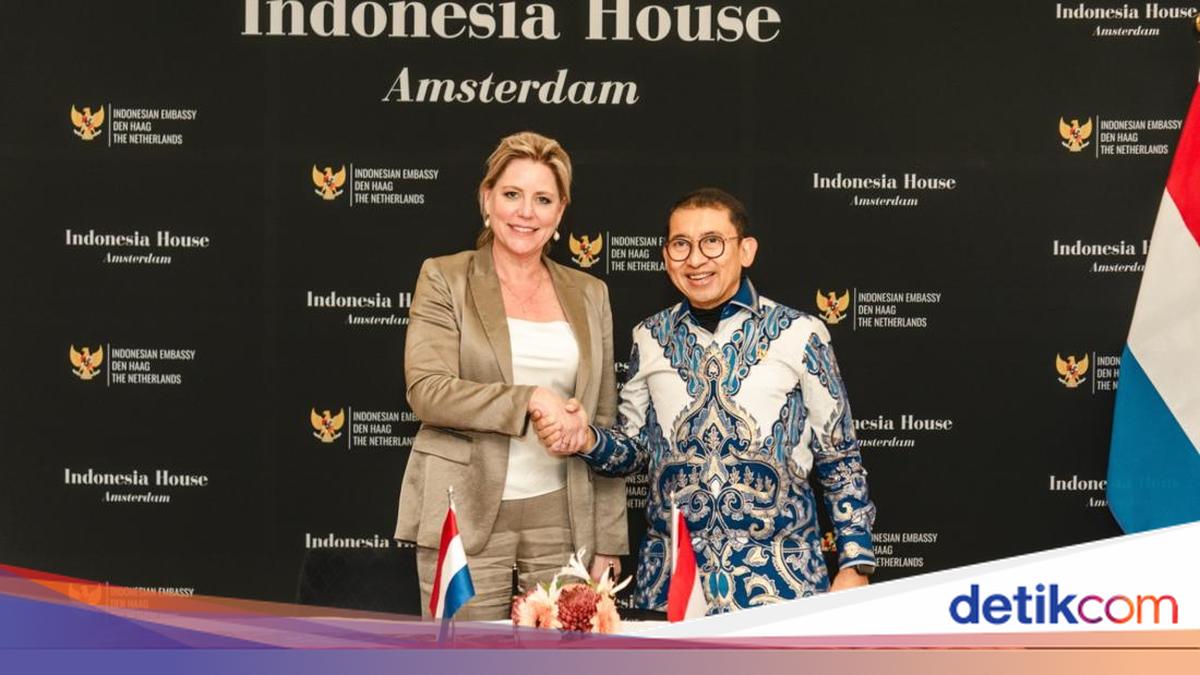
Indonesia has secured the return from the Netherlands of 30,190 items from the Eugène Dubois Collection and 20 historic cultural objects, under two Transfer Agreements signed by Indonesian Culture Minister Fadli Zon and Dutch Education, Culture and Science Minister Rianne Letschert at Indonesia House Amsterdam on Friday (9 October).
The achievement is one of the largest in Indonesia’s repatriation history and underscores the two countries’ commitment to cooperation on restitution and repatriation, as well as to strengthening scientific and cultural collaboration on an equal footing.
“This repatriation agreement between Indonesia and the Netherlands affirms historical justice, the restoration of cultural sovereignty, and recognition of the dignity and cultural identity of the Indonesian nation,” Fadli Zon said in a written statement on Saturday (10 October 2026).
Fadli said the return of the Dubois Collection, linked to the discovery of the ancient human Homo erectus (Java Man) in the Nusantara region 135 years ago, is the largest repatriation in Indonesia’s history.
“This is the largest repatriation in Indonesia’s history and one of the most significant repatriation milestones in the world, both in terms of quantity and the quality and scientific value of the collection. The Dubois Collection has great scientific and historical importance, while affirming Indonesia’s place in the history of human evolution and global palaeoanthropological research,” he said.
On 17 December 2025, the Indonesian Ministry of Culture formally received the first four items from the Dubois Collection: a skullcap, molar, and thigh bone of Homo erectus, as well as an engraved shell. They are now on display at the National Museum of Indonesia.
The first agreement signed by the two ministers continues the repatriation process with the second-stage return of 30,190 items from the Dubois Collection. This comprises 29,763 objects and 427 ancestral remains from the Naturalis Biodiversity Center in Leiden, the Netherlands.
The second agreement secures the return of 20 Indonesian cultural objects from seven collection groups:
The Banjarmasin Diamond (one object), a diamond weighing about 38 carats that was part of the regalia of the Sultanate of Banjarmasin and has been held at the Rijksmuseum;
The Sikin Panjang sword (one object), a traditional Acehnese weapon associated with resistance to colonialism, from the Rijksmuseum;
A Qur’an manuscript (one object) associated with Teuku Umar and his family circle, from the Wereldmuseum;
Four manuscripts from the Sultanate of Aceh, including texts documenting its intellectual, religious and political history, from the Wereldmuseum;
Six Wayang Beber scrolls, relics of Javanese storytelling and performance traditions with significant cultural and spiritual value, from the Wereldmuseum;
One tomb panel from the Sultanate of Aceh, a historic artefact associated with Acehnese royal burial traditions, from the Wereldmuseum; and
Six Aceh stone gravestones, examples of calligraphic art and Islamic burial traditions in Aceh, from the Wereldmuseum.
The return of the cultural objects follows a series of intensive discussions and negotiations between the Indonesian Repatriation Team for Cultural Advancement Objects and Indonesian Cultural Heritage Overseas, established by the Ministry of Culture, and the Netherlands’ Colonial Collections Committee (CCC).
The process was supported by in-depth provenance research, examination of historical evidence and ongoing dialogue between the two sides. The CCC concluded that the 20 artefacts had been taken involuntarily and should be returned to Indonesia as a means of restoring historical justice.
“Each artefact represents an important part of the history of Nusantara civilisation, including the struggle to defend sovereignty, Islamic scholarship, the arts and the spiritual life of Indonesian communities. These historic objects also embody our nation’s memory, identity and dignity, and deserve to be remembered, understood and shared again with the Indonesian people,” Fadli said.
From 1975 to 2025, more than 2,300 Indonesian cultural objects were returned from the Netherlands through diplomatic efforts, research and intergovernmental agreements. The two latest agreements bring the total number of Indonesian heritage items returned from the Netherlands to more than 32,500.
“This achievement reflects Indonesia’s long and sustained efforts, strengthened through constructive cooperation with the Netherlands, in-depth research and growing recognition of historical responsibility,” Fadli said.
Letschert also reaffirmed the Dutch Government’s commitment to addressing historical injustice by returning Indonesian cultural objects acquired in a colonial context.
“These objects should never have been in the Netherlands. What is proven not to belong to us, we will return. Now we are correcting that injustice,” Letschert said.
She added that the success of repatriation between Indonesia and the Netherlands could serve as a model for other countries seeking to resolve issues relating to colonial cultural heritage through provenance research and equal cooperation.
Meanwhile, CCC chair Lilian Gonçalves-Ho Kang You said the decision to return the 20 cultural objects was based on provenance research that revealed injustice in the colonial context.
“The committee concluded that the ownership of all 20 cultural objects was lost involuntarily,” Lilian said.
She cited the Banjarmasin Diamond, once worn as a symbol of the Sultan of Banjarmasin’s status and power, which passed into Dutch hands under colonial pressure.
“The document recording the diamond’s acquisition even uses the term ‘Report of Confiscation’, which clearly indicates that it was seized,” Lilian said.
Lilian also highlighted the Acehnese tomb panel’s connection to an important burial ground of the Sultanate’s family, the Qur’an manuscript associated with Teuku Umar containing handwritten notes on how it should be read, and the Wayang Beber scrolls as part of Javanese performance and ritual traditions.
“Today, we acknowledge that history and take steps to correct the injustice that occurred,” Lilian said.
Fadli Zon said the repatriation of cultural heritage forms part of the mandate of Article 32 of the 1945 Constitution to advance Indonesian national culture within global civilisation.
He said the return of cultural objects was important for restoring history and national identity, as well as strengthening Indonesia-Netherlands diplomatic relations on the basis of mutual respect, equality and a shared commitment to justice.
“We cannot change the events of the past. But we have a responsibility to face their consequences with honesty, wisdom and a commitment to justice,” he said.
Fadli added that the return of historic objects was not merely a matter of physically moving them, but an important symbol in restoring relations between the two countries.
“We do not intend to reopen the wounds of the past. We want to heal them. Reconciliation requires concrete action, mutual respect and a shared determination to build a better future,” he said.
Fadli said Indonesia’s responsibility did not end with the successful repatriation. The Ministry of Culture is committed to managing the heritage according to three principles: Care, Research and Educate.
The two agreements were signed at Indonesia House Amsterdam and attended by Indonesia’s Ambassador to the Netherlands, L. Amrih Jinangkung; Ambassador Daniël Stork; CCC chair Lilian Gonçalves-Ho Kang You; and Director-General for Cultural Diplomacy, Promotion and Cooperation Endah Retnoastuti.
Also present were expert staff member for the cultural economy and industry Anindita Kusuma Listya, Cultural Cooperation Director Mardisontori, Indonesian Repatriation Team members Professor Oman Fathurrahman and Dr Suryadi, and representatives of the Rijksmuseum, Wereldmuseum, Naturalis Biodiversity Center and relevant institutions from both countries.
Source: jawawa.id (https://jawawa.id/newsitem/indonesia-and-the-netherlands-agree-to-repatriate-more-than-30-000-historic-artefacts-1791647496)
Originally published by detikcom (https://news.detik.com/berita/d-8701417/indonesia-dan-belanda-sepakati-repatriasi-30-ribu-lebih-benda-bersejarah), translated from Indonesian