
Indonesia and the Board of Peace: Stay, Change It or Leave?
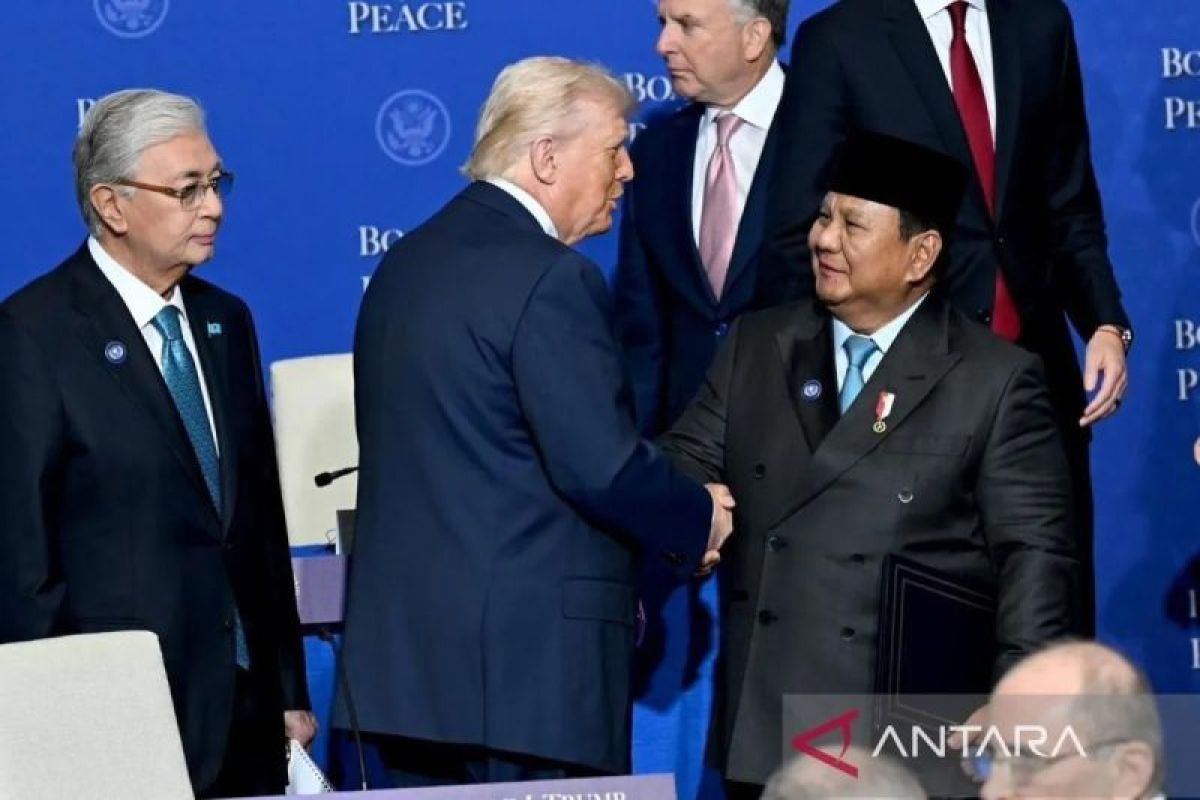
Jakarta (ANTARA) – Francesca Albanese, the United Nations Special Rapporteur on human rights in the Palestinian territories, has urged Indonesia to reconsider its participation in the Board of Peace (BoP), established by US President Donald Trump.
In an interview with Reuters on 22 October 2026, Albanese warned that Indonesia’s involvement risked normalising a mechanism she regarded as abnormal, particularly because Israel and the US have dominant roles in determining Palestine’s future, while the Palestinian people are not adequately represented.
Albanese therefore suggested that Indonesia should turn its attention to The Hague Group, a coalition of countries coordinating legal and diplomatic measures to hold Israel accountable for alleged violations of international law in the Palestinian territories.
Through this route, support for Palestine would go beyond political statements and be translated into concrete policies, from restricting arms shipments to reviewing economic ties that could help sustain Israel’s occupation.
Albanese’s recommendation deserves consideration, but for the Indonesian government the issue appears more complex than simply accepting or rejecting it.
Indonesia has already decided to join the BoP and has expressed its willingness to contribute to the International Stabilization Force (ISF) in Gaza.
Indonesia’s Ministry of Foreign Affairs has said discussions on both mechanisms remain suspended, taking account of developments in regional security.
This suspension could provide an opportunity to assess whether Indonesia’s involvement in the BoP can still benefit the Palestinian cause.
Political support
For years, Indonesian diplomacy, alongside that of various countries and international organisations, has secured political support for Palestine, but has not yet been able to end Israel’s occupation or bring about Palestinian independence.
UN resolutions, statements by the Organisation of Islamic Cooperation (OIC) and repeated international condemnations have not been enough to change Israel’s political and security calculations.
In this context, joining the BoP is seen as offering a different possibility: involving Indonesia in a mechanism with direct access to Washington, a country with considerable influence over Israel.
Broto Wardoyo, an international relations scholar at the University of Indonesia, outlined Indonesia’s diplomatic dilemma over Palestine in an analysis published by Singapore’s S. Rajaratnam School of International Studies (RSIS) on 9 October 2026. He framed it in terms of two concepts: legitimacy and leverage.
Indonesia, he said, has long had a strong foundation of international legitimacy in its defence of Palestine, but has lacked sufficient leverage to change Israel’s behaviour.
Multilateral mechanisms such as the UN have international legitimacy, but often face limits in enforcing their decisions.
The BoP, by contrast, has a legitimacy problem, particularly over Palestinian representation, but may offer leverage through US influence over Israel.
In other words, through the BoP, Indonesia hopes to gain more tangible influence over the conflict by using access to a party with substantial bargaining power.
The question, then, is whether that hope can be realised. This matters in light of the BoP’s mandate. On 17 November 2025, the UN Security Council, through Resolution 2803, welcomed the establishment of the BoP as an international transitional administration to coordinate Gaza’s reconstruction.
The mechanism also includes the creation of a Palestinian technocratic committee to manage civil administration and the deployment of the International Stabilization Force.
The resolution also referred to the possibility of a pathway towards self-determination and the establishment of a Palestinian state, following reforms to the Palestinian Authority and progress in Gaza’s reconstruction.
The BoP’s mandate, then, is not entirely separate from the goal of Palestinian independence. The real issue is how that mandate is implemented and who determines its direction.
A BoP report to the UN Security Council in May 2026 said the body had 28 member states, including Indonesia and Israel.
Gaza’s administration, meanwhile, is intended to be run by the National Committee for the Administration of Gaza (NCAG), a Palestinian technocratic committee.
The committee’s existence is certainly important. But civil administration is not the same as political sovereignty. Managing hospitals, schools, electricity and public services is not equivalent to having the authority to determine the future of one’s own territory.
Palestine needs more than a technical administration operating under international supervision.
Another concern is the BoP’s dependence on Trump’s leadership and considerable influence. His term as US president is due to end in January 2029, raising questions about the institution’s continuity.
If Trump is no longer in power, will the next US administration maintain the same commitment? Will member states still have an interest in continuing the BoP if Washington’s priorities change after Trump?
Shared interests
In international relations, an institution’s continuity depends on more than a jointly signed charter and a complete organisational structure.
It also requires agreement on shared interests among member states. Indonesia must therefore not make the future of its diplomacy on Palestine dependent on the political commitment of a single president.
Indonesia currently faces at least three options regarding the BoP.
First, it could remain involved and try to influence the BoP’s policies from within. This would provide direct access to decision-making, allowing Indonesia to press for Gaza’s reconstruction to remain linked to a political settlement for Palestine.
However, access does not automatically translate into influence. If strategic decisions continue to be made by a handful of more powerful countries, Indonesia risks becoming merely a participant lending political support without being able to significantly alter the policy direction.
Second, Indonesia could maintain its involvement while pushing for changes to the BoP’s mandate and governance. This would require the government to do more than express support for Palestine: it would need to advocate Palestinian political representation in decision-making, a clear transfer of authority to the Palestinian Authority, and an explicit link between Gaza’s reconstruction and the establishment of a sovereign Palestinian state.
Indonesia should also press for transparency over the BoP’s powers, the time limit for the transitional administration, funding sources and accountability for the implementation of its mandate.
Without such changes, Gaza’s reconstruction risks becoming a development project that leaves unresolved the political issues underlying the destruction of Gaza.
Third, Indonesia could withdraw if the BoP showed no willingness to reform its mechanisms and no longer aligned with the goal of Palestinian independence.
Withdrawal would have consequences. Indonesia would lose direct access to the body and could have fewer opportunities to influence policy from within.
But membership also carries a political cost if Indonesia’s presence is seen as support for a mechanism that disregards the Palestinian people’s political rights.
The decision to remain or leave should therefore be based on an assessment of tangible results, not merely on the desire to maintain relations with the US or on pressure from public opinion.
Indonesia’s own experience could provide a basis for setting limits on its participation in the BoP. On 14 February 2026, the Ministry of Foreign Affairs announced several national caveats that would have to be observed if Indonesian personnel were sent to the International Stabilization Force in Gaza.
The caveats specify that Indonesian personnel would carry out only non-combat and non-demilitarisation duties. These would include protecting civilians, providing humanitarian and medical assistance, supporting reconstruction, and training and strengthening the capacity of the Palestinian police.
The deployment would also require the consent of the Palestinian authorities. Its area of operation would be limited to Gaza, and it would have to respect Palestinian sovereignty and the people’s right to self-determination. Indonesia also rejects demographic change and the forced displacement of Palestinians.
Importantly, the Indonesian government has said that participation could be halted if the mission deviated from the national caveats or was inconsistent with Indonesia’s foreign policy.
Although the national caveats specifically govern Indonesia’s possible deployment of personnel to the International Stabilization Force, the principles behind them should also guide an assessment of Indonesia’s participation in the BoP.
Indonesia’s involvement should therefore be judged not only by the diplomatic access it secures, but also by the extent to which the mechanism respects the sovereignty and political rights of the Palestinian people.
Indonesia’s capabilities and position
The future of the BoP and the future of Palestine cannot be separated from Indonesia’s ability to determine its own diplomatic position.
Indonesia does not have to leave every forum with shortcomings, but nor should it maintain membership simply because it has already joined.
Diplomacy is not about remaining in a forum for as long as possible. What matters more is ensuring that participation produces results for the people whose cause it is intended to advance.
Source: jawawa.id (https://jawawa.id/newsitem/indonesia-and-the-board-of-peace-stay-change-it-or-leave-1793591509)
Originally published by Antara (Indonesian) (https://www.antaranews.com/berita/5825603/indonesia-dan-bop-bertahan-mengubah-atau-meninggalkannya), translated from Indonesian