
Indonesia and South Korea still discussing next phase of KF-21 project
Indonesia and South Korea are still discussing the form of continued cooperation on the KF-21 project after completing the joint development phase of the fighter jet, according to Uhm Taeho, Political Section Chief and Counsellor at the South Korean Embassy in Indonesia.
He said discussions on the next stage are still ongoing between the two countries, including regarding the form of cooperation to be pursued.
“However, we are in discussions about the specific form of the next stage of cooperation. So, I would not call it a change because no decision has been announced to date,” Uhm said at the Indonesian Next Generation Journalist Network on Korea (IKJN) workshop in Jakarta on Wednesday.
The statement responded to developments regarding the continuation of KF-21 cooperation, including information that Indonesia would not be involved in joint production of the KF-21 and would obtain the aircraft through a direct purchase scheme from South Korea.
Uhm said Indonesia and South Korea are now engaged in intensive discussions to bring the two countries’ defence cooperation to the next stage.
“We are in the process of very close discussions between Indonesia and Korea, between the defence ministries and foreign ministries of both countries, to deepen and bring our cooperation to the next stage,” he said at the event organised by the Foreign Policy Community of Indonesia (FPCI) and the Korea Foundation.
According to him, the discussions cannot yet be announced specifically because large-scale defence cooperation projects are influenced by economic conditions as well as domestic and international situations.
Uhm assessed that the completion of the KF-21 development phase is an important success for Indonesia-South Korea defence relations, even though the project faced a number of obstacles.
However, according to him, the two countries managed to overcome these obstacles through mutual agreement and adjustments to project terms.
Uhm stressed that the various obstacles that occurred in the project will not hinder future defence cooperation between Indonesia and South Korea.
He instead assessed that the experience of resolving various issues in the KF-21 project has become important capital for building trust between the two countries.
On the same occasion, Vahd Nabyl Achmad Mulachela, Head of the Centre for Asia Pacific and Africa Regional Policy Strategy at Indonesia’s Ministry of Foreign Affairs, said Indonesia and South Korea have completed the KF-21 development cooperation.
He acknowledged that the cooperation journey involved a number of dynamics, including shifts in each country’s priorities.
“After the signing of the joint cooperation agreement, a number of things emerged both in Indonesia and South Korea. The priorities of both countries may have shifted during the process,” he said.
However, according to Vahd, the two countries ultimately succeeded in achieving the main objective of the cooperation.
“The most important thing is that we finally achieved the final goal. This year, we completed the joint cooperation and development of the KF-21,” he said.
The KF-21/IF-X development cooperation began in 2015 and became one of the strategic projects in Indonesia-South Korea defence industry cooperation, with total development costs reported to have reached 8.8 trillion South Korean won.
Through a joint development scheme and shared financing contributions, Indonesia served as a partner in the development of the fighter jet while also gaining benefits in the form of technology transfer and human resource capacity building in the defence industry sector.
Indonesia’s involvement in the KF-21 project is considered strategic because it provides access to fighter jet technology development that has been relatively difficult to obtain.
The cooperation faced issues related to Indonesia’s funding contributions as well as alleged leaks of sensitive data by Indonesian technicians involved in the project.
Nevertheless, the two countries subsequently renegotiated and continued the project until the development phase was completed.
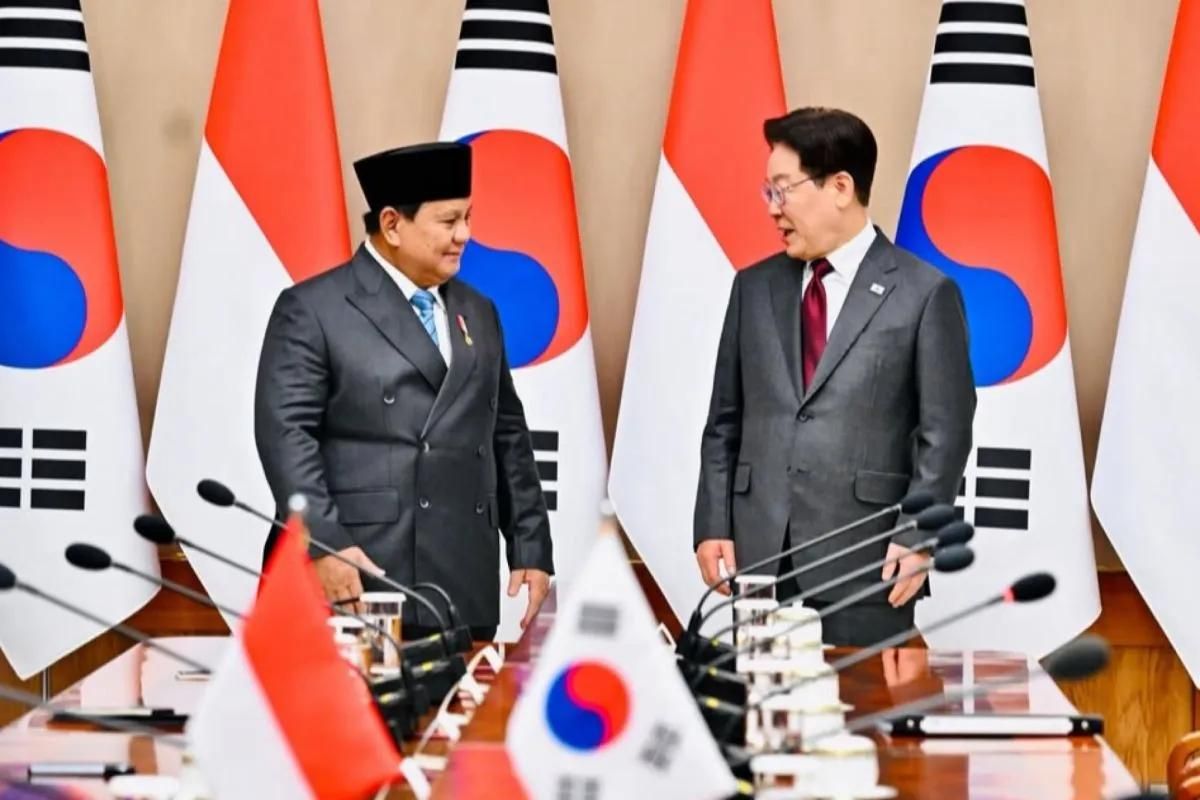
Defence cooperation was also one of the points in the Joint Statement on the Establishment of a Special Comprehensive Strategic Partnership between the Republic of Korea and the Republic of Indonesia resulting from the meeting between President Prabowo Subianto and South Korean President Lee Jae Myung in April 2026.
In the joint statement, the two leaders expressed commitment to cooperation in the IF-X production project as well as progress in other defence industry cooperation.
However, the Ministry of Defence stated in June 2026 that Indonesia was not involved in joint production of the KF-21 with South Korea and would obtain the aircraft through a direct purchase scheme from the South Korean government.