
Indonesia and South Korea Discuss Strategic Partnership to Strengthen Halal Certification System
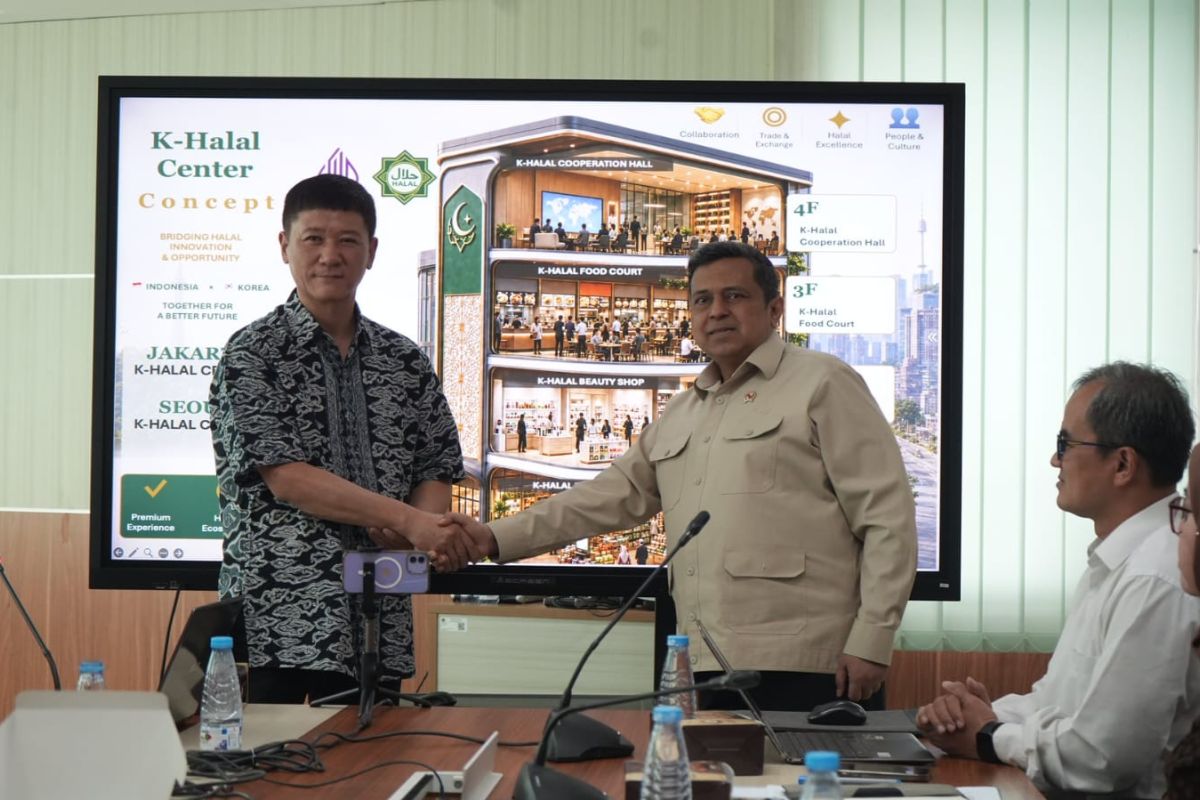
Indonesia and South Korea have discussed a strategic partnership aimed at strengthening the halal certification system, increasing institutional capacity, and supporting safer, more reliable, and globally competitive trade in halal products. The discussion on cooperation in halal product assurance technology and digital-based halal logistics development was conducted by the Halal Product Assurance Agency (BPJPH) together with the Korea Agency of HACCP Accreditation and Services (KAHAS), the Korea Halal Certification Center (KHCC), GL Halal Center (GLHAC), and representatives of South Korean industry. BPJPH Head Ahmad Haikal Hasan stated that strengthening technology is a crucial factor in implementing halal product assurance. He noted that digital innovation can be utilised not only to improve the effectiveness of the halal certification system but also to ensure the integrity of halal products throughout the supply chain through the development of halal logistics. ‘Collaboration in the field of technology is excellent. Besides leveraging digital innovation, we can also expand cooperation on developing halal logistics. Thus, the halal integrity of products can be maintained from the production process, storage, to distribution to consumers,’ Haikal explained. He added that halal logistics is an important aspect of the halal ecosystem because it ensures halal products are protected from potential contamination during storage, transportation, and distribution. Strengthening this aspect is considered increasingly strategic amid the rise in cross-border halal product trade, which demands a more effective and documented supervision system. Meanwhile, Korea Halal Certification Center (KHCC) Director Seo Yeon Beom presented various technological innovations to support the food safety assurance system. One such innovation is the application of SMART HACCP, a digital technology-based food safety management system capable of conducting more effective analysis and control of Critical Control Points (CCP). The system is supported by sensor technology that enables real-time and more accurate monitoring, thereby enhancing food safety assurance. According to Seo, this approach also has the potential to support the implementation of halal logistics, which is an important requirement in the global halal product trade. He also explained that the development of the halal system in Korea is not only oriented towards fulfilling halal requirements but also prioritises consumer protection. ‘The concept of halal products also includes consumer protection. Halal means products that are clean, safe, and trustworthy,’ Seo said.