
Indonesia and Saudi Arabia Strengthen Cultural Cooperation
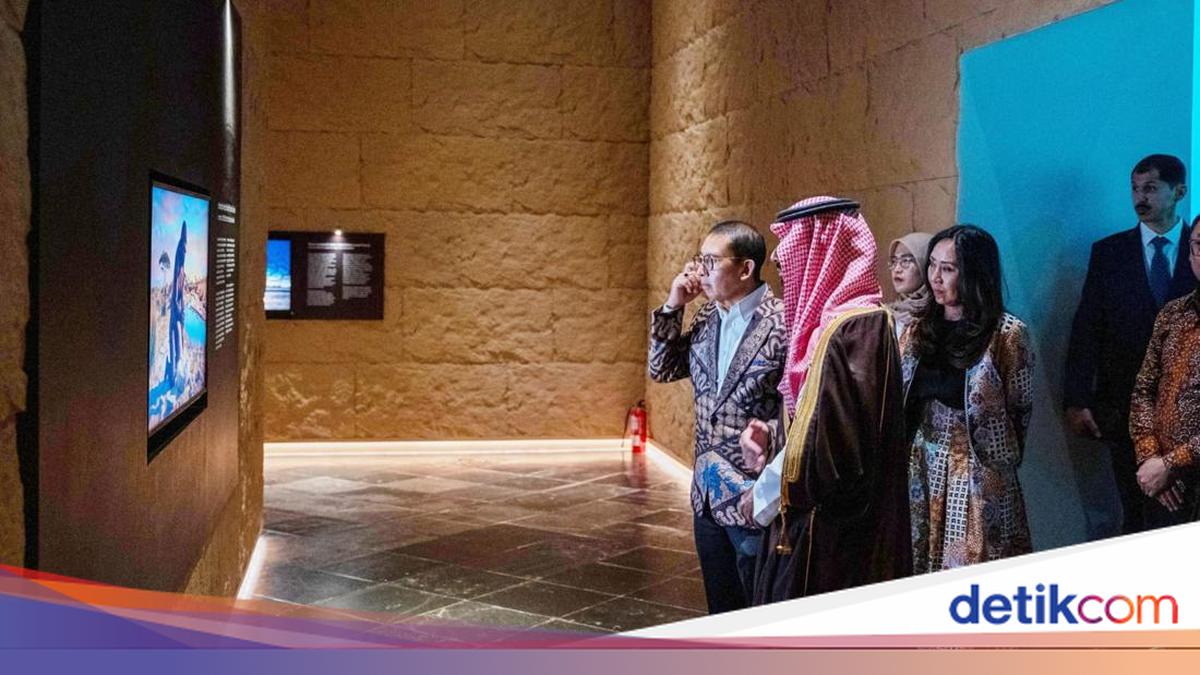
Indonesia’s Ministry of Culture (Kemenbud) received a visit from the Minister of Culture of the Kingdom of Saudi Arabia, His Royal Highness Prince Bader bin Abdullah bin Farhan Al Saud. The meeting, held at the Kemenbud office in Jakarta, serves as a significant opportunity to further enhance synergy between the two countries, particularly in advancing cultural development.
The meeting reaffirms the shared vision of Indonesia and Saudi Arabia in prioritising culture as a key element of national development. Saudi Arabia established its Ministry of Culture in 2018, positioning culture at the core of its national transformation, while Indonesia formed its own dedicated Ministry of Culture in 2024.
Indonesia’s Minister of Culture, Fadli Zon, emphasised that culture plays a strategic role as soft power and a unifying force amid the current challenging global dynamics.
He noted that the 76-year relationship between Indonesia and the Kingdom of Saudi Arabia is not only built on formal diplomatic cooperation but is also deeply rooted in cultural closeness and shared values. Fadli Zon also highlighted Indonesia’s cultural richness.
“Indonesia is a megadiverse nation; this diversity reflects a living cultural strength that continues to evolve from generation to generation,” explained Fadli Zon in his statement on Tuesday (14/4/2026).
The governments of the Republic of Indonesia and the Kingdom of Saudi Arabia, through their respective Ministries of Culture, are promoting strengthened partnerships via several priority agendas, including: (1) cooperation on Intangible Cultural Heritage (ICH) at UNESCO; (2) enhanced museum collaboration; and (3) bolstering the creative economy through film, literature, music, fashion, and residencies.
Prince Bader bin Abdullah bin Farhan Al Saud expressed his commitment to expanding cultural cooperation. He stated that his side is open to all ideas and collaboration opportunities that can be developed together. Moving forward, such opportunities can be explored more comprehensively and meaningfully.
The meeting also addressed global-level cooperation through UNESCO, particularly regarding the extension of the Intangible Cultural Heritage element Arabic Calligraphy: Knowledge, Skills, and Practices, which involves Saudi Arabia. Indonesia has submitted an official request through diplomatic channels (Note Verbale) and hopes for Saudi Arabia’s support as one of the element’s countries.
In the field of museum management and cultural heritage, both countries see significant opportunities to expand cooperation, including in conservation, curatorial exchanges, digitisation of collections, joint exhibitions, and capacity building for human resources. Indonesia also welcomes collaboration opportunities with Saudi Arabia’s new initiatives, such as the development of archaeological sites.
In the creative economy sector, particularly filmmaking, both countries identify substantial potential for expanding collaboration through co-productions highlighting historically relevant themes for both nations, talent exchanges, and strengthening industry networks. Indonesia’s film industry currently demonstrates significant growth with a strong domestic market share, while opening investment opportunities, including in cinema infrastructure development.
Indonesia-Saudi Arabia cooperation also encompasses strengthening crafts, fashion, and literature, including enhancing artist residency programmes, cultural exchanges, and developing tradition-based creative industries. Indonesia views its rich crafts as having great potential for development through international collaboration.
The Kingdom of Saudi Arabia’s government also has serious attention to museum, film, and craft development. It has engaged in communications with several institutions in Indonesia, including the National Museum of Indonesia, to explore long-term cooperation, such as collection loans and joint exhibitions.
It is known that the filmmaking industry is one of the rapidly growing sectors in Saudi Arabia. Private sector involvement continues to increase, significantly driven by various incentive schemes.
In the crafts sector, Saudi Arabia encourages broader participation from Indonesia, not only showcasing works but also creating added value and wider collaboration opportunities within the creative economy ecosystem.
In the field of literature, Saudi Arabia is currently developing standardisation of the Arabic language through the King Salman Language Center and has shown interest in exploring cooperation potential in translation and adaptation of literary works between Indonesian and Arabic languages.
During the series of meetings, the Saudi Arabian Minister also visited the National Museum of Indonesia in Jakarta. Both ministers reviewed several exhibition spaces displaying outstanding cultural heritage collections as representations of the archipelago’s historical and civilisational richness, including the Early History Exhibition, which presents the narrative of the Nusantara journey from geological evolution to prehistoric human life, and the Misykat Exhibition, which highlights the early traces of Islam in Indonesia in the 7th century.
After the National Museum review, both ministers also visited the National Gallery of Indonesia. The visit served as an important moment to introduce Indonesian art history to the state guest.
Fadli Zon, along with the Saudi Arabian delegation, reviewed several exhibition spaces, such as the Indonesian Women Artists #4 on the Map: Art, Science, Technology, and Culture exhibition, which features the contemporary art landscape by 12 Indonesian women emphasising themes of art, science, and technology.
Additionally, they visited the permanent collection exhibitions of the National Gallery of Indonesia, including viewing paintings by Raden Saleh and Affandi, which represent Indonesia’s cultural treasures as well as the journey of Nusantara’s fine arts history.
Through this meeting, both countries agreed to follow up on the various cooperation opportunities discussed, including further development of partnerships.