
Indonesia and Neighbours on Alert: Malacca Strait Threat Emerges Like Hormuz
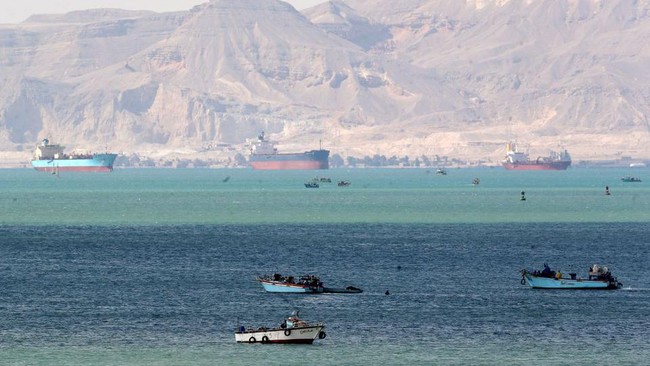
Energy investor concerns are beginning to shift from the Middle East to Southeast Asia following the emergence of a proposal to impose levies on strategic shipping lanes. After Iran proposed a management scheme for the Strait of Hormuz with Oman, market players are now scrutinising the possibility of a similar scenario occurring in the Strait of Malacca, one of the world’s key oil trade arteries.
Rystad Energy’s Vice President of Commodity Markets, Janiv Shah, stated that some investors are becoming uneasy because a levy in the Strait of Hormuz could set a precedent for other strategic shipping lanes. “If we look at the potential levy in the Strait of Hormuz, something similar could be applied elsewhere. In terms of trade volume, the Strait of Malacca is the most important location,” he said.
The concerns arose after Iran and Oman, which flank the Strait of Hormuz, reportedly submitted a proposal to the United States to jointly manage the maritime corridor, including charging administrative fees for passing vessels. In a memorandum of understanding agreed last month, ships were guaranteed safe passage for 60 days, while a long-term management scheme would be discussed further with the Persian Gulf states in accordance with international law.
The Strait of Hormuz is a vital route through which approximately 20% of the world’s oil trade passes. The discourse on imposing fees in the area immediately sparked fears that a similar model could be applied to other strategic shipping points, especially the Strait of Malacca.
According to the US Energy Information Administration, the Strait of Malacca accounted for about 29% of total seaborne oil trade flows in the first half of 2025. More than 70% of the volume passing through is crude oil, with the remainder being refined oil products. Stretching approximately 900 kilometres, the Strait of Malacca is the shortest sea route connecting East Asia with the Middle East and Europe. The waterway borders Indonesia, Malaysia, Singapore, and Thailand, giving it a crucial role in global trade.
Nevertheless, Shah assessed that implementing a levy in the Strait of Malacca would not be easy. “The mechanism is certainly still difficult to explain, but if it were truly implemented, the process would likely take a long time given the large volume of trade passing through the route,” he said.
Several maritime experts also consider the likelihood of tariffs being applied in the Strait of Malacca to be very small. Lowy Institute Southeast Asia Programme Director Hunter Marston said the Strait of Malacca is indeed a strategic chokepoint, but it is not a conflict zone. “Institutions are an important factor,” he said, referring to the Malacca Strait Patrol cooperation run by Indonesia, Malaysia, Singapore, and Thailand to maintain the security of the shipping lane. According to him, this mechanism benefits all countries while ensuring the smooth flow of global trade.
A similar view was expressed by analysts at the Center for Strategic and International Studies in Washington. In an analysis published on 1 July, they noted that Iran’s move in the Strait of Hormuz shows that controlling strategic maritime points can increase a country’s bargaining power. They warned that concerns are now spreading to the Strait of Malacca and the Taiwan Strait, two of Asia’s most important shipping lanes. “Iran’s efforts to control and charge fees in the Strait of Hormuz have revived fears that other countries could try to do the same with the Strait of Malacca. If one of these two major straits is disrupted, alternative routes are available, but the costs would be far more expensive,” the CSIS analysts wrote.