
Indonesia and Japan Strengthen Biochar Collaboration to Unlock Agricultural Carbon Credit Opportunities
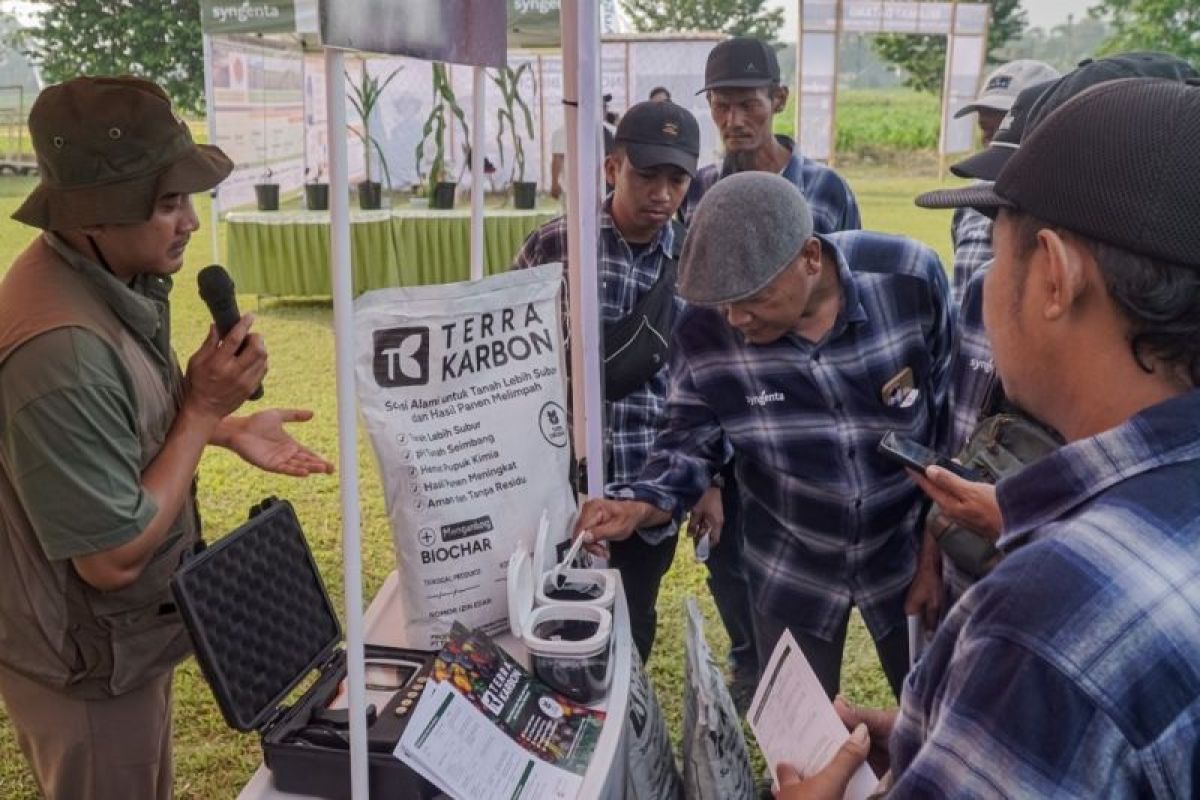
Jakarta (ANTARA) - Indonesia and Japan are strengthening collaboration to develop regenerative agriculture based on biochar, aiming to unlock carbon credit opportunities, improve soil health, and create sustainable economic benefits for farmers.
Eko Nugroho Dharmo Putro, Head of the Agricultural Extension Centre at the Agency for Agricultural Extension and Human Resources Development (BPPSDMP) of the Ministry of Agriculture, stated that the focus of regenerative agriculture is to enhance soil health to support sustainable farming that is simultaneously profitable for farmers.
“Biochar is a key technology for revitalising soil, increasing agricultural production, and mitigating the pace of climate change,” said Eko during the Workshop on Carbon Credit Methodology to Strengthen Agricultural Extension on Applying Biochar for Land and Regenerative Agriculture, held hybrid in Jakarta on Tuesday.
According to him, the global community is currently discussing carbon credit issues to ensure that every country contributing to climate change mitigation receives fair benefits. Biochar-based agriculture plays a vital role in retaining organic carbon from agricultural residues, preventing it from being released into the atmosphere and triggering climate change. Mastering carbon credit calculation methods is a crucial issue for Indonesia to understand its specific contributions.
“The government is seizing this momentum so that the implemented carbon credit system can improve farmer welfare,” Eability Eko.
He noted that if Indonesia’s 21,944,661 tonnes of dry agricultural biomass waste per year were processed into biochar, the use of biochar could potentially absorb up to 883,585 tonnes of organic carbon annually. Among various agricultural wastes, palm oil waste, including the pruning of old replanted trees, could serve as the largest volume of biochar raw material.
“The awareness to understand these methods has prompted the Indonesian and Japanese governments to organise this workshop on carbon credit calculation,” said Eko.
The workshop brought together approximately 75 participants from Indonesia and Japan, including government officials, agricultural extension officers, researchers, academics, biochar industry players, carbon project developers, the private sector, and international organisations. Representatives from ASEAN member states also participated online.
The workshop was organised by the BPPSDMP of the Ministry of Agriculture in collaboration with the National Agriculture and Food Research Organization (NARO) of Japan and Ritsumeikan University, Japan, with support from Tribhuwana Tunggadewi University.
Phil Rickard, Executive Director of the International Biochar Association Indonesia (ABII), assessed that Indonesia could seize economic opportunities from carbon trading through biochar-based agriculture, which is more resilient to climate change. Incorporating biochar into the soil from agricultural waste allows carbon to remain in the ground for decades without escaping into the atmosphere.
“Farmers implementing biochar technology deserve economic benefits because they help prevent the pace of climate change,” said Phil.
Professor Dedi Nursyamsi, a lecturer at the Bogor Agricultural Development Polytechnic, noted that the agricultural sector in various countries, including ASEAN, faces challenges such as climate change, land degradation, and declining soil fertility. These conditions affect not only agricultural productivity but also the long-term sustainability of land resources.
“Biochar is one of the innovations that can support regenerative agriculture,” said Dedi.
Biochar is a carbon-rich material produced through the process of heating organic matter with limited oxygen, known as pyrolysis. Using biochar in the soil has the potential to provide agronomic benefits such as nutrient retention, water-holding capacity, and support for improving various soil properties. On the other hand, biochar is also climatologically beneficial because the carbon stored in biochar can persist in the soil for relatively long periods.
“It is these characteristics that link biochar programmes with carbon credit mechanisms,” explained Dedi.