
Indonesia and India Strengthen Cooperation Across Multiple Digital Sectors
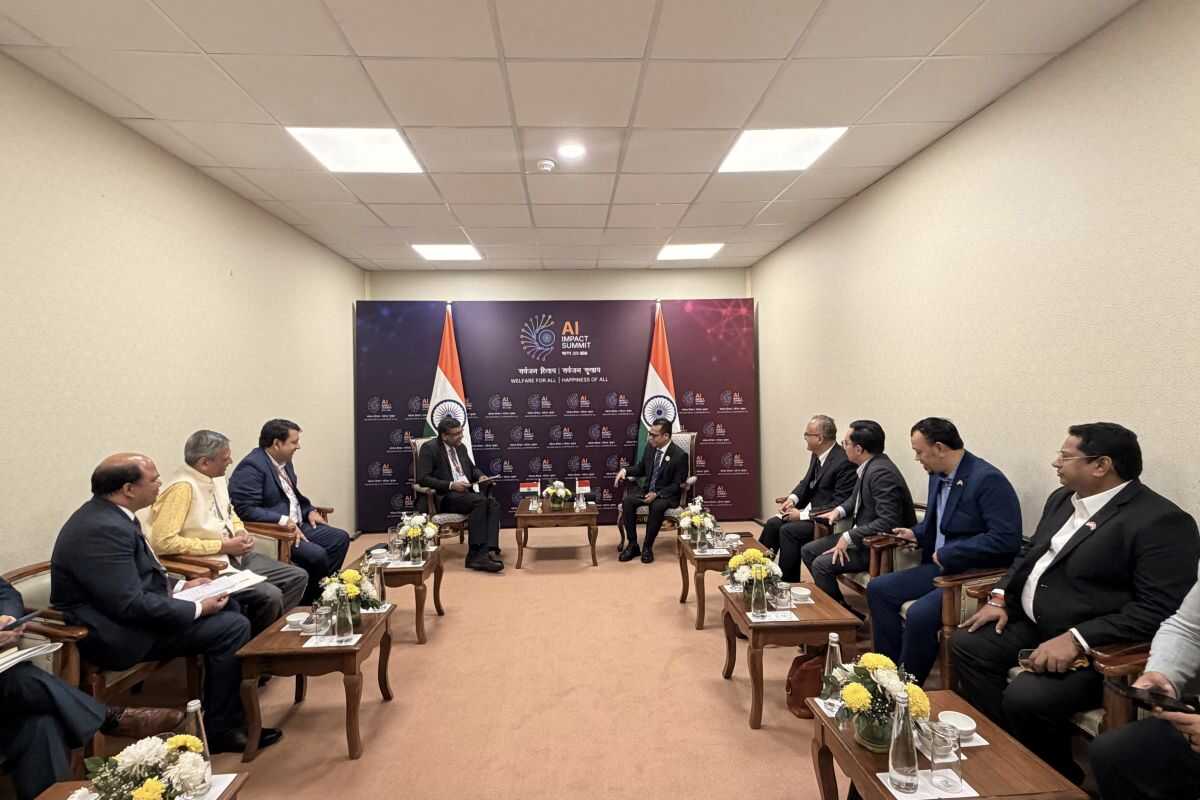
Jakarta (ANTARA) - Indonesia and India are strengthening strategic cooperation across multiple digital sectors through a bilateral meeting between Deputy Minister of Communication and Digital Nezar Patria and India’s Secretary of the Ministry of Electronics and Information Technology (MeitY) S. Krishnan.
During the meeting on the sidelines of the AI Impact Summit held in New Delhi, India, Nezar highlighted the importance of Indonesia-India collaboration in addressing the challenges and opportunities of the digital era.
“This strategic partnership will serve as a strong foundation for both countries to jointly shape a brighter digital future for Asia, where technology becomes a driving force for equality and inclusive growth,” said Nezar in a statement received in Jakarta on Thursday.
Five areas of cooperation were discussed during the meeting. These areas reflect a shared vision for harnessing digital technology in the public interest.
First, artificial intelligence (AI) and emerging technologies. Indonesia expressed its interest in adopting India’s approach to AI democratisation, which ensures that AI accessibility is not monopolised by a select few but can be reached by startups and the wider public.
Collaboration will also focus on developing sovereign AI that is culturally relevant and secure, protecting national data interests, and aligning with domestic regulations.
Second, digital public infrastructure (DPI). Indonesia is exploring the adaptation of India’s Aadhaar model to enhance transparency and efficiency of public services through Digital Identity.
Cooperation will also encompass GovTech initiatives to create seamless coordination between government agencies through digital platforms. Knowledge exchange will be conducted on platforms such as India’s e-Sanjeevani (telemedicine) and BISAG-N (geospatial mapping for logistics and infrastructure planning), which have proven successful.
Third, chip design and semiconductor supply chains. Indonesia’s potential mineral wealth as critical raw materials can complement India’s ambitious semiconductor mission in upstream collaboration.
India is offering support for chip design through the world’s largest chip design support facility, which currently assists more than 300 academic institutions and 100 startups. This support opens opportunities for infrastructure sharing with Indonesia.
Fourth, cybersecurity and emergency response. The establishment of information-sharing channels between India’s CERT-In and relevant Indonesian agencies will be a priority for detecting and mitigating cross-border cyber threats through CERT coordination.
The adaptation of India’s Emergency Response Support System (ERSS), which integrates medical services, policing, and roadside assistance into a single unified technology platform, will also be explored to improve emergency services in Indonesia.
Fifth, capacity building and talent exchange. The utilisation of India’s National Institute of Electronics and Information Technology (NIELIT) will be key in upskilling programmes, including training and digital literacy.
Additionally, Startup Tours and innovator exchange programmes will be initiated to enable Indonesian and Indian startups to explore each other’s markets and collaborate on the development of sound public technology.
Nezar expressed hope that this partnership can accelerate digital transformation in both countries, create new opportunities, and ensure that the benefits of technology can be felt by all levels of society.