
Indonesia and ILO Sign Declaration on 2026–2030 Decent Work Programme
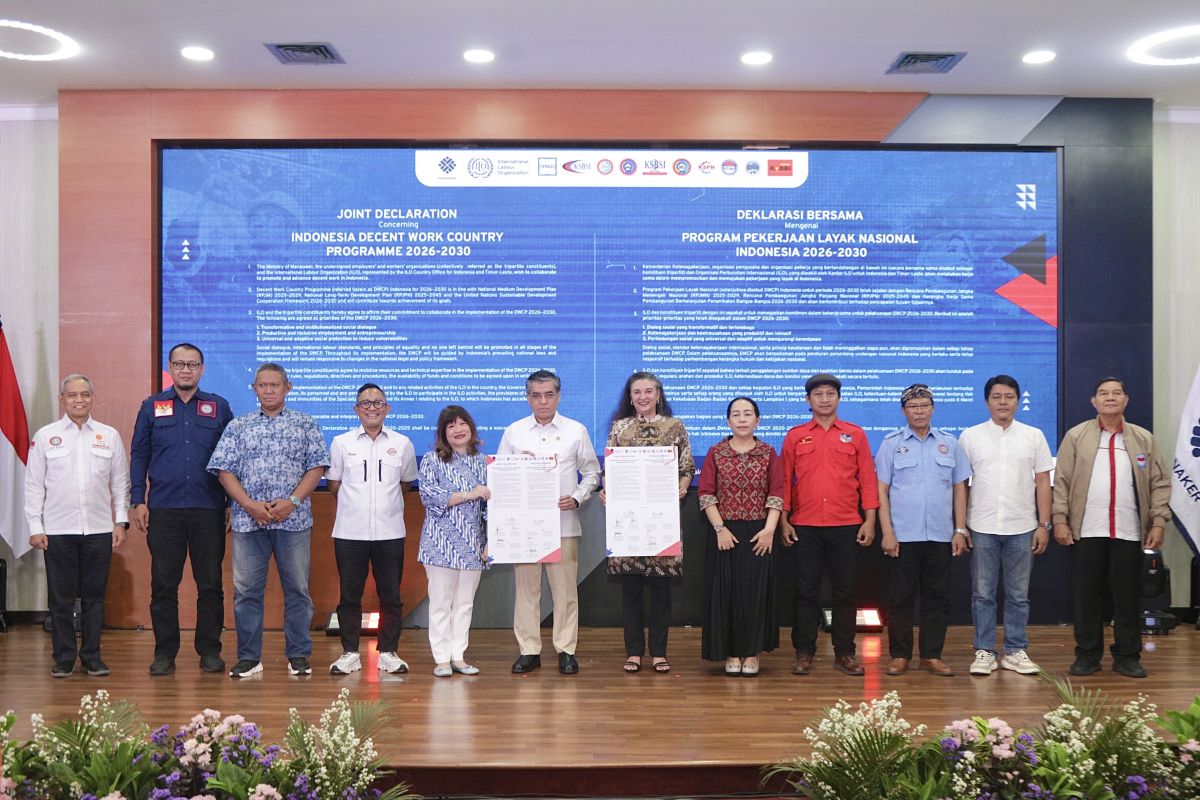
Jakarta (ANTARA) — The Ministry of Manpower, the Indonesian Employers Association (Apindo), the Confederation of Trade Unions and the International Labour Organization (ILO) have signed a joint declaration on the Indonesia Decent Work Country Programme (DWCP) 2026–2030.
The DWCP, or National Decent Work Programme, is entering its fourth period.
Manpower Minister Yassierli said in a statement in Jakarta on Thursday that the DWCP was a nationally owned shared commitment, not merely an ILO programme.
Yassierli said Indonesia faced major employment challenges. The labour force totals 155 million people, around 60 per cent of whom work in the informal sector.
“National employment policy cannot focus solely on the number of jobs. We need jobs that are productive, formal, protected and provide decent incomes,” Yassierli said.
Indonesia is undergoing transformation amid digitalisation, artificial intelligence (AI), the green transition, demographic change and shifts in the global economy, he said. At the same time, high levels of informality, skills mismatches, unequal access to work and gaps in social protection remain unresolved.
To address these challenges, the DWCP 2026–2030 sets out three main priorities: strengthening transformative and institutionalised social dialogue; creating productive and inclusive employment and entrepreneurship opportunities; and strengthening universal and adaptable social protection.
Yassierli stressed that the signing marked the beginning of five years of work. The Ministry of Manpower is committed to working with other ministries and agencies, local governments, Apindo, trade unions and the ILO to ensure the programme delivers tangible results.
ILO Director for Indonesia and Timor-Leste Simrin Singh said digitalisation, AI and the green transition offered significant opportunities to boost productivity and create jobs. She cautioned that inclusiveness would be the key measure of success.
“The true measure of success is the extent to which these opportunities can be turned into better and more inclusive jobs,” Singh said.