
Indonesia and Greece Target US$1 Billion in Bilateral Trade
Indonesia and Greece are targeting an increase in bilateral trade to US$1 billion by strengthening investment, maritime cooperation, renewable energy and sustainable tourism. The effort was reinforced at the inaugural meeting of the Joint Committee on Economic Cooperation (JCEC) in Jakarta on 13 October 2026, following more than 75 years of diplomatic relations between the two countries, Investor Daily reported. Greece’s Deputy Minister of Foreign Affairs for Economic Diplomacy, Harry Theoharis, described the meeting as a step towards turning bilateral agreements into concrete projects.
The two countries are also seeking to broaden market access and increase business involvement in a range of priority sectors. Theoharis said bilateral trade reached €302.3 million in 2025. In the first half of 2026, trade between the countries grew by 4.95 per cent year on year.
To reach the US$1 billion target, Greece wants to expand the range of products traded. Greek exports to Indonesia are currently dominated by cotton, although there are opportunities for olive oil, Mediterranean food products, agricultural and food technology, fisheries, aquaculture and digital services.
Theoharis also identified renewable energy, logistics, maritime transport and infrastructure as sectors with potential to attract investment. Indonesian companies, in turn, could use Greece as a gateway to European markets. In trade discussions, Greece also explored opportunities to export building materials, food, beverages and tobacco to Indonesia. Theoharis’s meeting with Indonesia’s Deputy Trade Minister, Dyah Roro Esti Widya Putri, also covered partnerships in the maritime and defence industries.
Greece does not regard Indonesia’s trade surplus as an obstacle to economic relations between the two countries. The Greek government wants to increase trade volumes while encouraging two-way investment, including by improving market access following the conclusion of negotiations on the Indonesia–European Union Comprehensive Economic Partnership Agreement (I-EU CEPA). On investment, Theoharis expressed support for Indonesia’s industrial downstreaming agenda. After meeting the chief executive of the Indonesia Investment Authority (INA), the two sides agreed to explore joint investment involving Growthfund, Greece’s national fund, and development banks.
A memorandum of understanding between Enterprise Greece and the Indonesian Chamber of Commerce and Industry (Kadin) also provides a basis for connecting Greek investors with strategic projects in Indonesia. The cooperation is intended to deliver commercial projects rather than merely exchange ideas. To build investor confidence, Greece is relying on policy stability, transparency and legal certainty.
Through its National Strategic Plan for International Expansion 2026–2030, Greece is seeking to simplify bureaucracy, speed up licensing and digitise public services. Theoharis said Indonesia’s large domestic market, economic growth and expanding digital sector were attractive to Greek investors. Other opportunities include tourism, vocational education, infrastructure, specialised technology and renewable energy development.
Greece, meanwhile, offers a strategic location at the crossroads of Europe, Asia and the Eastern Mediterranean for Indonesian companies looking to expand into Europe and the Balkans. Available incentives include tax relief, easier licensing, liquidity support and residence permits, subject to applicable rules.
Maritime cooperation is another item on the bilateral agenda. Greece has experience in shipping management, while Indonesia needs strong maritime connectivity as an archipelagic country. Greece has proposed establishing a Joint Maritime Committee.
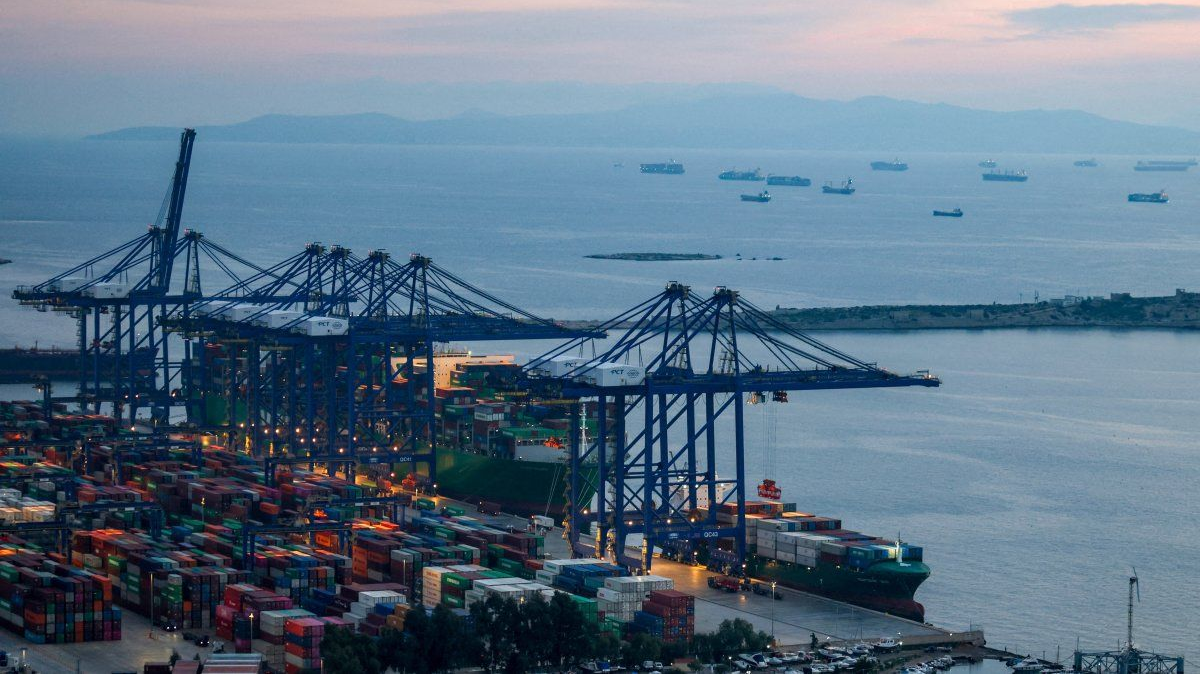
Collaboration between Greek maritime organisations and the Indonesian National Shipowners’ Association (INSA) could support technology transfer, port development, professional training and the adoption of environmentally friendly shipping practices. The Port of Piraeus is also expected to serve as an important route for Indonesian products bound for Central and South-Eastern Europe and the Black Sea region. In addition, the signing of a sister-city memorandum between Piraeus and Denpasar opens up opportunities for closer city-to-city relations.
At the regional level, Greece sees Indonesia as an increasingly influential economic and diplomatic partner, given its G20 membership, industrial strength and energy transition. Theoharis’s discussions with ASEAN Deputy Secretary-General Dato’ Astanah Abdul Aziz also covered greater Greek engagement in South-East Asia.
The two countries also share principles of respect for international law and the 1982 United Nations Convention on the Law of the Sea (UNCLOS). Economic cooperation, maritime affairs and market access formed part of the bilateral agenda discussed with Indonesian officials, including Jakarta Governor Pramono Anung.
Source: jawawa.id (https://jawawa.id/newsitem/indonesia-and-greece-target-us-1-billion-in-bilateral-trade-1792794027)
Originally published by koridor.co.id (https://koridor.co.id/indonesia-yunani-bidik-perdagangan), translated from Indonesian