
Indonesia and China Strengthen Economic, Trade, and Digital Technology Cooperation
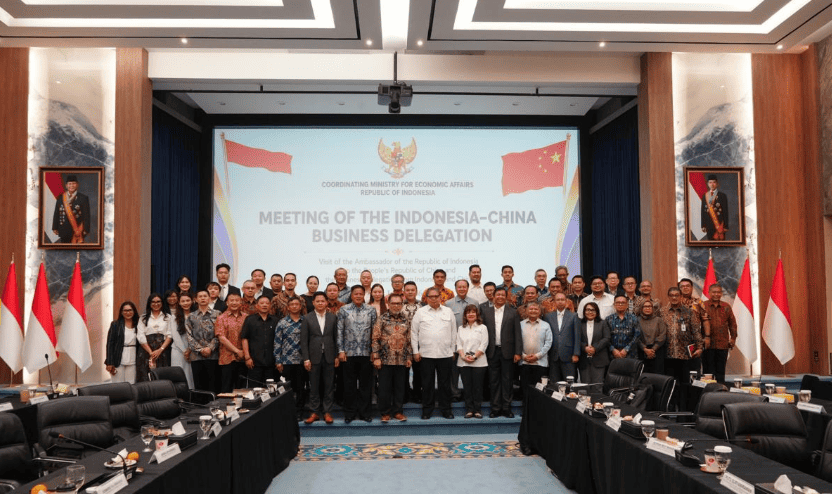
Bilateral relations between Indonesia and the People’s Republic of China continue to show increasingly close development through strengthened cooperation in various strategic fields, ranging from trade, investment, and industry to the digital economy and technology. A series of recent meetings have served as important momentum to expand collaboration while reinforcing a mutually beneficial economic partnership for both countries.
As part of this strengthening cooperation, Coordinating Minister for Economic Affairs Airlangga Hartarto previously received the Deputy Governor of Fujian Province along with a Chinese business delegation within the framework of the Two Countries Twin Parks (TCTP) scheme, reflecting the high interest of the Chinese business community in expanding investment in Indonesia. Earlier, on 16 July 2026 in Shanghai, Minister Airlangga also signed the Declaration of the World Artificial Intelligence Cooperation Organization (WAICO), positioning Indonesia as one of the founding countries of the global AI cooperation body.
"A report from the Japanese agency JETRO stated that foreign companies investing in Indonesia have a 70 per cent potential to experience or make a profit. So, there are more profits than losses," explained Coordinating Minister for Economic Affairs Airlangga Hartarto during a courtesy call with a PRC business delegation and the Indonesian Ambassador to the PRC on Thursday (23/07).
To date, several trade agreements have been established between the two countries, including the ASEAN-China Free Trade Area (ACFTA), which came into effect in 2010, and the Regional Comprehensive Economic Partnership (RCEP), effective from 2022. In line with these agreements, the value of bilateral trade has continued to show a strong trend, with trade value based on Indonesian data reaching approximately USD 154 billion, while Chinese data recorded around USD 160 billion. Key Indonesian export commodities include ferroalloy, nickel matte, lignite, coal, and palm oil.
Furthermore, China remains one of the largest investors in Indonesia, with a continuously increasing contribution across various strategic sectors. To further boost investment realisation, the Indonesian Government provides a range of competitive fiscal incentives, including a tax holiday facility of up to 100 per cent depending on the investment value and criteria, tax allowances, investment allowances, and super tax deduction facilities to support increased investment, innovation, and human resource development.
"We are open to cooperating with global partners, including China, whether in trade, investment, the services sector, or the education sector. And I invite businesspeople and entrepreneurs from China to continue investing in Indonesia, especially in sectors with high added value," concluded Minister Airlangga.
In the education sector, collaboration with leading universities such as Tsinghua University has been realised through various research activities and seminars in the Special Economic Zone (KEK) in Bali. Meanwhile, in the automotive sector, the government is encouraging strengthened investment by Chinese automotive companies such as BYD and Chery, which have now successfully penetrated the top five automotive market shares in Indonesia. In the digital economy sector, the government is also continuing to promote investment in the semiconductor industry, the development of fibre optic infrastructure, digital application development, and data centre infrastructure as part of the national digital economic transformation.
On this occasion, Minister Airlangga also held discussions with a number of business players from China. From the Indonesian side, business players from various sectors were also present, including the textile, footwear, furniture, education, plastic packaging, industrial estate, electronics, and renewable energy industries.
"Indonesia and China’s economic relations continue to show increasingly strong and comprehensive development. The government is committed to continuing to open opportunities and expand mutually beneficial cooperation, not only in trade and investment but also in strategic sectors such as industry, education, the digital economy, and technology," said Coordinating Ministry for Economic Affairs Spokesperson Haryo Limanseto.
Also present on the occasion were Indonesian Ambassador to the PRC Djauhari Oratmangun, Secretary of the Coordinating Ministry for Economic Affairs Susiwijono Moegiarso, Deputy for Investment and Cooperation Coordination Edi Prio Pambudi, Deputy for Trade and Digital Economy Coordination Ali Murtopo Simbolon, Acting Deputy for Industry, Manpower, and Tourism Coordination Dida Gardera, and APINDO Chairwoman Shinta Kamdani.
Source: jawawa.id (https://jawawa.id/newsitem/indonesia-and-china-strengthen-economic-trade-and-digital-technology-cooperation-1785210622)
Originally published by suarapemerintah.id (https://suarapemerintah.id/2026/07/indonesia-dan-tiongkok-perkuat-kerja-sama-ekonomi-perdagangan-hingga-teknologi-digital/), translated from Indonesian