
Indonesia and China Explore Collaboration to Establish Salor Agricultural Research Centre
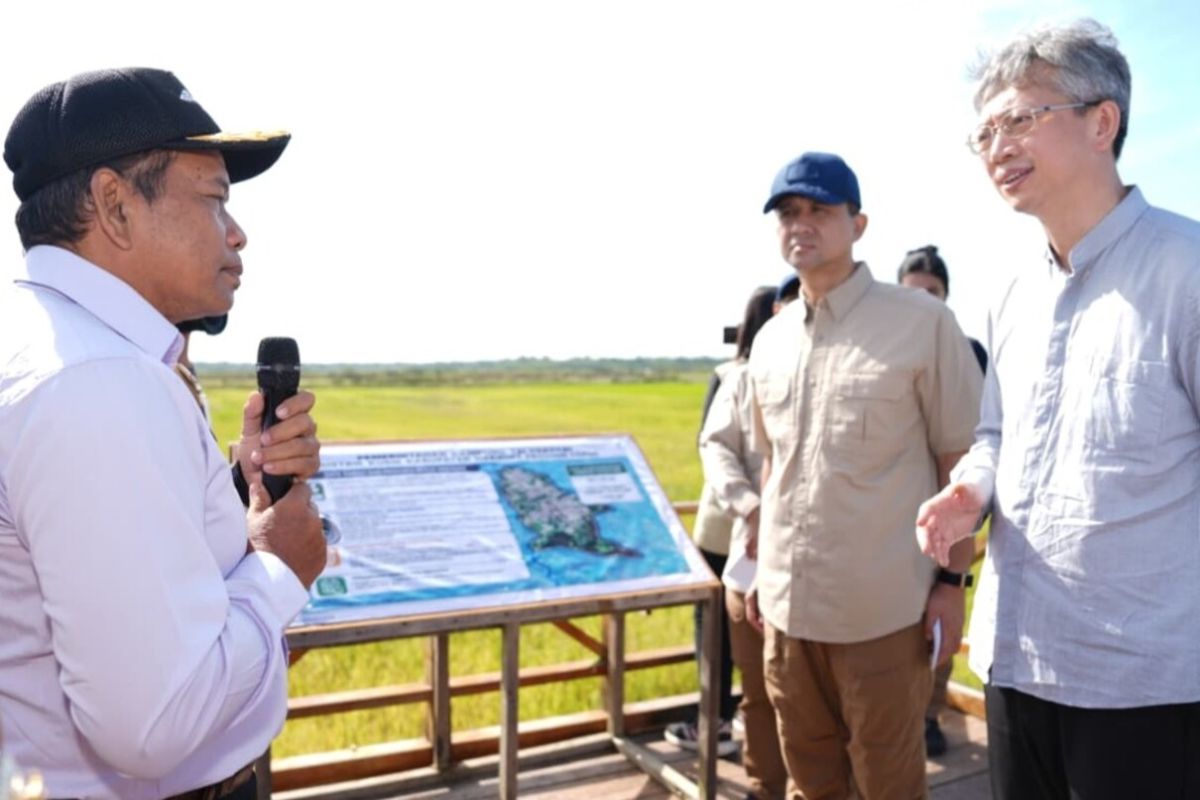
China is set to provide a grant or subsidy to establish a rice research centre as Indonesia focuses on achieving food self-sufficiency. The Indonesian Ministry of Transmigration and the Chinese Embassy to Indonesia are exploring cooperation to develop an agricultural research centre, vocational education, and the strengthening of the food ecosystem in the Salor Transmigration Area, Merauke, South Papua.
The Minister of Transmigration, M. Iftitah Sulaiman Suryanagara, stated that these efforts aim to support food security and improve the quality of education for the people of Papua. “China will provide a form of grant or subsidy to build a rice research centre because we want to focus on food self-sufficiency through food production hubs, alongside vocational schools for the agricultural sector,” M. Iritah Sulaiman Suryanagara said in an official statement received in Jakarta on Thursday.
He noted that according to research by the Ministry’s 2025 Patriot Expedition Team (TEP), several challenges hinder agricultural productivity in the transmigration area, including issues with seeds, pests, irrigation, and farm road infrastructure. Local governments have also proposed the development of agricultural machinery workshops within the national food production hub, which spans over 60,000 hectares of paddy fields.
To address these challenges, the Ministry of Transmigration will involve several partner universities, including IPB University, to support the development of the agricultural ecosystem in Salor. “We will also collaborate with designated partner campuses, such as IPB University, to develop the food production centres located in the Salor transmigration area, South Papua,” said Iftitah.
The Chinese Ambassador to Indonesia, Wang Lutong, believes the Salor Transmigration Area holds great potential for developing modern agricultural systems and becoming a new satellite city in South Papua. “I am very impressed with what I have seen and heard today. There is much potential here. Chinese agricultural experts who have visited this region also see significant opportunities for agricultural development,” he remarked.
In addition to increasing food production, the Ambassador identified opportunities to develop supporting industries, such as the manufacturing of agricultural machinery and tools. “Therefore, we support the utilisation of Chinese technology to assist the development of the agricultural sector in this region,” added Wang Lutong.