
Indonesia and China Commit to Advancing Economic Cooperation
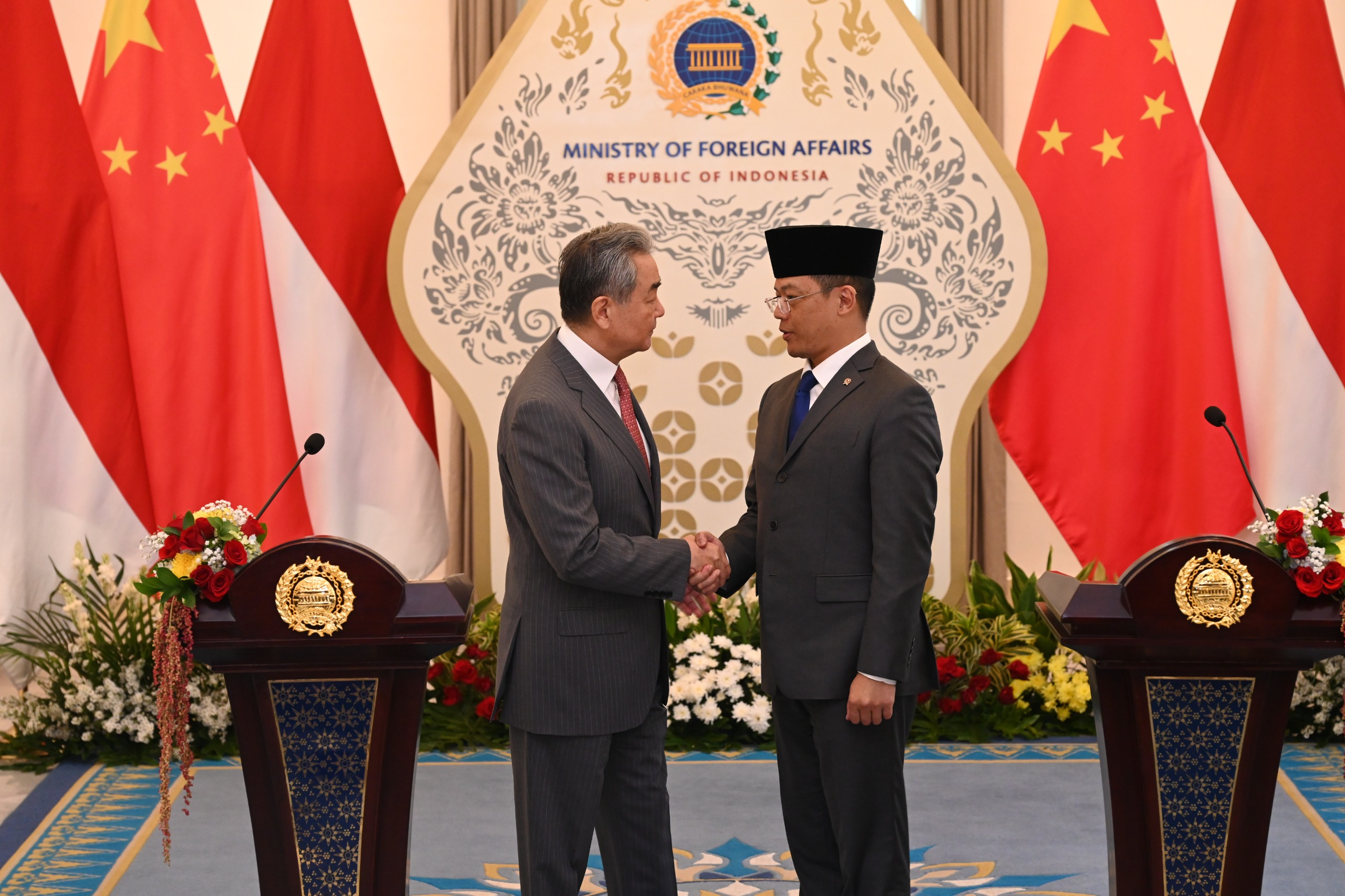
Indonesia and China are committed to strengthening cooperation in various fields. This cooperation is expected to be beneficial not only for both countries but also for the region.
21 Agt 2026 17:00 WIB · Internasional
KEMENTERIAN LUAR NEGERI
JAKARTA, KOMPAS — Indonesia and China are committed to advancing economic cooperation through increased trade and investment. The two countries will also explore several new cooperation opportunities, including in the field of artificial intelligence.
Indonesian Foreign Minister Sugiono stated that for Indonesia, China is an important partner for national development in promoting stability, peace, and prosperity in the region. He made this remark during a meeting with Chinese Foreign Minister Wang Yi at the Comprehensive Strategic Dialogue (CSD) in Jakarta, Friday (21/8/2026).
In the meeting, Sugiono and Wang Yi discussed several important issues. One of them was the architecture of bilateral cooperation. Both countries welcomed the discussion of the Action Plan 2027-2031 as a continuation of the Action Plan 2022-2026.
Indonesia and China also agreed to revitalize strategic mechanisms in the fields of energy, minerals, and maritime trade. In addition, they are exploring several new cooperation mechanisms, including in the areas of quarantine and artificial intelligence (AI).
“Then the second is, of course, to advance economic cooperation. We appreciate China’s continued commitment to Indonesia’s economic development through increased trade and investment,” he stated.
The trade value between Indonesia and China reached 167 billion US dollars. However, this value still needs to be increased as it does not yet encompass all the potential possessed by both countries.
“To that end, we also agree to continue enhancing cooperation in the field of trade in order to increase the volume and figures of trade,” he stated.
Sugiono appreciates China’s commitment to investing in Indonesia. According to him, China has a great deal of confidence in the investment climate in the country.
However, the investment climate in Indonesia has been complained about by Chinese investors. In May, the Chinese Chamber of Commerce in Indonesia wrote to President Prabowo Subianto regarding various investment obstacles that burden Chinese business actors.
In the letter, Chinese investors highlighted several classic issues that hinder investment in Indonesia. These include overly strict regulations, excessive law enforcement, and several new policies, such as tax and royalty increases, mandatory retention of foreign exchange from exports, reduced nickel ore quotas, tightening of work permits for foreign workers, and allegations of corruption and extortion by certain authorities (Kompas.id, May 13, 2026).
The two countries also agreed to facilitate trade, including exploring expanding market access for Indonesia’s leading commodities. Other topics discussed included the Belt and Road Initiative, including the Jakarta-Bandung Indonesia-China High-Speed Railway (KCIC).
Indonesia and China also agreed to revitalize strategic mechanisms in the fields of energy, minerals, and maritime trade. In addition, they are exploring several new cooperation mechanisms, including in the areas of quarantine and artificial intelligence (AI).
“The commitment that this is something that must continue and requires sustainable financing, including alternatives for increasing passenger volume on this high-speed train route. In the financial sector, we agreed to enhance collaboration in order to support priority development projects,” explained Sugiono.
The two foreign ministers also discussed the enhancement of cooperation in the fields of food security and energy. Moving forward, the cooperation will encompass matters in advanced technology and artificial intelligence, including the development of a joint communication satellite.
“In the maritime sector, we agreed to enhance collaboration in the areas of navigation safety, marine scientific research, maritime security, and capacity building,” he stated.
Sugiono added that he and Wang Yi reaffirmed their joint commitment to advancing the ASEAN-China partnership. Indonesia also supports China’s chairmanship in the Asia-Pacific Economic Cooperation (APEC) forum in 2026.
In the inaugural meeting of the CSD, Sugiono was accompanied by the Deputy Minister of Energy and Mineral Resources Yuliot Tanjung, the Deputy Minister of Trade Dyah Roro Esti Widya Putri, and the Deputy Minister of Communication and Digital Angga Raka Prabowo. Meanwhile, Wang Yi was accompanied by other Chinese officials, namely the Deputy Minister of Foreign Affairs Hua Chunying, the Vice Chairman of the National Development and Reform Commission Zhou Haibing, the Deputy Minister of Agriculture and Rural Affairs Zhang Zhili, and the Deputy Minister of Commerce Yan Dong.
Wang Yi stated that the meeting resulted in many new consensuses for fostering cooperation. According to him, under the leadership of the two presidents (Xi Jinping and Prabowo Subianto), the partnership between the two countries continues to deepen, even in global cooperation.
“In the midst of unprecedented changes, cooperation between the two countries has transcended bilateral scope and has a broad and profound impact on the region and the world,” he stated.
Wang Yi opened his remarks by expressing condolences for the earthquake that struck Flores, East Nusa Tenggara, on August 15. As of Thursday, more than 70 people have died and 900 others have been injured as a result of the 7.7 magnitude earthquake.
Wang Yi stated that it is very important for China and Indonesia to strengthen cooperation to face various challenges together. He mentioned that the presidents of both countries have agreed to build a China-Indonesia Community of Shared Future.
“Therefore, let us strive for this and take a leading role, to be a good example, and together with other countries, we respond to the various types of challenges that continue to a