
Indonesia Among Countries Spending the Most on Food
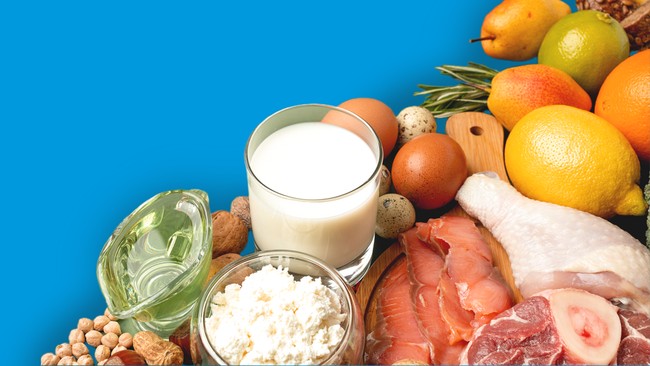
Jakarta, CNBC Indonesia – How much of household spending goes towards buying food? The answer varies from country to country. In some countries, food accounts for more than half of consumer expenditure, while in others it makes up only around 6%.
Data from the United States Department of Agriculture’s Economic Research Service (ERS) show that Indonesia allocated 33.1% of consumer expenditure to food consumed at home in 2025. This ranked Indonesia 23rd among the 103 countries and territories compared.
This percentage is not a direct measure of whether food prices are high or low. However, a large share of spending can indicate that food takes up a significant part of consumers’ budgets, so households’ ability to cope with price rises should be considered alongside income levels and other expenditure.
Differences in the share spent on food across countries are linked to income levels. Under Engel’s law, as income rises, the proportion of expenditure allocated to food tends to fall, even though the amount of money spent on food may increase.
The USDA also notes that lower-income countries tend to allocate a larger share of their expenditure to food.
This pattern is reflected in the 2025 data. Nigeria allocated 56.2% of consumer expenditure to food, followed by Myanmar at 54.8% and Laos at 53.9%. By contrast, the share was just 6.4% in the United States and 6.3% in Singapore.
This means that a low share of spending does not automatically indicate cheaper food or that people spend less money.
The percentage is also affected by the size of incomes and spending on other needs. In contrast, food inflation can add pressure on households when food prices rise faster than incomes.
Families that already allocate a large share of their budgets to food have less room to absorb higher costs without reducing spending elsewhere.
In Indonesia, the USDA’s figure of 33.1% gives an indication of the share of consumer expenditure allocated to food consumed at home. Other measures show that food affordability is also a challenge for some of the population.
The United Nations Food and Agriculture Organization (FAO) estimates that the cost of a healthy diet in Indonesia reached US$4.75, or about Rp86,079 (US$1 = Rp18,122), per person per day at purchasing power parity in 2024.
According to the report The State of Food Security and Nutrition in the World 2025, this cost made a healthy diet unaffordable for about 43.5% of Indonesia’s population, or around 123 million people.
This finding provides a more concrete context for food spending: the ability to access a healthy and nutritious diet.
The FAO measure covers a broader range of items than the food category measured by the USDA, but it indicates that prices in this spending category have risen faster than average consumer prices.
Even so, the two sets of data point in the same direction: food expenditure accounts for an important share of Indonesian consumers’ budgets.
Taken together, the figures show that food affordability in Indonesia needs to be viewed from several angles: the share of expenditure devoted to food, the ability to buy nutritious food, and price trends.
A high share of spending does not automatically mean that people are experiencing food insecurity. But when food costs rise and incomes fail to keep pace, households may have less room in their budgets to meet other needs.
Source: jawawa.id (https://jawawa.id/newsitem/indonesia-among-countries-spending-the-most-on-food-1793263881)
Originally published by CNBC Indonesia (https://www.cnbcindonesia.com/research/20261029140640-128-780596/duit-habis-buat-makan-ri-masuk-negara-dengan-belanja-pangan-terbesar), translated from Indonesian