
Indonesia Already Has Bioethanol-Blended Fuel; Here Are the Products
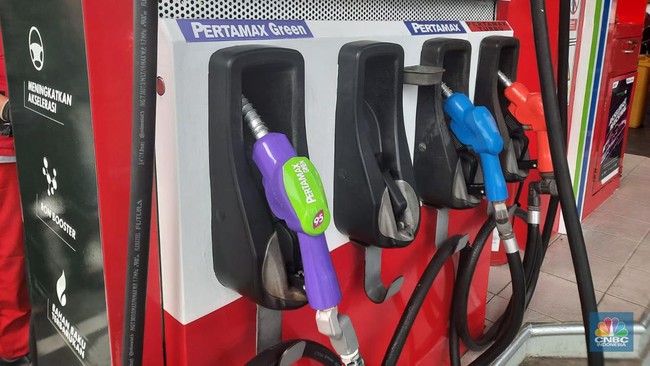
President Prabowo Subianto is actively pushing for the development of bioethanol-based biofuels to reduce dependence on imported fuels. Following the success of the B50 biodiesel programme, Prabowo has instructed the Minister of Energy and Mineral Resources, Bahlil Lahadalia, to formulate steps for developing a 50% bioethanol-blended fuel, known as E50.
Bahlil stated that the government has been asked to study the success of B50 and apply a similar approach to the development of the E50 programme. This directive was delivered by Prabowo during the Plenary Session of the National Energy Council (DEN) at the Merdeka Palace, Jakarta, on Thursday (17/09/2026).
“We have also decided that for the long term, we will study the success of B50. Learning from this, the President has ordered us to immediately prepare similar steps to build E50,” Bahlver said following the DEN session at the Palace.
According to Bahlil, developing E50 is one of the steps to boost domestic fuel availability, aligning with the high level of national fuel consumption. Amidst these efforts towards E50, Indonesia has already commercially implemented E5 fuel (a mixture of petrol with 5% bioethanol) through the Pertamax Green 95 product (equivalent to RON 95) sold at Pertamina gas stations.
As of September 2026, the price of Pertamax Green 95 is set at Rp19,150 per litre, an increase from the previous month’s price of Rp16,600 per litre.
Previously, the CEO of Pertamina New & Renewable Energy (Pertamina NRE), John Anis, emphasised that the company is ready to support the government’s target to accelerate bioethanol development. “We want to contribute to bioenergy. We share the same ambition and spirit for E20,” said John while accompanying Prabowo during a simultaneous national harvest event in Malang, East Java, recently.
He revealed that Indonesia currently only implements E5 on a limited basis across approximately 170 Pertamina gas stations located in East Java and Jakarta, whereas India has already reached E20 implementation. “We do not want to lose; we must catch up with them. We are only at E5, currently in 170 of our outlets in East Java and Jakarta,” he added.
John explained that Pertamina is also developing bioethanol using various types of raw materials, not just sugarcane, but also palm sugar, cassava, corn, and sorghum. To meet national demand, Indonesia requires approximately 20 to 30 new bioethanol factories within the next two years. The construction of these factories in various regions is expected to improve farmers’ welfare.
“Instead of importing money abroad, let’s give it to the farmers,” John asserted when responding to Prabowo’s question regarding the policy’s impact on reducing imports.
To realise this target, Pertamina emphasised the importance of mandatory regulations and certainty regarding raw material prices. These elements are necessary to ensure the bioethanol ecosystem in Indonesia can function effectively.