
Indonesia Aims to Reduce Internet Connectivity Dependence on Singapore
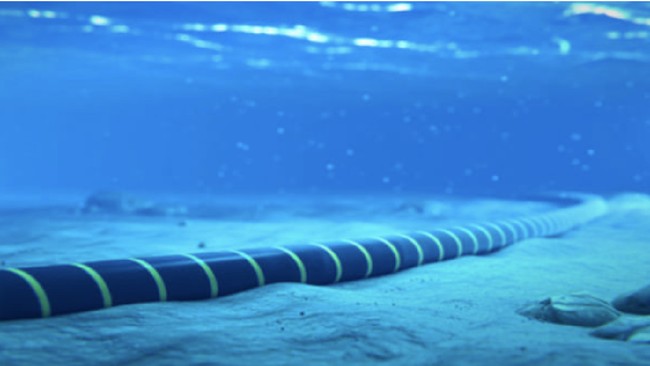
Jakarta - The majority of internet traffic in Indonesia still passes through Singapore. Indonesia wants to reduce this dependence. “Honestly, 90% of our internet traffic currently depends on Singapore,” said Denny Setiawan, Director of Digital Infrastructure Strategy and Policy at the Ministry of Communication and Digital Affairs, as quoted by Channel News Asia on Tuesday. This dependence stems from Singapore’s position as the primary digital hub in Southeast Asia. The country hosts major submarine cable networks, which are critical information technology and telecommunications infrastructure today. The independent submarine cable infrastructure platform GeoCables records that Indonesia has 72 submarine cables, comprising 42 domestic cables and 30 international cables. All of these submarine cables are connected to Singapore. According to Denny, Indonesia needs to build more alternative digital pathways. This would prevent reliance on a single corridor, which could pose risks due to the concentration of specific resources. Indonesia must also be supported by adequate connectivity as it becomes a digital hub in the Southeast Asian region, enabling it to reach all areas within the country. “We need diversity in submarine cables and terrestrial (land-based) cables, and the same for every island,” he stated. Meanwhile, Muhammad Erza Aminanto, assistant professor and cybersecurity programme coordinator at Monash University, said Indonesia’s dependence on Singapore is unavoidable, given the close proximity of the two countries. “From the perspective of companies building submarine fibre optic cables, if you want to reach Jakarta, it is best to connect to Singapore because it has become a global internet hub,” Erza said. However, several observers also warn of the risks of depending on Singapore. For instance, Erza mentioned the risk to data security. There is also the risk of natural disasters and accidents. Muhammad Arif Angga, Chairman of the Indonesian Internet Service Providers Association (APJII), explained that natural disasters could cause cable disruptions impacting internet connectivity in Indonesia. Erza acknowledged that reducing dependence on Singapore is not easy. This is because Indonesia’s geography does not allow for closely situated cable landing stations like Singapore’s, and building and connecting digital infrastructure across the entire archipelago is challenging. “We need to be more self-reliant, but it is not easy because the investment is very large,” he said. On the other hand, Arif revealed that only a few companies can build submarine cable infrastructure, due to the high costs involved and the specialised technical expertise required. “From a business perspective, this is a high-level industry. I only know of one or two players interested in opening new routes,” Arif explained.