
Indonesia Aims to Develop Rare Earth Treasures but Lacks Necessary Technology
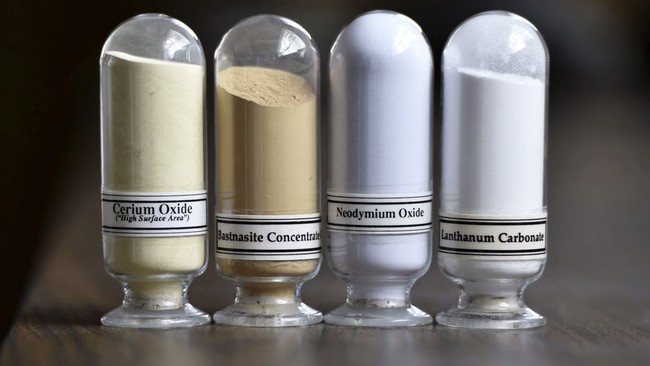
The Indonesian government has begun serious efforts to accelerate the development of Rare Earth Elements (REE), which are considered a strategic mineral treasure for the future. Nevertheless, the downstreaming of this strategic commodity still faces significant challenges, particularly regarding technological mastery.
The Chairman of the Indonesian Mining Institute (IMI), Irwanda Arif, stated that, to date, REE processing technology in Indonesia remains limited to laboratory and pilot project scales. “Up to this point, Indonesia does not yet possess REE processing or refining technology that has reached an economic scale,” Irwanda said during a webinar hosted by the Mineral Industry Agency (BIM) regarding the prospects and future of Indonesia’s rare earth metals.
According to Irwanda, various research efforts have been conducted, and several pilot plants are already operational, such as one in Tanjung Ular, Bangka Belitung. He noted that while some efforts have reached the laboratory scale, others have progressed to pilot plant stages.
Irwanda acknowledged the current limitations in domestic processing and refining facilities. Consequently, the economic value of these minerals cannot be maximised because Indonesia lacks adequate downstreaming technology. Despite this, he believes Indonesia still possesses a strategic opportunity to bridge the technological gap. Currently, research into mastering REE processing technology is being conducted by the Mineral Industry Agency (BIM) under a direct mandate from the President. “I believe this is vital because it is an absolute necessity, not an option, if we want to develop rare earth metals in Indonesia,” he added.
Previously, the Ministry of Energy and Mineral Resources (ESDM) revealed that China is currently the global leader in Rare Earth Elements. REEs have immense utility across various sectors, including technology, automotive, and military equipment. The Deputy Minister of Energy and Mineral Resources, Yuliot Tanjung, emphasised the importance of a national strategy to secure natural resource supplies, suggesting Indonesia could model its approach after countries like China.
He noted that China’s success in banning the export of raw REE materials has allowed the country to control approximately 90% of the global market. This dominance is directly linked to their domestic extraction and processing capabilities. “Currently, global dependence on China for rare earth metals is very high; about 90% of rare earth metals are produced and processed within China itself,” Yuliot stated during a speech at a graduation ceremony in West Java. He concluded that the experience of advanced nations shows that an active state role is key to the success of downstreaming programmes.