
Indonesia aims to become world's top seaweed processor: minister
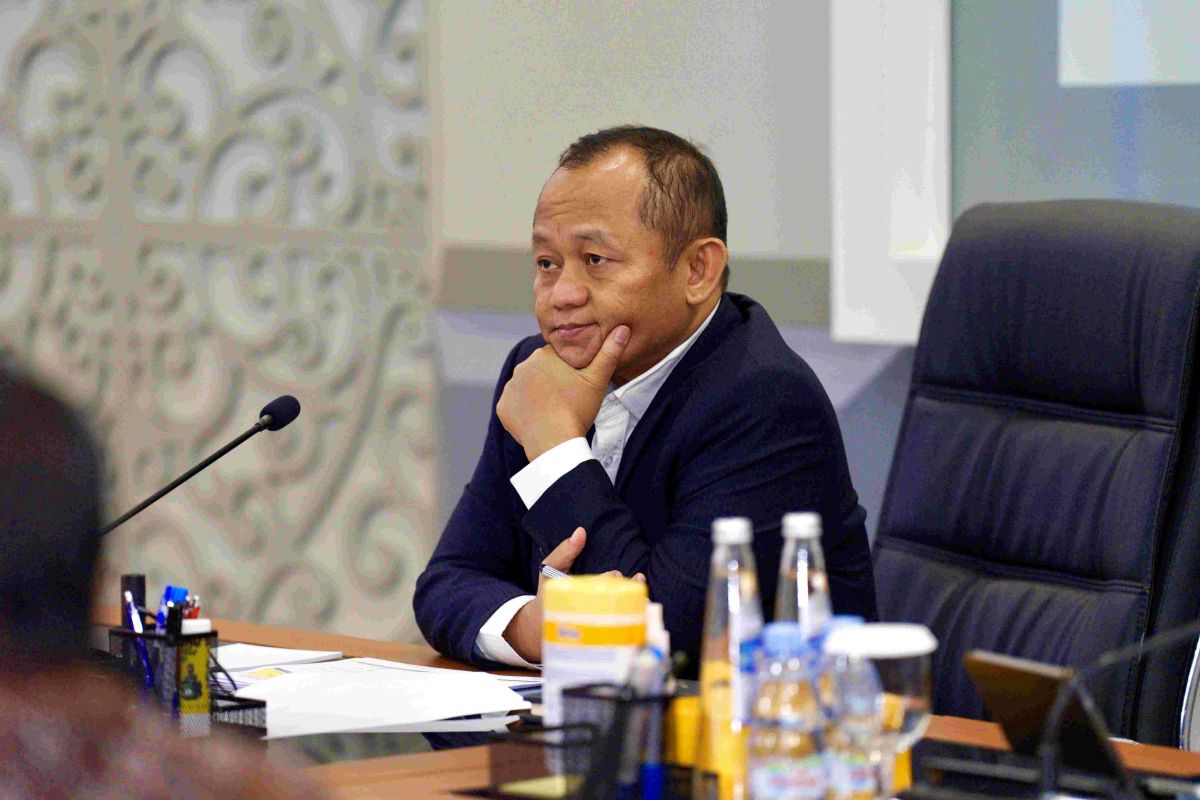
The development plan is framed within the Integrated Seaweed Development Action Plan (ISDAP) 2026–2030, coordinated by the National Development Planning Ministry (Bappenas), aiming to transition the nation from exporting raw materials to manufacturing high-value derivatives such as agar, carrageenan, pharmaceuticals, cosmetics, and bioplastics.
“God willing, the Industry Ministry is ready to take steps to prepare this seaweed industry ecosystem as a new source of pride for us all,” Sarmuji said in a statement on Tuesday.
“Hopefully, this serves as a crucial step toward making Indonesia’s seaweed production—and its entire downstream processing sector—the number one in the world,” he added.
Sarmuji noted that expanding processed seaweed capacity aligns with positive performance across the broader manufacturing sector.
In the second quarter of 2026, Indonesia’s non-oil and gas processing industry grew 5.32 percent year-on-year, outperforming national economic growth of 5.29 percent.
The sector contributed Rp1,102.88 trillion (approximately US$61.61 billion) to GDP, represented 38.98 percent of total realized investment, and generated 82.40 percent of total national exports.
Citing 2025 World Bank data, Sarmuji added that Indonesia’s Manufacturing Value Added (MVA) reached US$275.61 billion, placing the country 12th globally and first in Southeast Asia.
Within this industrial structure, the food and beverage sub-sector—a primary consumer of processed seaweed products—remains a dominant driver, expanding by 6.77 percent in the first half of 2026 to generate 41.86 percent of non-oil and gas industrial GDP and 7.16 percent of total national GDP.
Sarmuji stated that seaweed downstreaming strategies will be formally integrated into the National Industrial Development Master Plan (RIPIN) 2026–2045 to ensure supply chain continuity between coastal harvesting hubs, processing facilities, and international markets.
“Industrial development does not occur in isolation. It is interconnected with upstream raw material production hubs and downstream user industries and markets,” Sarmuji noted, stressing that raw material security, resource efficiency, and community welfare in coastal production regions will be central to long-term competitiveness.
Related news: Seaweed key to sustainable industrialization: Bappenas
Related news: Luhut calls for faster seaweed downstreaming
Related news: BRIN maps Indonesia’s seaweed value chain for added value
Translator: Ahmad Muzdaffar Fauzan, Yashinta Difa