
Indonesia–Africa Cooperation Ties Continue to Strengthen
Indonesia and Africa have several forums for practical economic cooperation. This month, Indonesia is facilitating delegations from Cameroon and the Central African Republic to attend Trade Expo Indonesia (TEI) 2026.
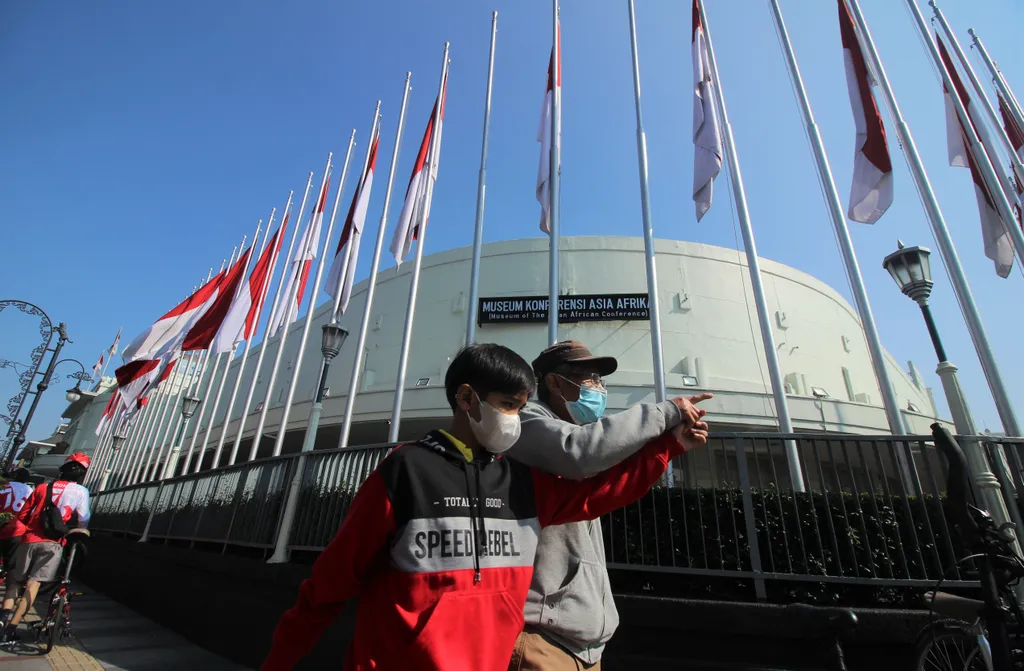
Geographical distance may separate them, but their ties must not be allowed to break. Since joining in the spirit of the 1955 Asian-African Conference (AAC), Indonesia has continually woven links of cooperation with Africa. For Jakarta, Africa is an important partner in preparing for the future.
The Bandung Spirit remains the foundation of Indonesia’s partnerships with African countries. The 1955 AAC focused on the struggle of Asian and African nations to determine their own futures.
Seven decades on, the results of that spirit are clear. Countries on both continents have achieved independence and development, and are playing an increasingly prominent role in shaping the direction of global development.
The spirit has also been translated into broader forms of cooperation. Asia and Africa are working together through practical initiatives to strengthen economic sovereignty, develop human resources and deliver shared prosperity.
“Indonesia stands with Africa as a partner, on the basis of solidarity and mutual respect,” Indonesia’s Permanent Representative to the United Nations, Umar Hadi, said in New York on Monday, 12 October 2026, according to a press statement.
Umar reiterated that commitment during the 18th plenary session of the UN General Assembly. The meeting discussed progress on sustainable development in Africa under the transformation of the New Partnership for Africa’s Development (NEPAD) towards the African Union’s Agenda 2063.
Africa is recording economic progress. The African Development Bank (AfDB) projects that the continent’s gross domestic product (GDP) grew by an average of 4.4 per cent in 2025, with 22 countries recording growth of more than 5 per cent. In 2026, Africa is forecast to grow by 4.2 per cent amid geopolitical tensions and global supply shocks.
Indonesia has welcomed the news. The figures reflect Africa’s resilience and considerable potential to realise Agenda 2063, a vision of a prosperous, integrated and peaceful continent.
One practical form of cooperation between Indonesia and Africa is the Indonesia-Africa Forum (IAF). The first IAF, held in 2018, produced business agreements worth nearly US$600 million, while the second, in 2024, generated agreements worth US$3.5 billion.
The Indonesia-Africa Infrastructure Dialogue, held in 2019, also secured deals worth more than US$800 million. In 2025, the Indonesia-Africa CEO Forum took place in Johannesburg, South Africa.
Other channels of cooperation are also being pursued. Indonesia is holding Trade Expo Indonesia from 14 to 18 October 2026 at the Indonesia Convention Exhibition (ICE) BSD in Banten.
The Indonesian Embassy in Yaoundé is facilitating visits by delegations from Cameroon and the Central African Republic for a series of events at TEI 2026. More than 75 delegates from Cameroon and other African countries are expected, representing government, business, universities, civil society associations and the creative economy.
“Africa has great potential, particularly in natural resources. By that we mean agriculture, livestock and energy. In terms of technological capability, Indonesia can provide extraordinary added value for the region,” Indonesia’s Ambassador to Cameroon, Agung Cahaya Sumirat, said at a press conference in Jakarta on Tuesday, 13 October 2026.
On the sidelines of TEI 2026, Indonesia and Cameroon will hold their second Indonesia-Cameroon Business Forum on 16 October. A day earlier, the Indonesian Embassy in Yaoundé, in cooperation with the South Tangerang City Government, will organise the Tangsel Central African Business Forum.
“Our main aim is to increase investment and trade volumes as part of strengthening economic diplomacy between Indonesia and the African region,” Agung said.
He added that the target for the meetings was at least to match the results of TEI 2025. Last year, Indonesia and Cameroon, for example, established several partnerships worth US$19.5 million, including a project to process cassava into tapioca flour.
“At TEI 2026, there is potential to reach four memorandums of understanding, particularly in agriculture, inorganic fertilisers and organic fertilisers. Cameroon needs fertilisers to increase agricultural production. Other potential areas of cooperation include railways and shipping,” he said.
Cooperation between Indonesia and Africa extends beyond trade and investment. Over the past decade, around 500 participants from Africa have benefited from at least 60 Indonesian South-South and Triangular Cooperation (SSTC) projects, including in health, agricultural technology and livestock. Indonesia has also shared its experience through agricultural training centres in Tanzania and The Gambia.
Indonesia sees significant scope to expand its partnerships from the bilateral to the interregional level. ASEAN economic integration and the establishment of the African Continental Free Trade Area (AfCFTA) create opportunities to increase trade, investment and connectivity between the two regions.
Nevertheless, cooperation still faces several obstacles. For example, access to development finance in Africa remains limited and costly.
Umar said Indonesia had identified three priorities to address these challenges. The first is to strengthen economic sovereignty by adding value to domestic resources, drawing on Indonesia’s experience in downstream processing.
The second is to make investment in human resources the foundation of sustainable development, including through cooperation with African countries on education and agricultural training.
“Third, we must translate the Bandung Spirit into practical partnerships in trade, investment and capacity-building,” Umar said.
In Jakarta, Dewi Justicia Meidiwaty, Director for African Affairs at the Foreign Ministry’s Directorate General for Asia, the Pacific and Africa, added that Indonesia had always considered Africa important. “Our relationship began with the 1955 AAC, and this historic journey has been translated into economic cooperation,” she said.
Source: jawawa.id (https://jawawa.id/newsitem/indonesia-africa-cooperation-ties-continue-to-strengthen-1792068625)
Originally published by kompas.id (https://www.kompas.id/artikel/tali-kerja-sama-indonesia-afrika-terus-teranyam), translated from Indonesian