
Indonesia Affirms Fight for Fair Compensation for Journalistic Works at UNESCO
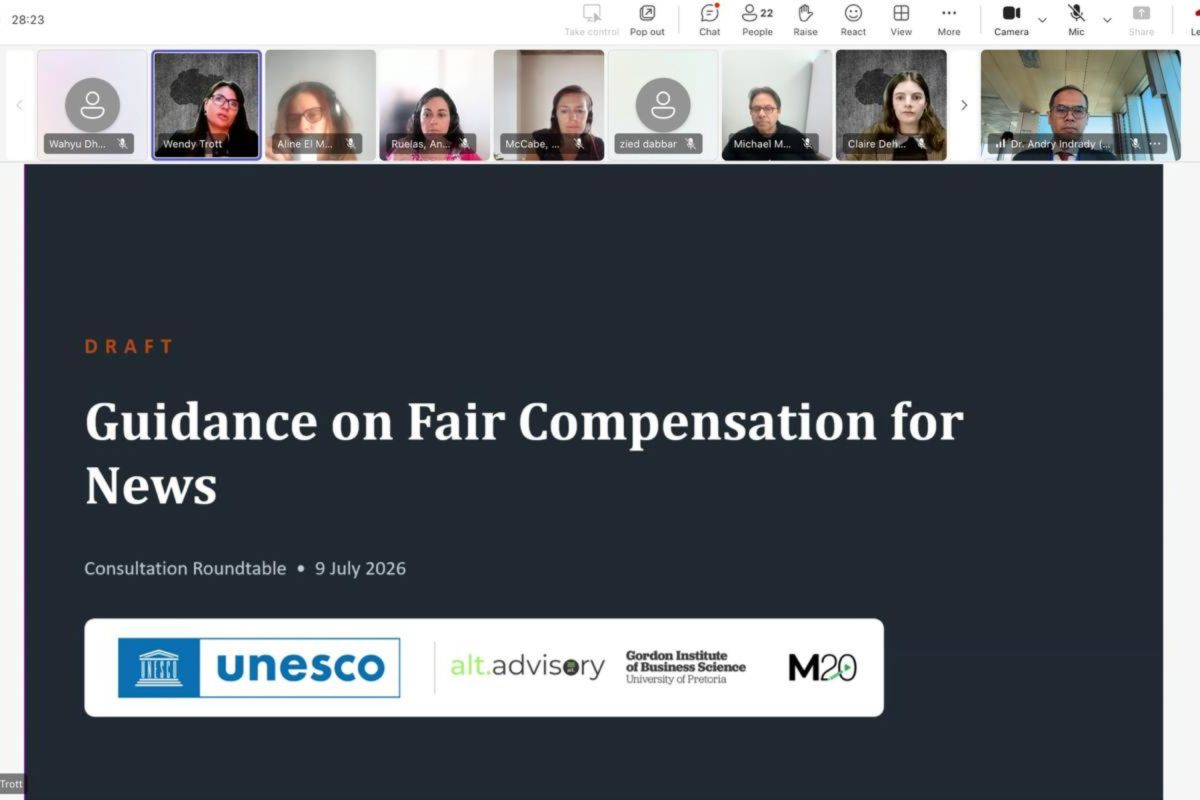
The Indonesian government has affirmed its commitment to fighting for fair compensation for journalistic works utilised by digital platforms and artificial intelligence (AI) providers, during a UNESCO consultation on the draft Guidelines for Fair Compensation for News. In an online group discussion on Thursday, Andry Indrady, Head of the Legal Strategy and Policy Agency at the Ministry of Law, stated that Indonesia is currently drafting a Copyright Bill that explicitly recognises journalistic works as part of copyright protection objects. “This recognition provides a legal foundation for journalists and news publishers to obtain fair economic value for the utilisation of their works,” Andry said, as quoted from a confirmed statement in Jakarta.
He explained that the recognition of journalistic works in the Copyright Bill is a statement that journalistic works have economic value that must be respected by anyone who uses them, including digital platforms and AI developers. However, he noted that a verification mechanism is needed to ensure that the journalists and journalistic products utilised by platforms or AI are genuinely verified, so that compensation benefits are precisely targeted and do not flow to content producers who do not meet journalistic standards. Andry revealed that Collective Management Organisations (LMK) will later be positioned as the main engine for collecting and distributing royalties for journalistic products, with transparent and accountable governance.
To guarantee transparency and interoperability, he continued, reliable metadata is needed to trace the use of various journalistic products by platforms and AI providers across jurisdictions. “Without reliable metadata, we cannot know whose work is used, where, and how much it is worth. Data transparency is the foundation of the entire fair compensation mechanism,” he said. He mentioned that the draft Guidelines on Fair Compensation for News is a companion document to the 2023 UNESCO Guidelines for the Governance of Digital Platforms and is being consulted globally until 30 July 2026.
It was explained that the document arose from international concern over the weakening economic foundation of journalism, namely advertising revenue shifting to digital platforms, the closure of local media in various countries, and the massive use of news content by generative AI systems without adequate attribution and compensation. The United Nations Educational, Scientific and Cultural Organization (UNESCO), he said, views journalism as a public good whose sustainability is a prerequisite for freedom of expression and the public’s right to information. “The draft guidelines map out various compensation mechanisms, ranging from mandatory negotiation frameworks, competition law instruments, copyright-based licensing, to public journalism funds, which can be adapted by each country according to its context,” Andry said.
Andry also emphasised that the UNESCO draft guidelines are very much in line with Indonesia’s proposal at the World Intellectual Property Organization (WIPO) regarding global royalty governance in the digital environment, which prioritises the principles of transparency, accountability, and interoperability. The convergence of policy narratives between the UNESCO and WIPO forums is expected to become a stronger multilateral diplomacy engine for Indonesia, while also rallying support from all stakeholders, such as member states, digital platforms, AI developers, the press community, civil society, and academics, for a healthy and sustainable information ecosystem. Through collaborative and convergent policy narratives in various multilateral forums, he argued, Indonesia is present not merely as a participant, but as a contributor to global norms. “The ultimate goal is one: economic justice for journalists and the sustainability of quality journalism,” he stated. Indonesia’s participation in the consultation is a continuation of its leadership in digital creative economy governance, including through Presidential Regulation Number 32 of 2024 on the Responsibility of Digital Platform Companies to Support Quality Journalism, which has been referenced in the draft UNESCO guidelines as a legislative model.
Source: jawawa.id (https://jawawa.id/newsitem/indonesia-affirms-fight-for-fair-compensation-for-journalistic-works-at-unesco-1783612462)
Originally published by Antara (Indonesian) (https://www.antaranews.com/berita/5643073/ri-tegaskan-perjuangan-kompensasi-karya-jurnalistik-adil-pada-unesco), translated from Indonesian