
Indonesia Affirms Commitment to High-Integrity Carbon Market Development
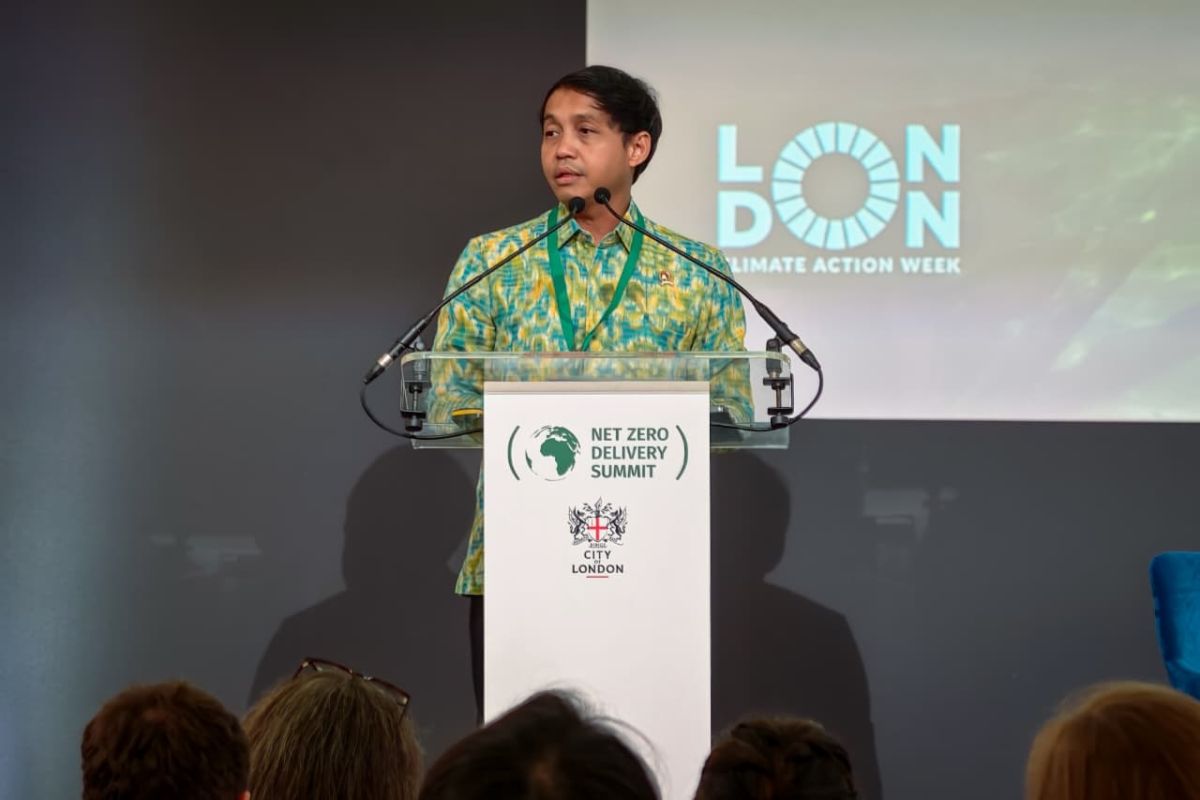
Jakarta (ANTARA) - The Indonesian government has affirmed its commitment to building a credible, transparent, and high-integrity carbon market as a crucial instrument for mobilising global climate finance. Forestry Minister Raja Juli Antoni stated that the main challenge in climate financing today is the lack of conducive conditions for safe and large-scale investment to flow into various climate solutions. “The carbon market has significant potential to channel investment into emission reduction, forest protection, ecosystem restoration, and sustainable development,” said Raja Juli Antoni. “However, to realise this potential, the carbon market must be built on a foundation of integrity, transparency, regulatory certainty, and trust,” he added. He assessed that Indonesia has a strategic interest in strengthening the global carbon market, given its status as one of the countries with the largest tropical forest areas in the world, which plays a vital role in climate change mitigation. To this end, the government continues to strengthen national carbon governance through various policy reforms and institutional instruments. One key milestone is the implementation of Presidential Regulation Number 110 of 2025, which serves as the basis for developing a more integrated and credible national carbon market. In the forestry sector, this is reinforced by Forestry Ministerial Regulation Number 6 of 2026 and Forestry Ministerial Regulation Number 7 of 2026, which regulate carbon governance, transparency, environmental integrity, and investment certainty in forestry carbon activities. As part of strengthening the national carbon market infrastructure, Indonesia will also launch the Carbon Unit Registry System (SRUK) on 9 July 2026. Additionally, on 6 July 2026, the Ministry of Forestry will issue ministerial approvals and facilitate the issuance of forestry carbon credits with a volume exceeding 30 million tonnes of CO2e. “This is proof that Indonesia is not only building a policy framework but also presenting concrete market opportunities that investors can trust,” he said. The Minister also stressed the importance of international collaboration to build a stronger global carbon market. He noted that global financial centres have a vital role in establishing trusted market institutions, developing risk management instruments, and mobilising the investments needed to support the transition to a low-carbon economy. Ahead of COP31, Indonesia is promoting three main agendas for global carbon market development: strengthening market integrity and transparency to increase trust in carbon credits; developing market infrastructure, liquidity mechanisms, and risk-sharing instruments to attract large-scale private and institutional investment; and ensuring that carbon financing delivers tangible benefits to local communities, indigenous peoples, and forest guardians who contribute directly to ecosystem protection.