
Indonesia Affirms Commitment to Building High-Integrity Forest Carbon at New York Business Forum
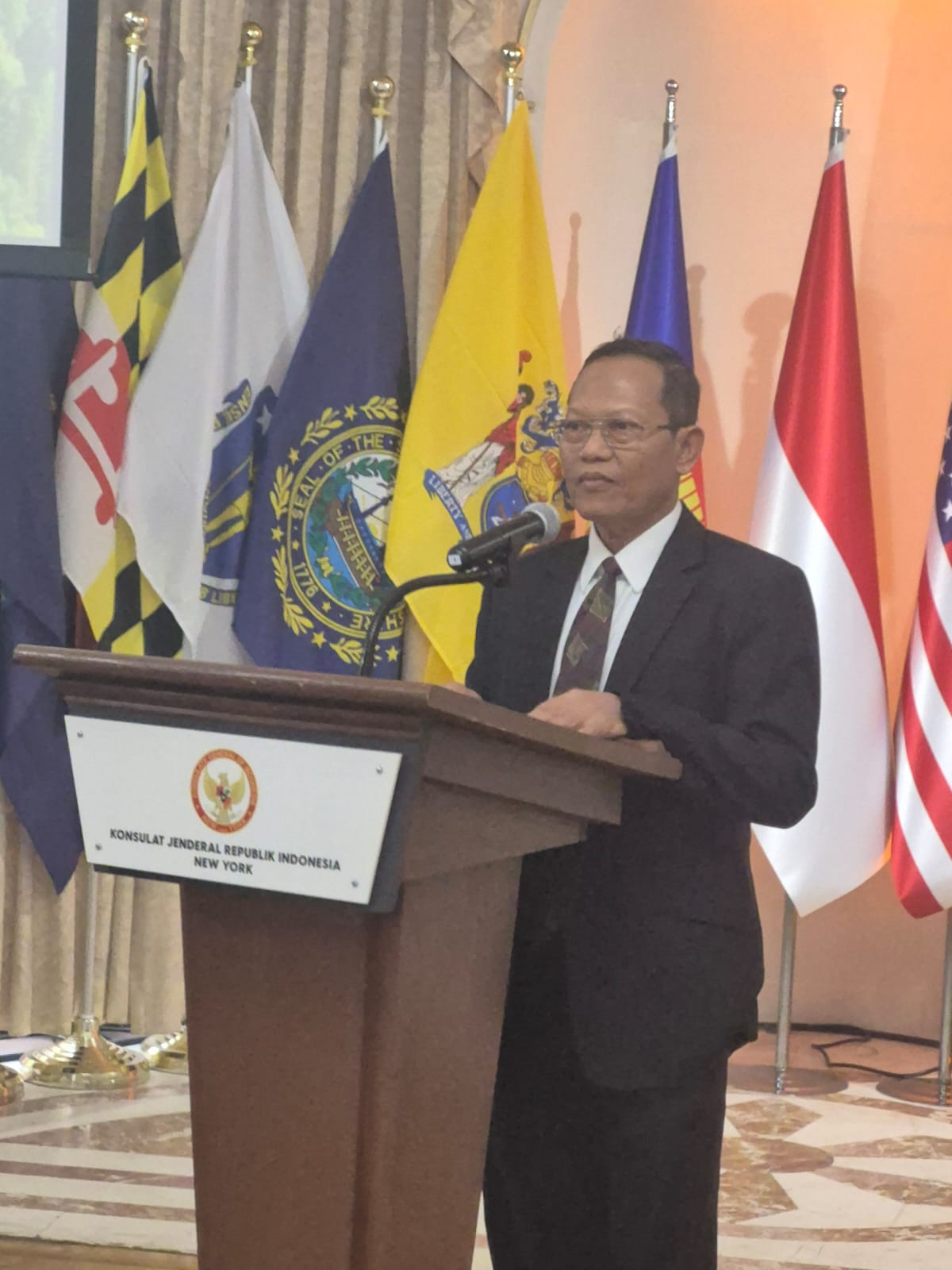
The Indonesian government has affirmed its commitment to building a high-quality and high-integrity forestry carbon trading system as part of strengthening Indonesia’s position in the global carbon market. This commitment was conveyed at the Business Forum on Carbon Market held in New York, United States, on Monday (11/5/2026), as part of the activities of the United Nations Forum on Forests (UNFF) 2026. The forum brought together governments, forestry business actors, international investors, emissions trading associations, and global partners to discuss opportunities for developing carbon projects in Indonesia’s forestry sector.
Forestry Minister Raja Juli Antoni emphasised that Indonesia’s “high-quality and high-integrity” forest carbon means carbon credits produced with a strong scientific basis, transparency, measurability, verifiability, and real benefits for the environment and surrounding forest communities. According to him, Indonesia is not only pursuing the economic value of carbon but also ensuring that forest management maintains ecosystem sustainability, biodiversity, and the welfare of local communities. “Indonesia’s forests are ready to become the basis of trust and international investment,” said Raja Juli Antoni at the forum.
He explained that the government has strengthened the governance framework through Ministerial Regulation on Forestry No. 6 of 2026 on the Procedures for Carbon Trading through Greenhouse Gas Emission Offsets in the Forestry Sector. This regulation serves as a national framework to ensure no double counting occurs, strengthens carbon recording transparency through the National Registry System (SRN), and aligns Indonesia’s carbon trading with international standards, including global carbon integrity principles and the mechanisms of Article 6 of the Paris Agreement. According to Raja Juli, this approach is an important part of building international market trust in Indonesia’s forestry carbon.
Director General of Sustainable Forest Management at the Ministry of Forestry Laksmi Wijayanti stated that the quality of Indonesia’s forest carbon is also built through a Multi-Forestry Business (MUK) approach, where forest management is not only oriented towards carbon but also maintains a balance of social, economic, and environmental aspects. “Indonesia is currently developing multi-forestry business-based forest management, where carbon becomes one of the sources of economic value that complements sustainable forest management, along with timber forest products, non-timber forest products, environmental services, and strengthening community economies,” said Laksmi. According to her, this approach is expected to create broader economic benefits for communities around forests while strengthening the resilience of forest areas against climate change pressures.
General Chairman of APHI Soewarso said the forestry business world fully supports the development of high-integrity carbon because international market acceptance is highly determined by the quality of governance and the credibility of the carbon projects developed. According to him, Indonesia’s forestry carbon must be able to demonstrate real benefits in the form of emission reductions, forest protection, peatland restoration, rehabilitation of degraded areas, and improved welfare of communities around forest areas.
“APHI and all members are fully committed to promoting the development of high-integrity and quality carbon initiatives, so as to make a significant contribution to Indonesia’s greenhouse gas emission reduction targets,” said Soewarso. He added that the development of forestry carbon is also expected to strengthen the green investment climate and open up opportunities for sustainable financing in Indonesia’s forestry sector.
Meanwhile, APHI Secretary General Purwadi Soeprihanto said the main challenge in developing Indonesia’s forestry carbon is ensuring governance consistency, strengthening field capacity, regulatory harmonisation, and increasing global market trust in national carbon projects. According to him, carbon projects must be built through strong landscape governance, accurate spatial planning, and international collaboration support to produce high-quality carbon credits.
Purwadi added that Indonesia’s forestry concession areas have great potential with around 48.69 million hectares of potential area for emission reduction projects and around 3.5 million hectares of potential area for carbon absorption projects. “Carbon must be part of multi-forestry business and developed through strong landscape governance, accurate spatial planning, and supported by international cooperation and investment to produce high-integrity carbon credits,” he said.
Through this business forum, Indonesia affirmed that forestry carbon trading is not only positioned as an economic instrument but also as a means to strengthen sustainable forest management, support the FOLU Net Sink 2030 target, improve the welfare of communities around forests, and strengthen Indonesia’s contribution to the global climate change mitigation agenda.