
Indonesia adds 410,000 formal workers in one year
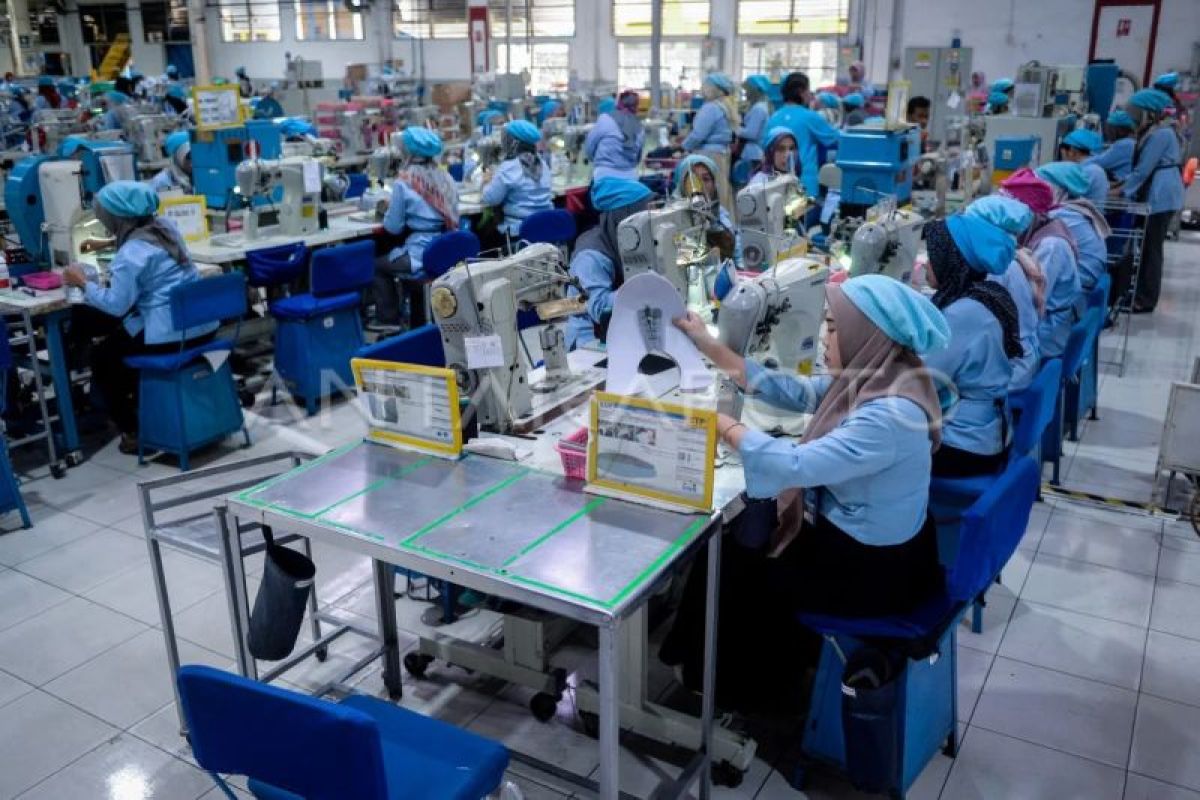
The number of formal workers rose from 61.84 million in August 2025 to 62.25 million in August 2026.
“Driven by an increase in the number of laborers, employees, and civil servants, the number of formal workers reached approximately 62.25 million in August 2026,” M. Edy Mahmud, Deputy for Balance Sheet and Statistical Analysis at BPS, said at a press conference on Thursday.
BPS also reported that the sectors employing the largest shares of workers in August 2026 were agriculture (28.20 percent), wholesale and retail trade (17.86 percent), and manufacturing (13.75 percent).
Meanwhile, the share of informal workers also increased, from 57.80 percent in August 2025 to 57.93 percent in August 2026.
According to the International Labour Organization (ILO) definition, anyone who works for at least one hour during the reference week is classified as employed, Edy said.
Based on working hours, the employed population is divided into three categories: full-time workers, who work at least 35 hours a week; part-time workers, who work fewer than 35 hours a week and are not seeking or available for additional work; and underemployed workers, who work fewer than 35 hours a week but are seeking or available for additional work.
In August 2026, BPS recorded that full-time workers accounted for 67.47 percent of the employed population, or 99.85 million people. Part-time workers made up 23.85 percent, or 35.29 million people, while underemployed workers accounted for 8.68 percent, or 12.84 million people.
Regarding educational attainment, Edy said approximately 13.37 percent of the employed population had a tertiary education or a diploma.
However, BPS noted that 33.89 percent of employed people had completed only elementary school or had a lower level of education, making them the largest educational group in Indonesia’s workforce.
“Compared with August last year, the share of workers with an elementary school education or lower declined, while the proportion of workers with a diploma or higher education increased,” Edy said.
Related news: Indonesia urges Hong Kong to open formal sectors for workers
Related news: Govt encourages workers to enter formal employment through empowerment
Translator: Arnidhya Nur, Resinta Sulistiyandari