
Indonesia Achieves FAO Food Self-Sufficiency Standard, Imports Below 10%
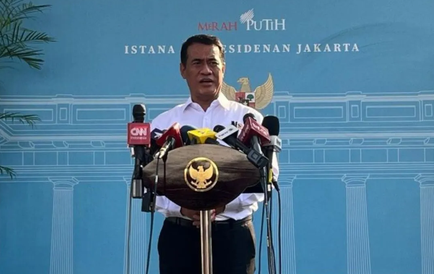
Agriculture Minister Andi Amran Sulaiman has confirmed that Indonesia has officially achieved aggregate food self-sufficiency status. The claim is based on the maximum import threshold indicator set by the Food and Agriculture Organization (FAO). In a press statement at the State Palace, Jakarta, on Thursday (18/6/2026), the Minister described the achievement as an important milestone for national food security amidst global challenges.
Referring to the standard FAO provisions of 1999, a country is categorised as self-sufficient if its dependence on food imports is below the 10 per cent threshold. Based on the latest data, Indonesia has surpassed this standard with a significantly lower import dependency ratio.
The Minister detailed that total domestic food production volume has now reached 73 million tonnes, while total national demand stands at 68 million tonnes. The accumulated imports for commodities that are not yet self-sufficient amount to only around 3.5 million tonnes.
“Our national requirement is 68 million tonnes, while our production has reached 73 million tonnes. If we calculate it, the ratio of the 3.5 million tonne shortfall compared to the total 73 million tonnes of production is only around 4 to 5 per cent,” explained Andi Amran Sulaiman.
With these figures, Indonesia’s aggregate food resilience is very strong because its dependence on foreign sources is far below the 10 per cent maximum threshold set internationally.
The government continues to closely monitor 12 main food commodities that serve as pillars of national stability. The majority of these have shown encouraging performance.
Although there are still three commodities that require imports, the Minister stressed that the accumulated import volume does not undermine the national self-sufficiency status, as it is offset by surpluses in other strategic commodities such as rice and maize.
Achieving the FAO standard does not mean the government will relax its oversight. The future focus is on strengthening the upstream sector for the three commodities that are still in deficit: garlic, beef, and soybeans. Land intensification measures and the use of modern agricultural technology are key to further reducing the 4-5 per cent import dependency ratio until it approaches zero.