
Indonesia Accelerates Low-Carbon Industrial Transformation to Achieve Net Zero Emission by 2050
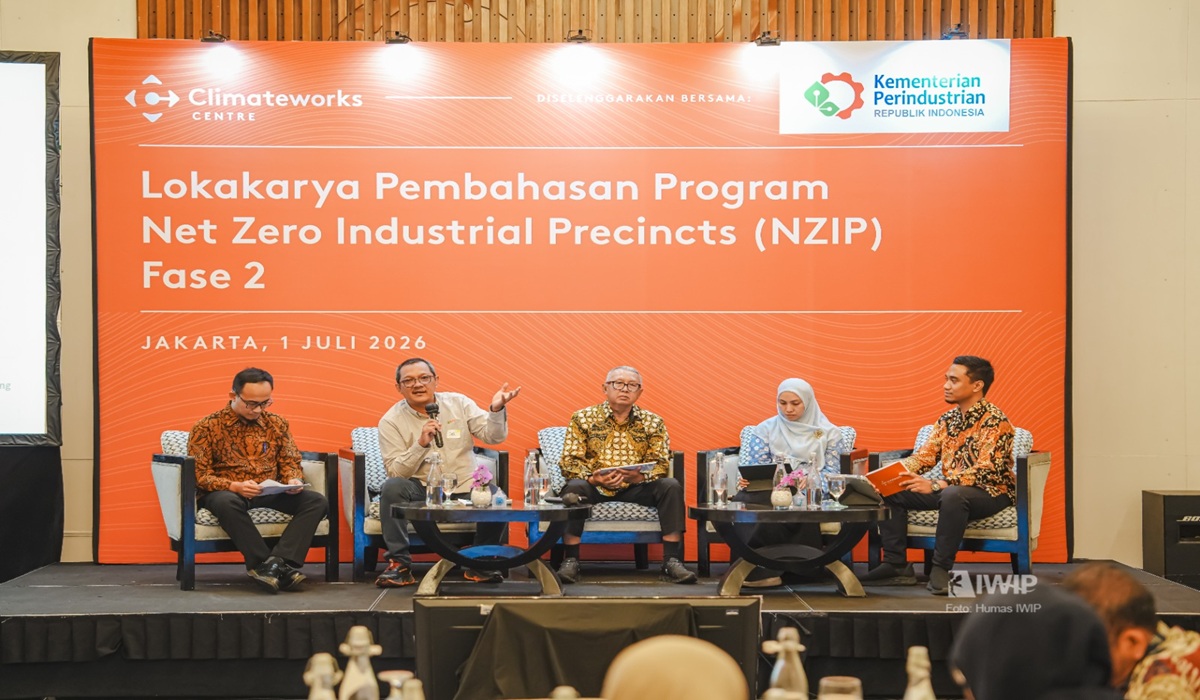
Efforts to transform towards low-carbon industrial zones are being strengthened to support the national decarbonisation agenda and achieve the Net Zero Emission (NZE) target for the industrial sector by 2050. This strategic move is being accelerated through cross-sector collaboration focusing on energy efficiency and integrated environmental management in various strategic manufacturing centres across the country. The commitment is realised through active participation in the Net Zero Industrial Precincts (NZIP) programme. The programme is an initiative of the Ministry of Industry together with the Climateworks Centre, specifically designed to encourage the development of sustainable industrial ecosystems in Indonesia. The progress of the NZIP programme Phase 2 was recently discussed in a workshop held in Jakarta on Tuesday, 1 July 2026. The forum brought together government officials, industrial zone managers, industry players, and various stakeholders to strengthen synergy in accelerating the green transition. One party demonstrating strong commitment to this agenda is PT Indonesia Weda Bay Industrial Park (IWIP). As part of a major industrial zone, IWIP continues to integrate low-carbon principles into its operations to align with global standards and national policies. Director of Industrial Zoning at the Ministry of Industry, Dr. Winardi, M.Si., stated that industrial zones must now transform into ecosystems that promote resource efficiency and clean energy utilisation. He noted that through this approach, zone managers, tenants, the government, and various stakeholders can jointly identify emission reduction opportunities through improved energy efficiency, renewable energy adoption, and more circular waste management systems within industrial zones. The industrial sector absorbs nearly 46 percent of national energy consumption, making the utilisation of solar power plants a key factor in achieving efficiency and decarbonisation. Through the NZIP collaboration, the national industry’s competitiveness in the global market is expected to increase, in line with the growing international demand for products manufactured through low-emission processes.