
Indonesia Accelerates Development of Global Halal Ecosystem with D-8
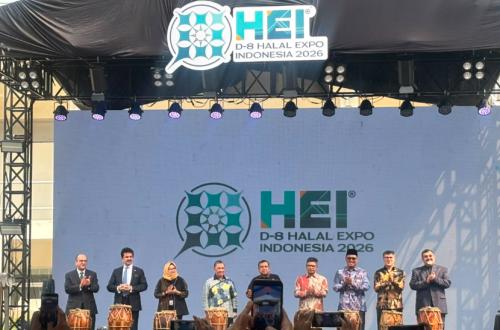
JAKARTA – Demand for halal products continues to rise in line with the expansion of the world’s Muslim consumer market. However, the interconnection of the global halal ecosystem remains a problem.
Various links in the chain, from raw materials and production to certification, logistics and distribution, are not yet fully integrated, so opportunities for trade, investment and value creation in this sector have not developed optimally.
This issue of interconnection is one of the focal points of the D-8 Halal Expo Indonesia (HEI) 2026, to be held at the Indoor Tennis Stadium in Senayan, Jakarta, from 8 to 12 July. As holder of the Developing Eight (D-8) chairmanship for 2026-2027, Indonesia is using the exhibition as a means of strengthening economic cooperation among member states.
Carrying the theme “Strengthening the D-8 Halal Economy Through International Collaboration”, the D-8 HEI brings together business players, investors, regulators and research institutions to broaden collaboration in the halal economy sector.
The exhibition will feature trading activities, business matching, panel discussions and business meetings involving D-8 member states and a number of partner countries. The D-8, or Developing Eight, is an economic cooperation organisation of developing countries founded in Istanbul, Turkey, on 15 June 1997 to strengthen trade, investment and economic development among members. Its original members were Indonesia, Malaysia, Turkey, Iran, Pakistan, Bangladesh, Egypt and Nigeria. At the end of 2024, Azerbaijan officially joined as the ninth member.
Collectively, the D-8 countries possess enormous economic potential, with a population of around 1.3 billion people, or 16 per cent of the world’s population, and a combined gross domestic product of about US$5.1 trillion. This strength serves as capital for the D-8 to expand trade, investment and industrial cooperation across various strategic sectors.
The D-8 countries have set a target of US$500 billion in internal trade by 2030. To pursue that target, strengthening the halal industry is one of the areas receiving attention, as it encompasses high-value sectors ranging from food and beverages, cosmetics, pharmaceuticals, fashion and tourism to sharia finance and digital services.
Deputy Foreign Minister of the Republic of Indonesia Anis Matta said Indonesia is encouraging the D-8 to become a new force in the global halal economy by strengthening economic integration with the Islamic world. D-8 HEI 2026 is designed as a platform to expand business partnerships, investment and knowledge exchange among member states.
The staging of the exhibition also aligns with Indonesia’s commitment to strengthening the global halal value chain. This is consistent with President Prabowo Subianto’s statement at the 11th D-8 Summit in Cairo in December 2024 regarding the importance of strengthening the halal economic network and Indonesia’s role as one of the world’s halal economic hubs.
According to Ary Aprianto, Director of Socio-Cultural Affairs and Strategic Partnerships at the Directorate General of Multilateral Cooperation of the Indonesian Ministry of Foreign Affairs, the D-8 HEI is directed at strengthening the halal supply chain from upstream to downstream, from the provision of raw materials, industrial estates and logistics to distribution, capacity building and technology exchange.
This means the competitiveness of the halal industry cannot rely solely on end products, but also on the ability to build efficient and integrated supply chains.