
Indomaret and Alfamart Workers Face Extinction as China Offers a Replacement
Jakarta, CNBC Indonesia — Rapid advances in artificial intelligence (AI) and robotics are beginning to pose a tangible threat to the global retail industry. The arrival of automated, robot-powered shops is creating a new challenge for human workers around the world, including cashiers and employees at modern convenience-store chains such as Indomaret and Alfamart in Indonesia.
The technology allows shops to operate around the clock without tiring, taking breaks or requiring leave. Unlike human workers, robotic systems are designed to manage all store operations automatically without requiring a monthly salary.
Although adoption has yet to become widespread in Indonesia, unstaffed convenience stores are gaining ground in several parts of Asia. The trend is a strong signal that retail is entering a new phase, one that could significantly reduce demand for workers in the future.
Ro-bodega makes its debut in Hong Kong
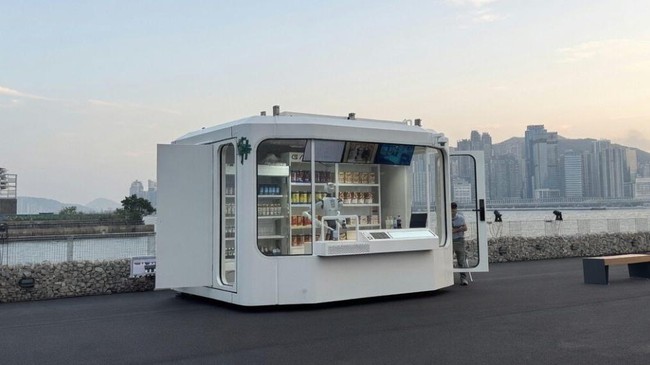
After attracting attention in mainland China, the fully robot-powered convenience-store concept has officially arrived in Hong Kong. One of the most talked-about examples is Ro-bodega, located in the Hung Hom waterfront area.
Ro-bodega has immediately caught the attention of global retail businesses. Its fully automated model is seen as a glimpse of how technology could transform store operations, from stock management to customer service.
The store operates entirely without human staff. Every task — including restocking shelves, retrieving customers’ orders and processing payments — is handled independently by a humanoid robot called Xiao Gai, the South China Morning Post reported.
Developed by Beijing-based AI and robotics giant Galbot, Xiao Gai stands 1.67 metres tall and has an arm span of 1.8 metres. The robot is not only physically capable but also equipped for interactive communication and can speak several languages.
The goods on sale are much like those found in an ordinary convenience store: snacks, chilled drinks and over-the-counter medicines — just like the shops found on almost every street corner in Indonesia.
The project, backed by the Hong Kong Investment Corporation, demonstrates that the integration of AI and robotics is becoming part of everyday life. Galbot projects that the unusual store could boost footfall in the area by up to 40%.
Beyond Hong Kong and Beijing, Galbot has set an ambitious target to launch 100 similar robot-powered capsule stores in 10 other major cities.
Warning sign for Indonesia’s retail workers
The growing trend is a stark warning for Indonesia’s retail industry. If the technology proves increasingly efficient and becomes cheaper to adopt, unstaffed convenience stores could soon enter the Indonesian market. As a result, thousands of shop jobs currently held by people could potentially be taken over by machines.
The drive for efficiency through robotics is also consistent with global trends in other sectors. In aviation, for example, Japan Airlines recently began trialling baggage-handling robots at Haneda Airport.
However, full automation is not without its flaws. A series of failures involving AI robots has attracted public attention. Earlier this year, a viral video showed a restaurant-serving robot ‘going berserk’ and throwing tableware.
Elsewhere, an AI agent assigned to run a coffee shop in Stockholm reportedly drained its entire operating budget in less than a month after mistakenly ordering 3,000 pairs of unwanted rubber gloves.
Despite these technical shortcomings, the spread of automation is difficult to stop. For retail workers, the threat of layoffs driven by technological efficiencies is no longer merely hypothetical; it is drawing ever closer.
Source: jawawa.id (https://jawawa.id/newsitem/indomaret-and-alfamart-workers-face-extinction-as-china-offers-a-replacement-1792227016)
Originally published by CNBC Indonesia (https://www.cnbcindonesia.com/tech/20261017121148-37-777084/pegawai-indomaret-alfamart-terancam-punah-ada-penggantinya-di-china), translated from Indonesian