
Indomaret and Alfamart Staff Could Become Obsolete as Replacement Emerges in China
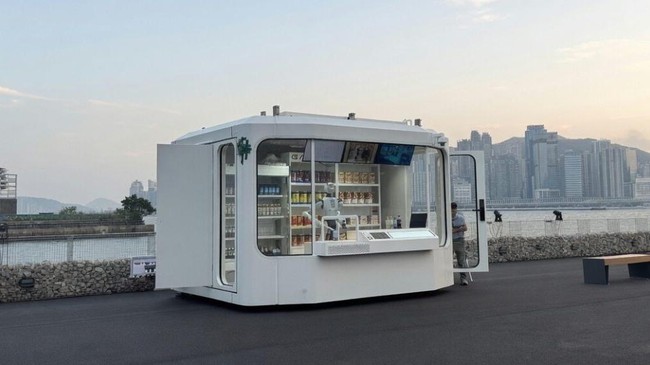
Artificial intelligence (AI) technology is bringing major changes to various business sectors, including retail. This also impacts human employment, as AI development increasingly leads to machine-based task automation. This automation is tempting for businesses because it can boost productivity and efficiency. Imagine a grocery shop or convenience store operating fully for 24 hours without a single employee who feels tired, requests leave, demands benefits, let alone asks for a pay rise. This phenomenon is no longer just a science fiction prediction, but a new reality pioneered by Chinese technology giants and is now beginning to penetrate the Hong Kong market. An autonomous robot shop named “Ro-bodega” has officially opened in the strategic Hung Hom waterfront area of Hong Kong. The presence of this smart shop immediately caused a stir and served as a loud alarm for conventional retail industry players worldwide. What makes Ro-bodega special, yet terrifying for the future of the workforce, is the absence of humans inside the shop. The entire operational chain, from the restocking process, picking up consumer orders, to the payment transaction process, is fully controlled by a single humanoid robot named Xiao Gai. The 1.67-metre-tall robot with an arm span of 1.8 metres was developed by Galbot, a leading AI and robotics company based in Beijing. Not only is it adept at performing physical tasks, Xiao Gai is also equipped with friendly social interaction skills and the ability to communicate in various languages through generative AI support. The goods sold in this shop are quite comprehensive, ranging from snacks and fresh drinks to over-the-counter light medicines. These commodities are exactly like what we usually find in local Indonesian convenience store chains such as Indomaret and Alfamart. The ambitious Ro-bodega project is fully supported by the Hong Kong Investment Corporation as tangible proof of AI’s commercial penetration into people’s daily lives. Galbot claims the novelty effect of the Xiao Gai robot successfully boosted visitor traffic in the area by 40%. Not satisfied with just one location, Galbot is targeting an aggressive expansion by launching 100 similar robot-based capsule shops in 10 other major cities. Previously, a similar pilot project was successfully operated in the super crowded Summer Palace tourist area in Beijing. The rapid adoption of this service robot technology is certainly a warning signal for the domestic retail industry. If the capital expenditure investment costs for this technology become cheaper and reach an economic scale, it is not impossible that the concept of human-less convenience stores will be adopted by giant retail corporations in the Indonesian market. When that moment arrives, the positions of cashiers and sales assistants, which have been one of the largest absorbers of labour in Indonesia, will slowly but surely be eliminated by automation. However, this migration to the robotic era is not without its flaws. In other parts of the world, technological transitions are often marked by fatal errors. In Stockholm, Sweden, an AI agent assigned to manage a coffee shop burned through its budget in a month because it mistakenly ordered 3,000 pairs of unnecessary rubber gloves. Elsewhere, a restaurant service robot went viral after losing control and throwing cutlery at visitors. Yet, history records that the pace of technological disruption cannot be stopped. For millions of workers in the retail sector, the threat of layoffs due to automation is no longer just an issue on paper, but a real threat whose replacement is now already operating and serving buyers in China.