
Indomaret and Alfamart Staff Could Become Obsolete as Chinese Robot Shop Expands
The retail industry is beginning to undergo transformation due to the development of advanced technologies such as artificial intelligence (AI) and robotics. Cashiers and shop staff at modern retail outlets like Indomaret and Alfamart appear to need to start preparing for a real disruption threat. This is because a shop ‘employee’ has now arrived that never tires, needs no leave, and demands no salary even while working nonstop 24 hours. The wave has not yet reached Indonesia, but it is already strengthening in other Asian countries.
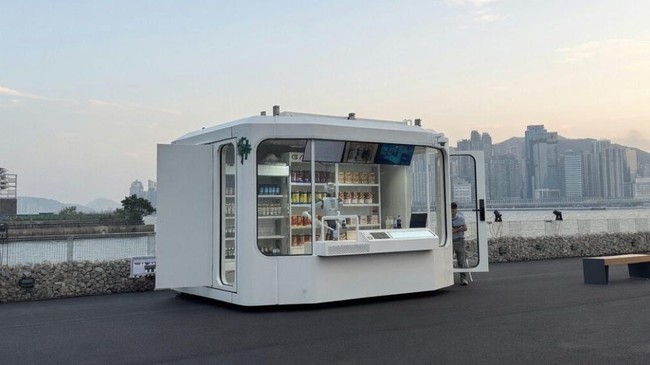
After causing a stir in China, the fully robot-powered retail shop has now officially expanded to Hong Kong. The shop, named Ro-bodega and located in the Hung Hom waterfront area, has suddenly become a focus of attention for global retail industry players. The shop operates fully without a single human worker. All operational activities—from restocking shelves, retrieving customer orders, to processing payment transactions—are handled independently by a humanoid robot named Xiao Gai, as reported by the South China Morning Post.
Developed by Beijing-based AI and robotics giant Galbot, Xiao Gai stands 1.67 metres tall with an arm reach of up to 1.8 metres. Not only is it skilled at performing physical work, the smart robot is also equipped with friendly communication abilities in multiple languages. The products on offer are very familiar, ranging from snacks, cold drinks, to over-the-counter medicines—exactly like the minimarkets commonly found on street corners across Indonesia.
The project, backed by the Hong Kong Investment Corporation, serves as clear evidence that the integration of AI and robotics has penetrated everyday life. Galbot even projects that the unique shop’s appeal could boost visitor traffic in the area by up to 40 percent. Not stopping at Hong Kong and its first location at the Summer Palace in Beijing, Galbot is targeting the launch of 100 similar robot-based capsule shops in 10 other major cities.
This trend clearly serves as a loud alarm signal for the domestic retail industry. If the efficiency of this technology becomes more proven and adoption costs become cheaper, it is not impossible that the human-free minimarket concept will soon invade the Indonesian market. The consequence is clear: the positions of thousands of shop workers currently filled by humans could potentially be replaced by machines.
Robotics-based efficiency measures are also in line with global trends. In the aviation industry, for example, Japan Airlines recently began testing baggage-handling robots at Haneda Airport. Nevertheless, total automation is not without flaws. A series of AI robot failures has drawn public attention. Earlier this year, a viral video showed a restaurant service robot ‘going berserk’ and throwing dining utensils in all directions. Additionally, an AI agent tasked with managing a coffee shop in Stockholm drained the entire operational budget in less than a month due to a blunder in ordering 3,000 pairs of rubber gloves that were completely unnecessary.
Although technical issues remain, the pace of robotic technology is difficult to stop. For workers in the retail sector, the threat of layoffs due to automation is no longer merely futuristic discourse, but an increasingly tangible reality.
Source: jawawa.id (https://jawawa.id/newsitem/indomaret-and-alfamart-staff-could-become-obsolete-as-chinese-robot-shop-expands-1787727071)
Originally published by CNBC Indonesia (https://www.cnbcindonesia.com/tech/20260826112922-37-762301/pegawai-indomaret-alfamart-bisa-punah-penggantinya-muncul-dari-china), translated from Indonesian