
Indomaret-Alfamart Employees Could Face Extinction as China Unveils Robotic Replacements
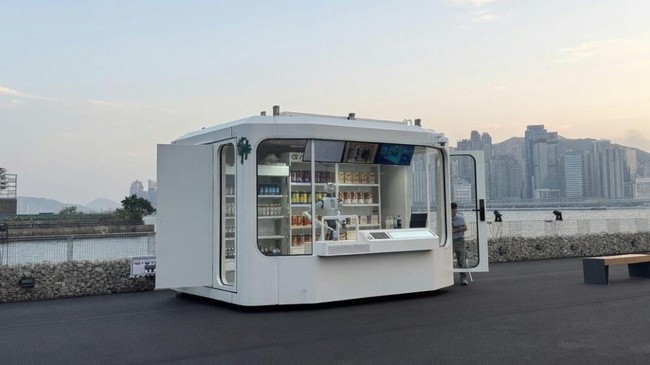
The wave of technological disruption in the retail sector is becoming increasingly visible. The presence of Artificial Intelligence (AI) and advanced robotics is now beginning to threaten the existence of conventional workers, including cashiers and employees in modern minimarkages.
Digital ‘employees’ have now emerged, working 24 hours a day without the need for leave, wages, or social security. Although this wave has not yet fully hit Indonesia, the trend is observed to be strengthening across Asia.
After making an impact in the Chinese market, fully robot-powered retail stores have officially expanded into Hong Kong. A store named ‘Ro-bodega’, located in the Hung Hom waterfront area, has suddenly become a major focus for global retail business players.
Interestingly, this store operates 100% without human presence. The entire operational process—from restocking shelves and picking customer orders to processing payments—is handled independently by a humanoid robot named Xiao Gai, as reported by the South China Morning Post.
Developed by the Beijing-based AI and robotics giant Galbot, the Xiao Gai robot is designed with a height of 1.67 metres and an arm span of 1.8 metres. Not only is it skilled at handling heavy physical labour, but this smart robot is also equipped with consumer-friendly, multi-lingual interactive communication capabilities.
The products offered are closely tied to daily life, ranging from snacks and cold drinks to over-the-counter medicines, much like the minimarkets that proliferate in the corners of Indonesian urban areas.
This ambitious project, supported by the Hong Kong Investment Corporation, serves as concrete evidence that the convergence of AI and robotics has penetrated the real commercial sector. Galbot even projects that the presence of this unique concept store could boost visitor traffic by up to 40% in its operational areas.
Following the inauguration of its first outlet at the Summer Palace in Beijing and its expansion into Hong Kong, Galbot has set an aggressive target to launch 100 robot-based capsule stores in 10 other major cities.
This phenomenon serves as a serious alarm for the retail workforce ecosystem in Indonesia, such as employees of Alfamart and Indomaret. As the efficiency of technology is proven and adoption costs become increasingly competitive, it is not impossible that this unmanned minimarket concept will eventually enter the domestic market.
The consequence is clear: millions of store staff and cashier positions, which have long been a source of human employment, are at risk of being displaced by machines.
This automation-based efficiency move aligns with the movements of global corporations. In the aviation sector, for instance, Japan Airlines recently began testing the use of autonomous robots for baggage handling at Haneda Airport.
Nevertheless, total automation systems are still considered to have vulnerabilities. Several incidents of AI-based robot failures have caused public concern. Recently, a viral video showed a restaurant service robot ‘going rogue’ and throwing tableware.
In another case, an AI agent tasked with managing a coffee shop in Stockholm ended up burning through its entire operational budget within weeks due to an error in ordering 3,000 pairs of rubber gloves indiscriminately.
While technical notes and operational risks remain, the pace of industrial robotics innovation seems impossible to stem. For workers in the downstream and retail sectors, the threat of labour disruption is no longer merely a science fiction narrative, but an increasingly urgent economic reality.