
Indomaret-Alfamart Employees Could Become Extinct, Their Replacement Emerges in China
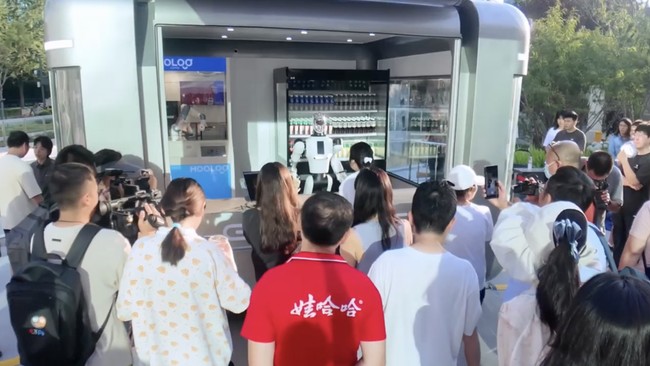
In the era of artificial intelligence (AI) technology, concerns are emerging that certain jobs may become obsolete. This is because AI can perform tasks that previously required human involvement. For example, in the United States (US), e-commerce giant Amazon has already utilised robots in its warehouse facilities to carry out various tasks. Meanwhile, China has a robot training centre in Wuhan that trains robots to perform jobs such as making coffee and everyday household tasks. Recently, reports indicated that a Chinese startup has opened a ‘stall’ managed by robots. This innovation could threaten the existence of convenience store employees, for instance, those at Indomaret and Alfamart in Indonesia. Galbot, a company in the robotics industry, opened a kiosk in Beijing in August 2025 operated by humanoid robots. They describe the kiosk as the “first store operated by autonomous humanoids.” The humanoid used is the Galbot G-1, a two-armed robot launched by Galbot in June 2024. The robot can move around the kiosk to fetch items and hand them to customers, just like a human employee. “The Galbot G-1 robot manages everything, serving thousands of customers every day. From greeting them, serving drinks, snacks, and medicine. Galbot handles every order without remote commands, powered by GroceryVLA and GraspVLA,” the company stated. However, the Galbot G-1’s movements are still somewhat slow. Its functions are not much different from a vending machine. Galbot stated that similar kiosks will be opened across China. Most recently, Galbot opened a kiosk in a bustling area in Beijing, namely the Summer Palace. Galbot CEO Wen Airong revealed ambitions to open 100 stores in 10 cities in China by 2026. To achieve this ambition, he and his team must overcome two challenges: creating more “natural” interactions and improving operational speed. Robot developers, according to Futurism, are indeed struggling to create voice sensor systems that function smoothly in the real world due to variations in voice volume and accents. Movement issues are also a major challenge, particularly in creating bipedal robots. To date, according to Futurism, there is no standard design for robot movement using legs.