
Indo-Dutch Residents Lived Like Royalty in Batavia, While Natives Served as Servants
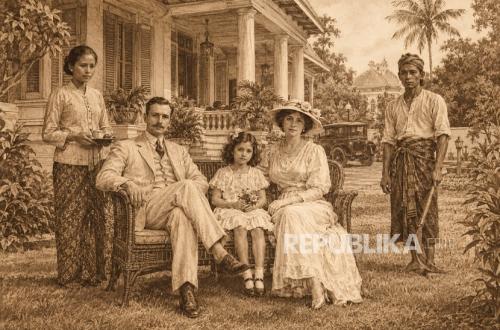
Approximately 100 years ago, the city of Batavia had a population of only 450,000. Of these, 25,000 were Europeans, and two-thirds of that number were Indo-Dutch, or mixed-race.
The caste of Indo-Dutch or Indo-European residents was not equal to that of pure Europeans. They were born from Dutch masters and ‘Nyai’ (concubines) who were indigenous women. For the VOC, Europeans born in the colonies—especially those born to concubines—held a very low social status.
Despite being looked down upon by Europeans or the Dutch, Indo-Europeans were spread throughout the city, living in both grand mansions and simple dwellings. Many resided along the muddy and dirty streets of villages located on the outskirts of the city, such as Kemayoran in Central Jakarta.
This area was known by the term ‘Belanda Kemayoran’, referring to the Indo-Dutch residents living in Kemayoran.
Kemayoran was not the only place where Indo-Dutch communities gathered. Several villages in Batavia also housed Indo-Dutch individuals or ‘China totok’ (pure Chinese). However, while the ‘China totok’ were often reluctant to socialise with the indigenous villagers, the Indo-Dutch were not.
Alwi Shahab, a journalist for Republika, recalled that during his childhood in Kwitang, he socialised extensively with Indo-Dutch children. Almost every day, he played football with them at the Kwitang and Gambir fields, the latter of which has now been transformed into the Monas area.
Dutch and Indo-Dutch residents left Indonesia in the mid-1950s when relations between the two nations were severed due to the West Papua dispute. In 1928, the city centre of Batavia was dominated by large houses.
Until the 1950s, along the main roads connecting Kramat, Salemba, Matraman, and Jatinegara, there were many large buildings with vast yards. Today, these buildings have been repurposed into offices, companies, and hotels.
One of the historical buildings, the National Archives and the Department of Social Affairs on Jalan Salemba, was originally a residential house. These houses were initially built as county residences for Europeans, but they were gradually absorbed into the suburban areas.
As noted by Pamela Pattynama in the book ‘Recalling the Indies’, the status and prosperity of residents could be measured by their dwellings. Some houses resembled palaces, featuring cool rooms with high ceilings, galleries, and marble terraces set against lawns decorated with palm trees and other greenery.
Source: jawawa.id (https://jawawa.id/newsitem/indo-dutch-residents-lived-like-royalty-in-batavia-while-natives-served-as-servants-1790247557)
Originally published by Republika (https://news.republika.co.id/berita/tlv5n0282/warga-blaster-indobelanda-hidup-seperti-raja-di-batavia-warga-pribumi-hanya-jadi-babu-dan-jongos), translated from Indonesian