
Indigenous Communities Must Be Recognised as Conservation Subjects
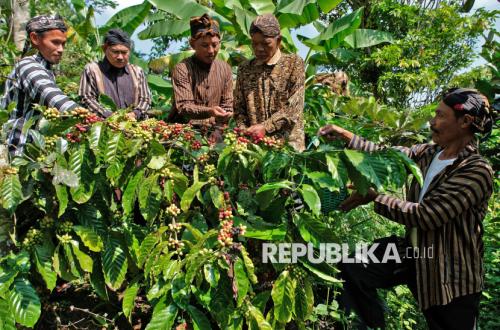
The Ancestral Domain Registration Agency (BRWA) asserts that indigenous peoples must be acknowledged as subjects of conservation, rather than simply being seen as custodians of nature. This recognition is deemed crucial because indigenous communities have been implementing environmental preservation practices long before modern conservation concepts developed.
Aria Sakti Handoko, Deputy Chair of the People Conservation Summit (PCS) Organising Committee from BRWA, stated that the momentum for recognising indigenous peoples in conservation is strengthening, driven by increasing global attention to the role of indigenous and local communities in safeguarding biodiversity.
“Indonesia is a megabiodiversity country that has been protected for hundreds of years. Not only through conservation policies but also through practices that existed long before the Indonesian state was formed,” Sakti said during a preparatory discussion for the summit on Monday (29/6/2026).
According to Sakti, various indigenous communities across Indonesia have long implemented conservation practices passed down through generations. He cited examples such as customary forest protection rules in Mount Halimun-Salak, traditions of respecting water sources in Bali, and marine resource management by indigenous communities in Maluku.
“These are all forms of conservation practices and noble values born from the ideas of indigenous communities living in harmony with nature, ecosystems, and species,” he explained.
Sakti emphasised that the People Conservation Summit is important because the world already possesses a global framework that recognises indigenous peoples and local communities as conservation subjects. The outcomes of the consolidation will be brought to the Conference of the Parties to the Convention on Biological Diversity (COP17) in Armenia.
He noted that Indonesia has already implemented this framework through the Indonesia Biodiversity Strategy and Action Plan (IBSAP) document. However, the various practices and experiences of indigenous communities across the country still need to be consolidated to become part of the global discussion.
“What is missing is for us to gather, consolidate, and collect the voices, practices, experiences, and knowledge from Sumatra, Java, Kalimantan, Nusa Tenggara, Bali, Maluku, to Papua, to bring to Armenia,” Sakti said.
He assessed that indigenous peoples are still not fully positioned as key actors in conservation. Their contributions to protecting forests, seas, and ecosystems remain largely uncounted as part of nature protection efforts.
“Indigenous and local communities today are not yet recognised as conservation subjects. Their practices are not counted as contributions to protecting nature in this country,” he stated.
Based on BRWA data, approximately 36.4 million hectares of indigenous territory have been identified, with around 28 million hectares of that being forest areas. However, legal recognition of these territories remains very limited. Additionally, there are about 29.5 million hectares of conservation areas managed by communities, yet formal recognition of management by indigenous communities is still minimal.
“If we look at the rate of recognition for living spaces that can be led by indigenous communities, it is only around hundreds of thousands of hectares. This is not yet comparable to the area they have actually been protecting,” Sakti said.
BRWA also recorded that around seven million hectares of indigenous territory overlap with various concessions, including forestry, plantations, and mining.
“Seven million hectares compared to less than one million hectares that have been granted tenure rights to indigenous communities in Indonesia. The pressure is real,” Sakti remarked.
Through the People Conservation Summit, BRWA hopes that the voices, practices, and knowledge of indigenous communities can provide input for COP17 while strengthening the recognition of indigenous peoples as leaders in biodiversity conservation.