
India's 'Cash Paradox': 176 Billion Banknotes in Circulation
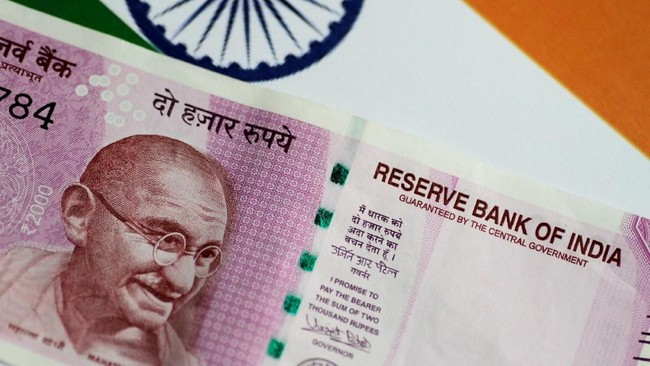
India is facing a unique phenomenon amid the rapid development of digital payments. As people increasingly use digital payments, the amount of cash in circulation has actually continued to rise.
Citing BBC International on Tuesday (15/9/2026), India’s central bank, the Reserve Bank of India (RBI), now records around 176 billion banknotes in circulation among the public. Each year, the RBI prints around 28-30 billion new banknotes in six denominations, while around 21 billion notes are withdrawn from circulation.
The sheer volume of physical currency presents its own challenge for the RBI, particularly as India’s digital payment system develops at breakneck speed.
India’s main digital payment system, the Unified Payments Interface (UPI), is even approaching around 1 billion transactions per day. Yet the growth in digital transactions has not eliminated the need for cash.
RBI Deputy Governor Shirish Chandra Murmu described the situation as a “cash paradox”. “Currency in circulation continues to grow at double digits even as the share of cash in individual transactions declines,” he said.
Not Merely a Shopping Tool
According to economist Anirudh Tagat, the phenomenon shows that cash has a broader function than simply being a means of payment. Cash can be used as a transaction tool, a store of value, and as protection in emergencies.
Digital payments mainly replace the first function, but do not automatically eliminate the other two. This helps explain why Indians continue to hold physical cash even as the use of payment apps widens.
India itself has an enormous cash distribution network. Banknotes are distributed through 19 RBI regional offices, bank branches, more than 250,000 ATMs and cash-recycling machines, and millions of banking agents serving communities in rural areas and small towns.
Other factors also play a role. Research cited by BBC International shows that unrecorded economic activity, including property transactions using cash, can cause the money supply to grow faster than officially recorded transactions.
In Indian property transactions, cash payments persist because the government’s reference values for property are sometimes below market prices. This can encourage some buyers and sellers to under-report transaction values and pay the difference in cash.
Crisis Trauma and Fear of Digital Systems?
There is also a psychological factor. As digital payments become easier, people may in fact become more aware of the importance of holding cash as a reserve. Concerns about power outages, cyber attacks, war, or failures of digital payment systems have led cash to be viewed once again as a form of insurance against emergencies.
A similar phenomenon is occurring in Europe. The European Central Bank (ECB) records that the number of euro banknotes in circulation rose from around €1 trillion in 2016 to €1.6 trillion this year, even though cash use in shop transactions has declined.
For India, the situation creates a dilemma. The RBI must maintain cash infrastructure while, at the same time, the government and central bank continue to push the digitalisation of payments.
The RBI even has its own paper mill, four banknote printing presses and ink production facilities to ensure the currency supply is maintained. With more than 550 million people using UPI, India has become one of the world’s largest examples of digital payment transformation.
Yet this development has not caused cash to lose its place. The lesson is that digital payments may change how people use money, but they do not necessarily eliminate the desire to hold money physically.
For many people, cash is now not only a means of transacting. It is also a reserve for when technology cannot be relied upon.