
India wants to turn more coal into gas for energy security. It faces a tough conversion
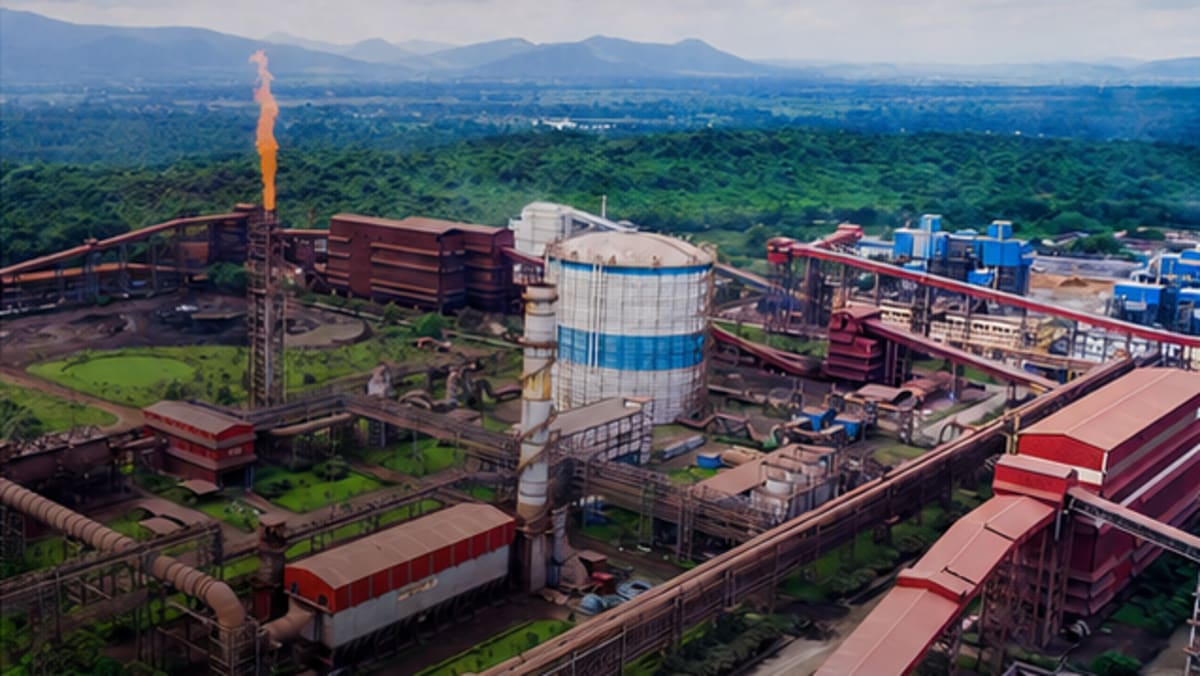
analysis Asia
India wants to turn more coal into gas for energy security. It faces a tough conversion
India recently approved a US$3.9 billion scheme to turn more of its vast coal reserves into gas. Even as its energy security ambitions gather pace, experts warn that scaling up the centuries-old technology will likely be a slow burn.
SINGAPORE: India is ramping up efforts to turn coal into gas, joining several other Asian economies such as China and Indonesia in turning to the centuries-old technology to reduce dependence on imported fuels.
New Delhi’s push has gained fresh urgency as shipping disruptions through the Strait of Hormuz during the US-Israel war on Iran threaten supplies of crude oil, liquified petroleum gas (LPG) and fertiliser feedstock to import-dependent economies such as India, say analysts.
For India, coal gasification seems an obvious answer given its vast reserves of the fossil fuel.
Yet experts say it may face the toughest challenge among regional peers, with obstacles ranging from the characteristics of Indian coal and water-intensive operations to financing constraints and fragmented policymaking.
TURNING COAL TO GAS
Unlike conventional coal-fired power generation, coal gasification converts the resource into synthetic gas (syngas) rather than burning it directly. The process, which dates back several centuries, heats and reacts coal with oxygen and steam to produce syngas, which is made mainly of carbon monoxide and hydrogen.
The syngas can then be cleaned and converted into many molecules to make fertilisers, methanol, dimethyl ether (DME), synthetic natural gas and hydrogen. DME can also be used as a substitute for liquefied petroleum gas (LPG). And even the residual carbon dioxide can be further captured and converted to more products.
Coal gasification can substitute some imports but not fully replace them, because industrial demand is large, varied and difficult to displace quickly, experts said.
Atanu Mukherjee, CEO of energy-transition advisory firm Dastur Energy, described it as a way to create “optionality” and energy resilience, rather than a route to stop reliance on imported fuels altogether.
Experts said coal gasification has remained niche because projects are costly, technically complex and slow to scale.
Mukherjee pointed to China as an example, saying its coal-gasification buildout was a “long haul” that took “10 to 15 year runs” to reach large-scale deployment.
But the technology is drawing renewed interest as oil- and gas-import-dependent economies look for a cushion from fossil-fuel shocks, experts said.
India is among the countries accelerating its coal-to-gas push.
Last month, the country approved a US$3.9 billion scheme to support coal gasification, with incentives covering up to 20 per cent of plant and machinery costs for new projects.
Authorities expect the programme to attract large-scale private investment, adding that the projects would be selected through a competitive bidding process.
Officials framed it as a way to strengthen energy security, make greater use of domestic coal and reduce reliance on imports of fuels, fertilisers and chemical feedstock.
Other Asian economies have already taken similar steps.
China has 13 new coal-to-gas projects under construction or in planning, as Beijing looks to tap domestic coal and reduce its exposure to natural gas imports, Bloomberg reported in April. The push has gained urgency as the war in Iran disrupted its energy shipments from the Middle East and exposed China’s dependence on imported oil and gas, the report added.
These projects could potentially provide syngas equivalent to 12 per cent of the country’s gas supply, said the report, citing Chinese consultancy OilChem.
Meanwhile, Indonesia reportedly announced the launch of six coal gasification projects in early February, before the Iran war erupted, with US$9.8 billion in investment for DME production to replace LPG supply.
Crude, oil products and LNG account for about a quarter of India’s import bill and around 15 per cent of Indonesia’s, according to local government data. China’s wider fuel import bill, including mineral fuels, accounts for about 20 per cent of imports, according to World Bank data.
The appeal of coal gasification is clear for India, which holds the world’s fifth-largest coal reserves yet remains heavily dependent on imported energy - sourcing about 88 per cent of its crude oil and roughly half its natural gas, according to local media reports and government data.
In 2021, the country launched its National Coal Gasification Mission, setting an ambitious target to gasify 100 million tonnes of coal per annum by 2030. However, the government has not said how much this target would reduce India’s overall energy import bill.
Dastur Energy’s Mukherjee told CNA that US$55 billion to US$78 billion of coal-gasification investment over 10 to 15 years could reduce India’s import bills by about US$20 billion.
A TOUGH MIX OF CHALLENGES
Yet analysts pointed out that India’s coal-to-gas ambitions face a layered set of challenges, ranging from physical constraints in its coal and water resources to structural barriers in scaling up the technology.
A key hurdle is gasifying Indian coal, which has a high ash content. The large amount of ash creates challenges, lowers efficiency and requires customised gasifier designs, experts said.
Indian coal often contains 30 to 45 per cent ash, according to a report by Indian government think tank NITI Aayog. In comparison, the ash content of coal in places such as China and Indonesia is below 20 per cent, analysts noted.
“You have plenty of gasification technologies on the market and you can find most of them in China and buy them directly off the shelf. However, the technologies from China cannot one-to-one be directly used in India,” said Martin Grabner, head of the Department of Energy and Process Engineering at German applied research institute Fraunhofer IKTS.
China is the global leader in