
India to Acquire German Submarines in $8 Billion Deal, Raising Stakes with China
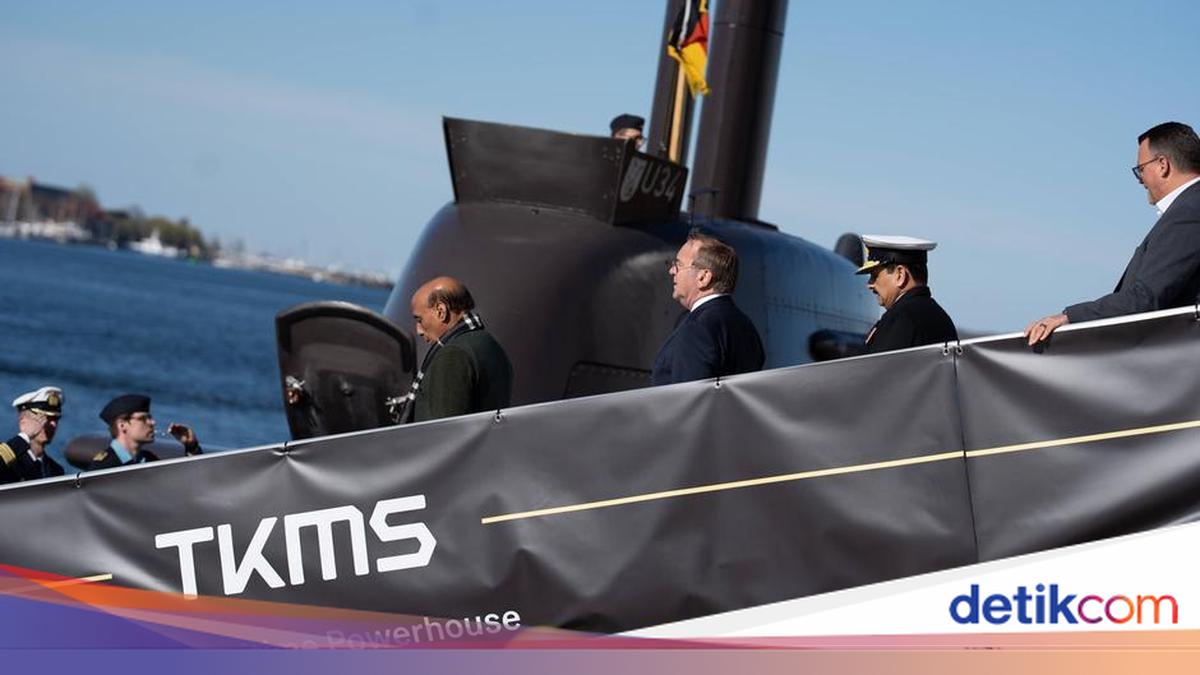
India is moving to strengthen its navy with a new generation of submarines designed in Germany and to be built in India. The deal, worth approximately $8 billion, is expected to be signed this summer, according to German Defence Minister Boris Pistorius. The agreement emerges as the Indo-Pacific increasingly becomes a contested arena, with submarines playing a central role. China’s expanding naval reach and Pakistan’s deepening military ties with Beijing reinforce India’s sense of urgency. The submarine in question is the German-designed Type 214, manufactured by Thyssenkrupp Marine Systems (TKMS). It is diesel-electric powered, not nuclear. However, the vessel is equipped with critical technology that makes it highly valuable: air-independent propulsion (AIP). This technology allows the submarine to remain submerged far longer than other conventional submarines, making it harder to detect and better suited for patrols in congested waters. India’s sea lanes are vital. The country has a coastline of more than 11,000 kilometres, and over 90 per cent of its trade by volume is transported by sea. Yet the Indian Ocean also contains several strategic chokepoints, narrow passages where maritime traffic can be disrupted. Threats to these routes can quickly become threats to India’s economy. “This is why it is very important for India to maintain freedom of navigation in the Indo-Pacific region,” said Shairee Malhotra, Deputy Director of the Strategic Studies Programme at the Observer Research Foundation (ORF) in New Delhi. “That is why India wants to enhance its naval power. And these submarines will be a major leap in India’s underwater warfare capability.” Submarines are highly useful in such environments because they can patrol silently, monitor enemy vessels, and create uncertainty for stronger surface fleets. In a crisis, submarines can serve as a deterrent. “Submarines are evolving into one of the most crucial capabilities in maritime power in the Indo-Pacific,” said Sidharth Kaushal, Senior Research Fellow for sea power at the Royal United Services Institute in London. One reason, he said, is because “the sea surface in the region is increasingly becoming a highly contested and even access-denied space.” Why AIP matters. Traditional diesel-electric submarines must periodically surface to draw air for their engines, making them more visible and vulnerable. AIP changes this dynamic. “What AIP enables the submarine to do is to remain underwater for longer periods without needing to snorkel like traditional conventional submarines,” Kaushal said. The German Type 214 uses fuel cells to generate electricity by combining hydrogen and oxygen. This process produces power silently and without exhaust emissions, allowing the submarine to stay underwater for weeks. “This technology gives it some of the characteristics of a nuclear submarine, while at the same time retaining the advantages of a conventionally powered system,” Kaushal noted. Such submarines are smaller and cheaper than nuclear-powered ones. They are also very quiet, a major advantage in shallow or high-traffic waters. They can pose a sudden threat to much larger naval forces. In a US-led naval exercise in 2005, a small Swedish AIP submarine penetrated layered defences and scored simulated attacks on a US aircraft carrier twice. This appears to be the kind of capability India seeks as it modernises its fleet. “For now, India has a relatively small submarine fleet, mostly from the Soviet era. So these vessels are quite old,” Malhotra said. “What India is really looking for is to modernise those naval capabilities.” China and Pakistan drive India’s concerns. India’s naval build-up is closely tied to its two nuclear-armed rivals: China and Pakistan. China now has the world’s largest navy by number of ships, with around 400 vessels. Its primary focus remains Taiwan and the South China Sea, but Beijing is also expanding its presence elsewhere. Pakistan is modernising its submarine fleet with Chinese assistance. In 2015, Islamabad signed a deal worth approximately $5 billion to acquire eight advanced submarines from China. Four will be built in China and four in Pakistan, using Chinese technology. These Hangor-class submarines are based on China’s Type 039, known to NATO as the Yuan class, and also utilise AIP. Pakistan buys roughly 80 per cent of its armaments from China. This deepening military relationship has shifted the balance in South Asia and increased pressure on India. The risk is not merely theoretical. In May 2025, India and Pakistan fought for four days, raising fears of a wider war. India and China have also clashed along their disputed Himalayan border. With Pakistan allied with China, India is increasingly seeking partners in the West. For decades, the country pursued a very different path.